
The Swiss hound varieties
The Swiss Hound has a long cultural association with scent hunting in Switzerland. The FCI history discusses older imagery, including a Roman-period mosaic, but resemblance in art cannot establish a complete modern pedigree. The clearer organisational record begins with separate variety standards drawn up in 1882.
Revisions followed in 1909, and a single standard for four varieties was established in 1933. Those surviving varieties are Bernese, Jura, Lucerne and Schwyz. The taller Swiss Hound is a separate registered breed from the short-legged Small Swiss Hound, despite their related colour traditions.
Four familiar colour appearances
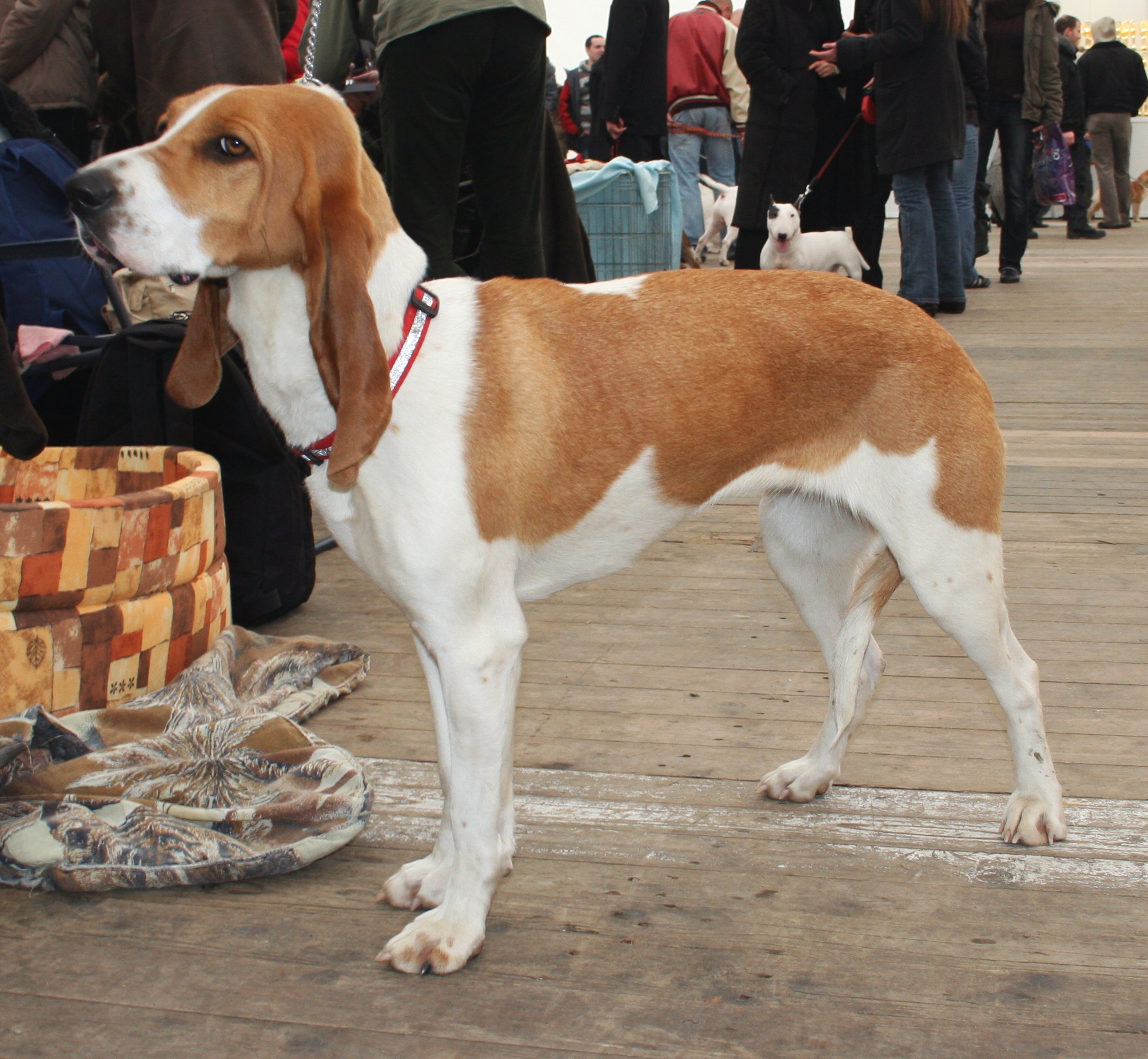
A short smooth dense jacket shows the lean outline and long ears. Bernese, Jura, Lucerne and Schwyz varieties have different characteristic patterns, from tricolour to blue-effect mottling and white with orange. The photographed white-and-orange dog illustrates one variety rather than a universal Swiss Hound appearance.
Sensitivity with scent-working interest
The standard combines attachment to the handler with lively, determined hunting interests. Rewarding attention and secure opportunities to explore can help owners respond to that combination. A soft expression or familiar-person bond does not establish recall around game or comfort with every unfamiliar procedure.
Gentle care around long ears
Introduce foot, ear and body examination gradually without pulling sensitive skin. Check equipment contact points after activity and use suitable tools for close hair. Explain irritation or handling sensitivities to a groomer, and seek assessment when persistent discomfort changes the dog's response to touch.
Plan comfortable care
Our gentle coat-care guide and first grooming appointment guide help you prepare questions about handling, maintenance and a suitable service. This breed profile is independent of named businesses.
Compare breed stories
Photograph and sources
The photograph illustrates one Swiss Hound. See the linked credit for its creator, source and reusable licence. It does not establish the dog's health, age or temperament.
Read the FCI catalogue entry and FCI breed standard. General care and handling guidance is available from PDSA and Dogs Trust.