
A smaller hound for changed hunting grounds
The Small Swiss Hound developed as hunting arrangements changed in several Swiss cantons around the turn of the twentieth century. The FCI history explains that the familiar medium-sized Swiss Hounds were considered too fast for smaller enclosed hunting areas, prompting selection for lower, short-legged scent hounds.
A breed club formed in 1905, initially under the Swiss Dachsbracken name. The resulting Niederlaufhund retained scent-working interests and familiar Swiss colour patterns while becoming a separate registered breed. It is not simply an undersized individual of the taller Swiss Hound.
Several textures and colour varieties
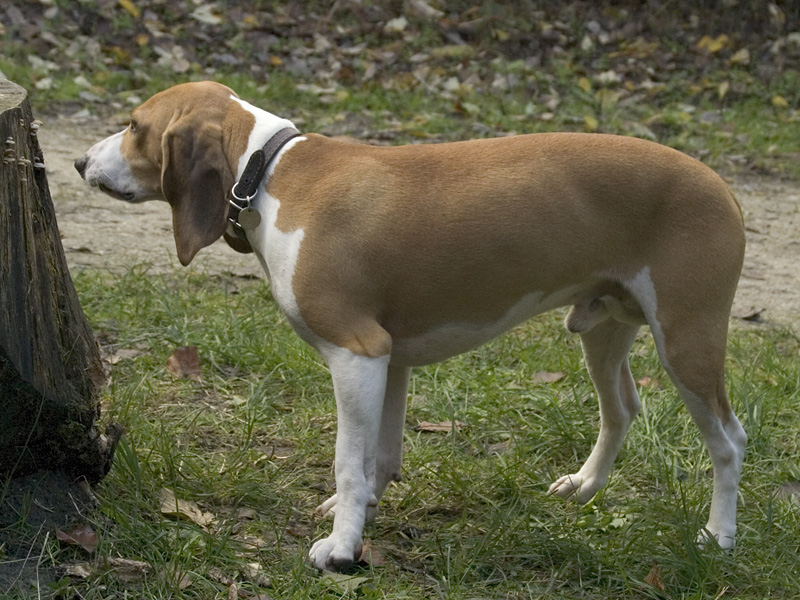
The standard describes smooth, rough and double-coated textures, including a modest beard in rough examples. Bernese, Jura, Lucerne and Schwyz patterns provide different colour appearances. The pictured white-and-orange Schwyz dog illustrates one variety, not a colour requirement for every Small Swiss Hound.
A short body height does not remove working interests
The standard combines a friendly ideal with persistence on scent and a carrying voice. Reward attention and arrange secure exploration rather than assuming short legs mean low activity needs. Introductions and grooming routines should reflect the individual's confidence, experience and response to new situations.
Maintenance following the actual coat
A smooth jacket and a rough beard need different tools and attention. Check equipment contact points and furnishings before debris becomes compacted. Ask a groomer to demonstrate gentle care, and investigate persistent skin irritation or pain rather than forcing the dog through an unsuitable routine.
Plan comfortable care
Our gentle coat-care guide and first grooming appointment guide help you prepare questions about handling, maintenance and a suitable service. This breed profile is independent of named businesses.
Compare breed stories
Photograph and sources
The photograph illustrates one Small Swiss Hound. See the linked credit for its creator, source and reusable licence. It does not establish the dog's health, age or temperament.
Read the FCI catalogue entry and FCI breed standard. General care and handling guidance is available from PDSA and Dogs Trust.