
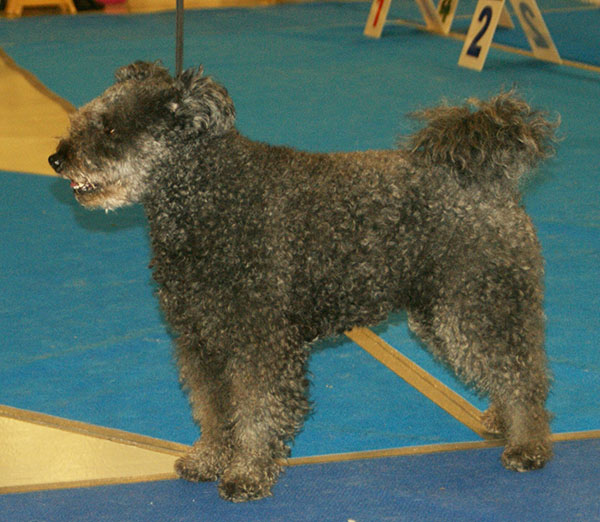
A Hungarian breed with a separate identity
The Pumi developed in Hungary during the seventeenth and eighteenth centuries. The FCI history describes regional Puli-type dogs crossed with imported German and French dogs of terrier type. It became recognised as an independent breed during the early twentieth century, rather than simply a differently groomed Puli.
The distinction is practical as well as historical. Expressive semi-erect ears, a lively herding style and springy hair create a different outline from the corded relative. Shared national origins do not mean the two breeds have identical maintenance needs or interchangeable behaviour.
Tufts rather than cords
The jacket combines a strong outer layer with soft undercoat, forming elastic waves and curls. The face remains more open, and the hair should not form cords. Grey, black, fawn and white are recognised; some grey individuals start darker, so a puppy photograph may not predict the mature shade.
An expressive working character
The standard emphasises activity, boldness and a readiness to use the voice. Useful learning and predictable rest can help owners respond to that combination without expecting constant excitement. Introductions to strangers and grooming tools should reflect the individual's confidence rather than assuming intelligence makes every experience easy.
Maintaining the actual texture
Check beneath equipment and around furnishings before debris tightens into tangles. Ask an experienced groomer about appropriate tools and a manageable finish, rather than automatically copying a Poodle or Puli routine. Persistent skin irritation or painful handling needs attention beyond cosmetic preparation.
Plan comfortable care
Our gentle coat-care guide and first grooming appointment guide help you prepare questions about handling, maintenance and a suitable service. This breed profile is independent of named businesses.
Compare breed stories
Puli.
Photograph and sources
The photograph illustrates one Pumi. See the linked credit for its creator, source and reusable licence. It does not establish the dog's health, age or temperament.
Read the FCI catalogue entry and FCI breed standard. General care and handling guidance is available from PDSA and Dogs Trust.