
From working households to a familiar companion
The Yorkshire Terrier’s name records a place of development, not a promise of a delicate personality. Its story belongs to nineteenth-century northern England, where terriers were part of working households as well as companions. The Royal Kennel Club describes Scottish workers taking terriers with them to Yorkshire’s mines and cotton mills; it identifies the old Black and Tan Terrier, Maltese and Skye Terrier among the ancestry. The FCI records the breed emerging around the 1850s and the Yorkshire Terrier name being accepted in 1870. Huddersfield Ben, born in 1865, is an important foundation dog in the Royal Kennel Club’s account. The long-coated companion that later became fashionable did not lose the terrier part of its history. Today’s FCI classification is Group 3, in the Toy Terriers section, even though the Royal Kennel Club places the breed in its Toy group. Those are different organisations’ catalogues, not two different breeds.
Living with the individual dog
Small size does not remove the need to explore, learn and rest. Plan walks and play around the individual dog’s age, health and confidence, rather than treating it as an ornament to carry everywhere. Introduce unfamiliar situations gradually and reward the responses you want. A terrier background offers a useful question about interest in movement or small animals; it does not predict every Yorkie’s reaction.
Think about the coat you can maintain before choosing a style. A long show presentation and a practical pet trim involve different daily commitments, and neither should get in the way of comfortable movement or seeing clearly. Ask a groomer to demonstrate the care your chosen length needs. Discuss the same plan with everyone who looks after the dog, so difficult areas are not overlooked between visits. The purpose is a comfortable dog and a manageable routine, not a competition photograph.
Plan care around the individual
Use the gentle coat-care guide to think about comfortable handling and the difference between care at home and professional help. Our appointment guide explains useful questions to agree before a visit.
About the photograph and sources
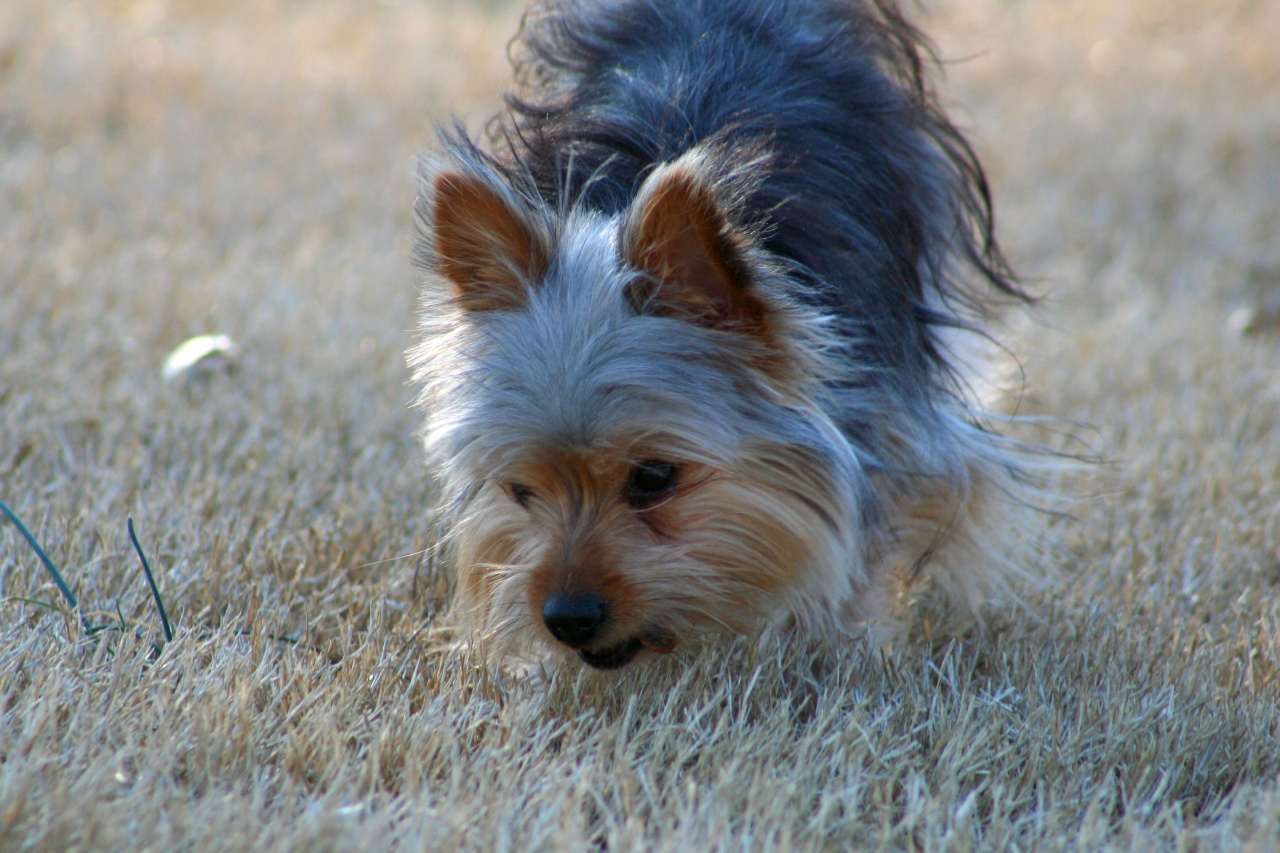
The natural photograph shows a Yorkshire Terrier investigating grass outdoors. It records one dog’s appearance and moment, not a full show-coat presentation or evidence of temperament, age or health.
Further reading: Royal Kennel Club Yorkshire Terrier history and care guide; American Kennel Club breed guide; PDSA grooming guidance; Dogs Trust handling guidance. Breed origins describe the catalogue history, not a count of dogs living in each country today.