
A working sighthound with a place beside the hearth
The Whippet developed in Britain, with a history of pursuing small game before racing became another part of its story. The Royal Kennel Club connects nineteenth-century Whippets with working communities and the mining areas where racing was popular. Its resemblance to the larger Greyhound reflects its sighthound background, but the Whippet has its own breed identity. The FCI classifies it among short-haired sighthounds and lists Great Britain as its origin. Rather than an extreme outline, the standard calls for a balanced dog combining strength and speed. Historical work helps explain the breed, without deciding the interests or abilities of every modern companion.
Living with the individual dog
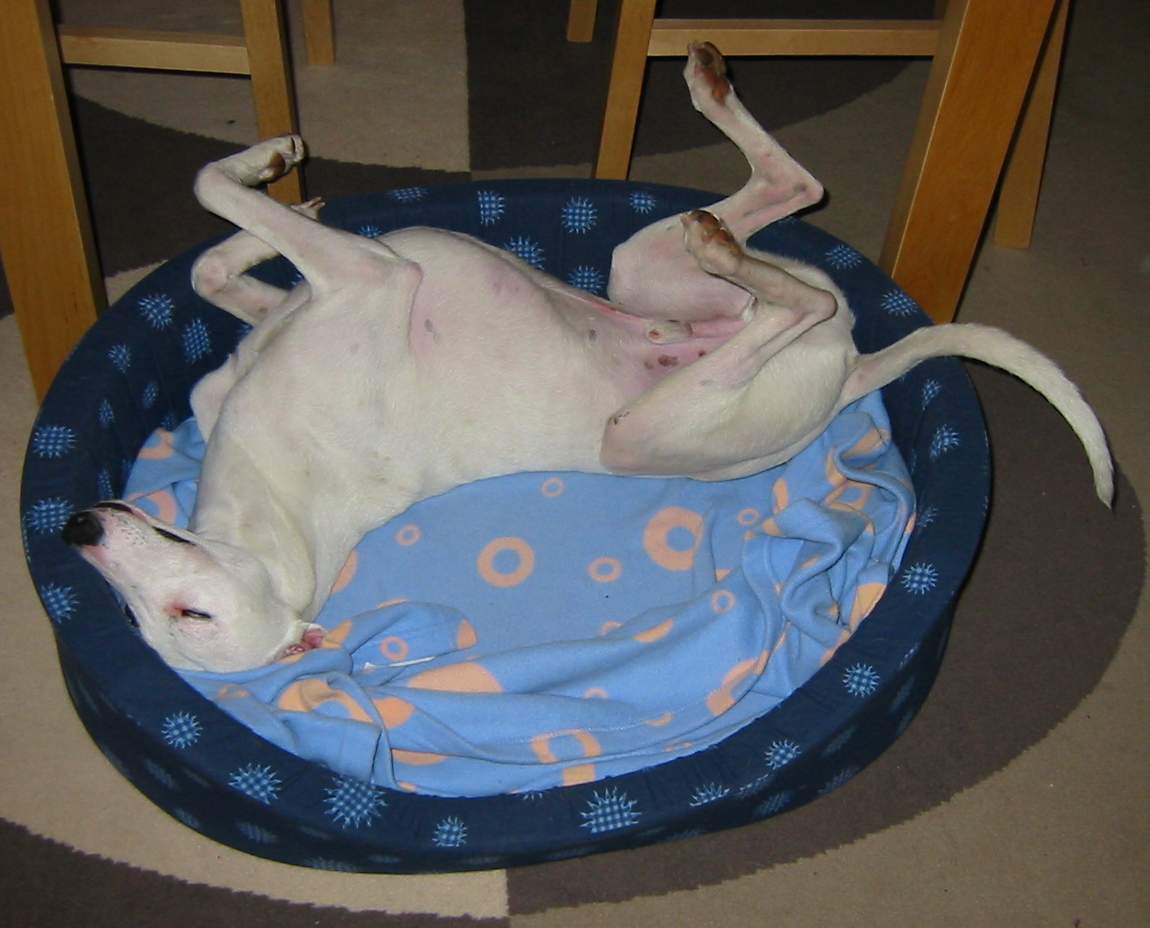
The breed standard describes a gentle, affectionate disposition. Many readers will also recognise the appeal of a dog relaxing on a comfortable bed, as in this profile's photograph. Rest and suitable activity both deserve a place in the day. A history of chasing means safe exercise arrangements and careful introductions to other animals matter; assess the individual dog rather than assuming a label predicts every reaction. Build recall and settle skills positively, and choose safe enclosed opportunities when free running is appropriate.
About the photograph: A Whippet sleeping on its bed, photographed by its owner. This relaxed resting position is an individual moment, not a demonstration of the breed's standing outline or a prediction of temperament.
Further reading: Royal Kennel Club Whippet guide and breed history.