
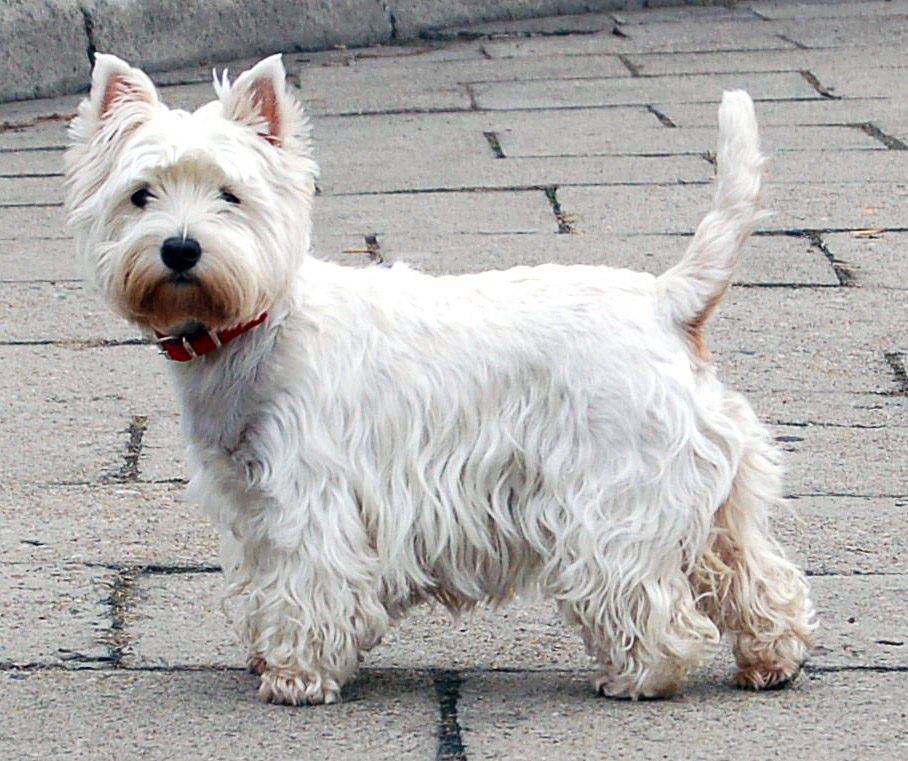
Why a white terrier?
The West Highland White Terrier grew from Scottish working terrier stock. In the nineteenth century, the Malcolm family of Poltalloch developed a white strain from Cairn-type dogs; a pale dog was easier to spot on the moor. The breed's earlier names included Poltalloch and Roseneath Terrier. That small piece of history makes the bright coat feel less like decoration and more like a link to the landscape where these dogs worked.
Texture beneath the colour
A Westie's coat has a harder outer layer and a softer undercoat. The familiar white outline can be maintained in different ways, and hand stripping and clipping produce different textures and upkeep needs. The right conversation starts with the dog's actual coat, age, tolerance of handling and what the family can maintain between appointments.
Character is personal
Terrier heritage may show up as curiosity and persistence, but a breed label does not tell you how one dog will react to a brush, a visitor or a new place. Short, calm handling sessions can help an owner learn what works. Check the coat for knots, particularly where movement causes rubbing, and seek professional advice if the skin looks sore. Comfort should guide the routine more than a perfectly sculpted silhouette.