
The hunting dog linked to Weimar
The Weimaraner's name connects it with Weimar in Germany. The FCI's historical account is careful about its beginnings: several ancestry theories exist, but dogs of this kind were kept at the Weimar court in the early nineteenth century. Professional hunters and gamekeepers in central Germany, particularly around Weimar and Thuringia, also played a part in development.
Planned breeding and stud-book recording followed later in that century. That is a firmer outline than a story claiming one exact combination of founding breeds. Kennel-club histories associate the dog with German sporting life, but some colourful accounts go further than the evidence needed to understand a modern companion. The useful thread is its development as a hunting dog expected to work closely with people.
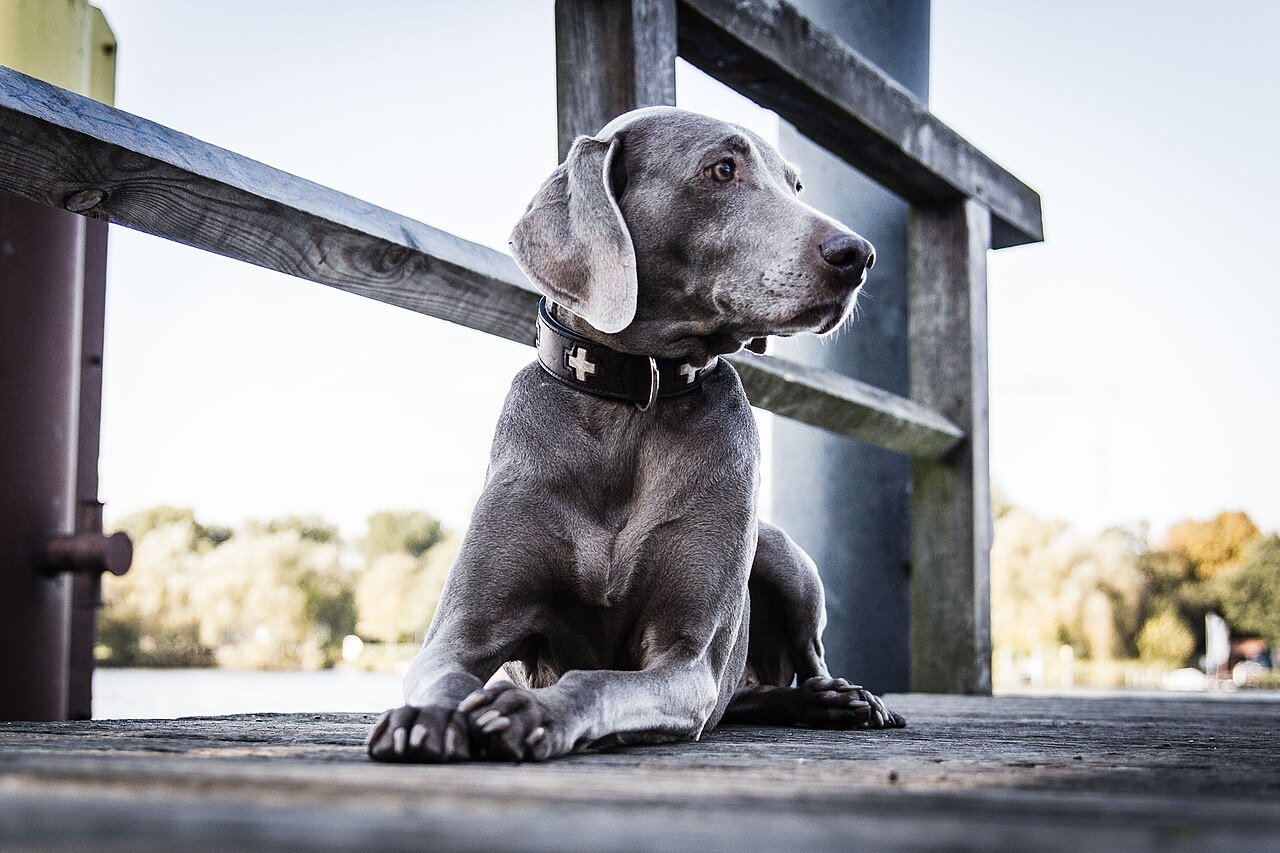
The familiar short, grey coat is not the whole catalogue. FCI standard 99 also describes a long-haired variety, with feathering and a fuller tail. This page covers both, while the photograph illustrates a short-haired individual. Germany in the filter records breed development, not where the largest number of Weimaraners lives today.
Living with the individual dog
The neat outline can make a Weimaraner look effortless, but living together involves more than admiring a coat. Breed descriptions emphasise working ability, scenting interest and a relationship with the handler. Before choosing a dog, ask about its experience of being alone, responding to distractions, meeting animals and relaxing after activity.
Plan rewarding learning alongside suitable exercise and rest. Practise everyday skills in places where the dog can succeed before making the task harder. A strong interest in the environment is a reason for thoughtful management, not a guarantee that any particular dog will behave in a particular way. Match the routine to age, health and the individual rather than a fixed exercise target copied from a breed chart.
Choose care for the coat your dog actually has
A short-haired dog and a long-haired dog may share a breed name while needing different attention. For a longer coat, show the groomer the ear fringes, tail and feathering you maintain at home. For a short coat, describe shedding, skin sensitivity and handling just as carefully. A photograph of one variety is not a grooming specification for another.
Ask for a demonstration of any unfamiliar brush or comb and agree a manageable appointment. Regular foot and nail checks deserve as much planning as bathing. If a task becomes uncomfortable, stop and find the cause rather than treating cooperation as something to force. Our first-appointment guide can help you prepare those questions.
Read our gentle coat-care guide for help with home maintenance, and our first grooming appointment guide for questions to ask before a visit.
About the photograph and sources
The photograph shows one short-haired grey Weimaraner resting outdoors. It gives a clear view of the head, ears and close coat, but does not illustrate the long-haired variety or establish health or temperament.
Further reading: Royal Kennel Club breed guide; American Kennel Club breed guide; PDSA grooming guidance; Dogs Trust handling guidance.