
A Carpathian working history
The FCI history describes an old Hungarian hound shaped by climate, terrain and hunting conditions. Changes in land use pushed much of its working role towards wooded Carpathian country, where different conditions once supported long- and short-legged forms.
The account records severe decline in the early twentieth century and renewed organised breeding in 1968. The modern entry, FCI 241, concerns the surviving long-legged type. Its cultural and geographical history should not be confused with a current census of dogs in Hungary or Romania.
A purposeful, dense-coated hound
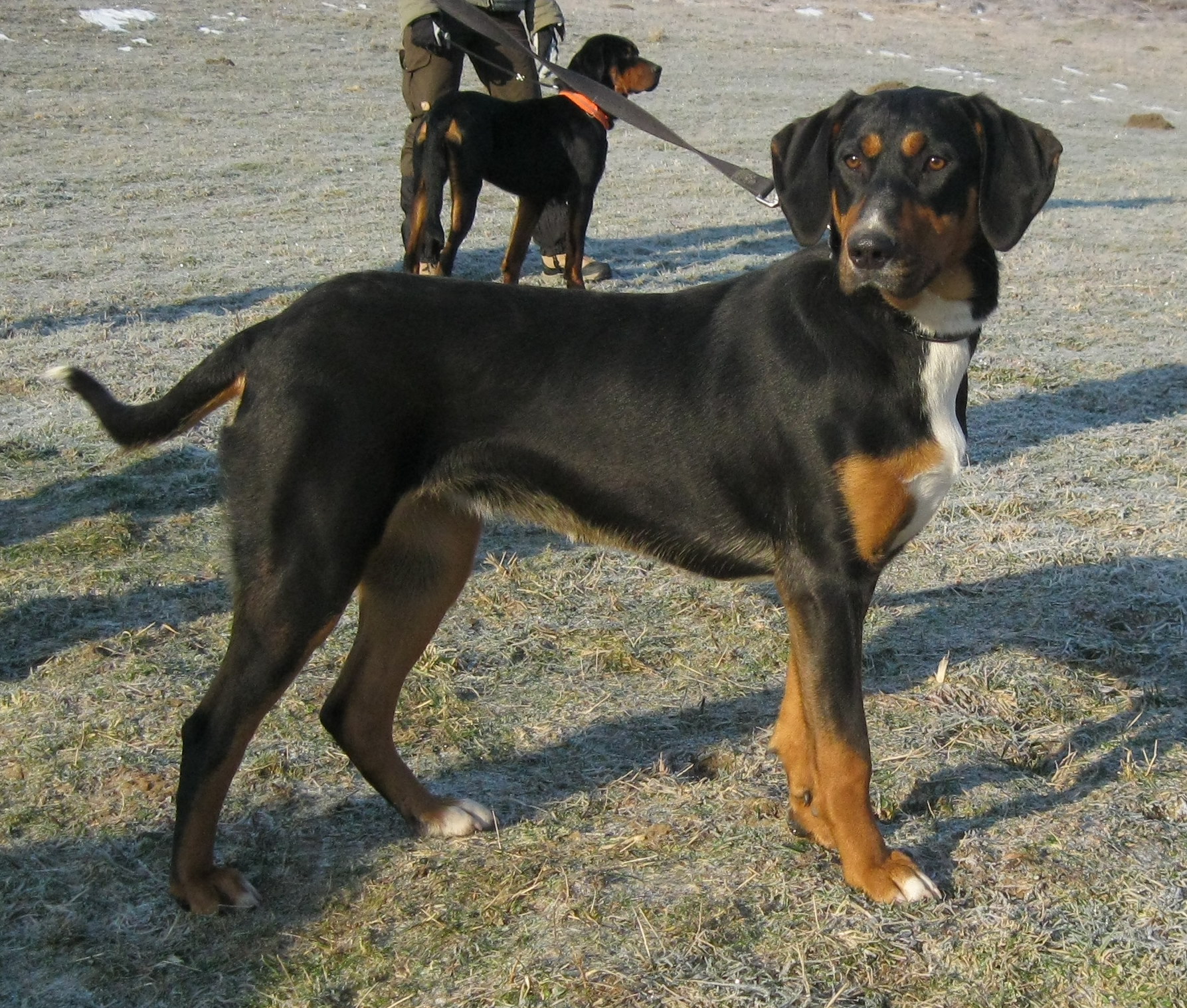
The close, dark coat carries defined tan points, with some white markings permitted by the standard. Undercoat and slightly fuller hair on parts of the body support an outdoor-working outline. The photographed dog is a natural example, not proof of a particular dog's lineage or health.
Determination and a hound voice
The standard combines a quiet, even basic disposition with drive and a characteristic voice during hunting. Consider scent interests and the household's surroundings when researching the breed. Reward checking in and settling, and make introductions gradual where an individual is reserved.
Routine checks after the countryside
Inspect feet, the outside of ears and collar contact areas without rough handling. Use gentle tools and short sessions to remove loose hair. A professional care appointment should begin with the dog's experience and comfort, rather than assuming all short-coated hounds enjoy unfamiliar handling.
Plan comfortable care
Our gentle coat-care guide and first grooming appointment guide help you prepare questions about handling, maintenance and a suitable service. This breed profile is independent of named businesses.
Photograph and sources
The photograph illustrates one Transylvanian Hound. See the linked credit for its creator, source and reusable licence. It does not establish the dog's health, age or temperament.
Read the FCI catalogue entry and FCI breed standard. General care and handling guidance is available from PDSA and Dogs Trust.