
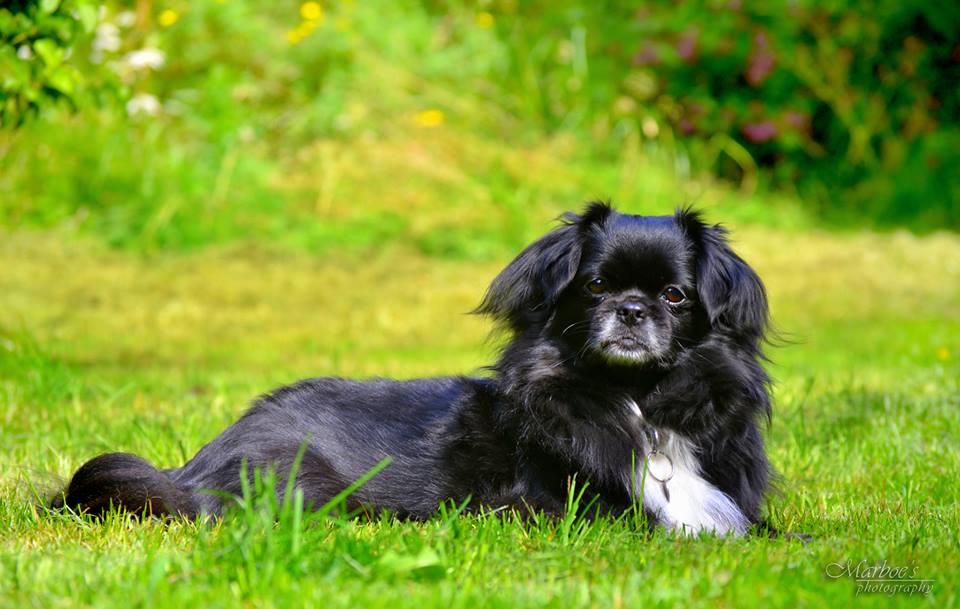
A companion rather than a flushing spaniel
The Tibetan Spaniel's background is as a companion and watchdog, including an association with Tibetan monasteries. The Royal Kennel Club explains that early European visitors used the spaniel name because the dogs reminded them of toy spaniels. It should not be read as proof of a conventional British flushing-gundog role.
Dogs reached Britain in late Victorian times, but the breed became more established after the Second World War through imported dogs and the people maintaining them. The Tibetan Spaniel Association formed in 1957. These clearer modern milestones complement the Tibetan cultural background without turning a monastery association into an exact ancient pedigree.
Silky hair with a practical limit
Moderately long silky outer hair lies relatively flat over fine dense undercoat, with feathered ears and a plumed tail. The current October 2026 FCI standard permits varied colours while excluding merle. A full mane is not a reason to exaggerate coat volume or overlook tangles in less visible areas behind the ears and beneath equipment.
Alertness alongside independence
The standard describes intelligence, alertness and independence, with reserve towards strangers. A small body does not guarantee easy restraint or comfort with lifting. Reward voluntary cooperation and let the dog's experiences guide introductions to visitors, unfamiliar animals and grooming equipment rather than assuming that companion status predicts every response.
Care around feathering and furnishings
Check ear hair, rear furnishings and equipment contact points gently before loose undercoat and debris tighten. Choose a routine that can be maintained without pulling sensitive skin or forcing prolonged handling. A groomer can help plan manageable sessions; persistent irritation, painful knots or changed tolerance of touch needs professional assessment.
Plan comfortable care
Our gentle coat-care guide and first grooming appointment guide help you prepare questions about handling, maintenance and a suitable service. This breed profile is independent of named businesses.
Photograph and sources
The photograph illustrates one Tibetan Spaniel. See the linked credit for its creator, source and reusable licence. It does not establish the dog's health, age or temperament.
Read the FCI catalogue entry and FCI breed standard. General care and handling guidance is available from PDSA and Dogs Trust.
Additional primary reading: Royal Kennel Club Tibetan Spaniel history.