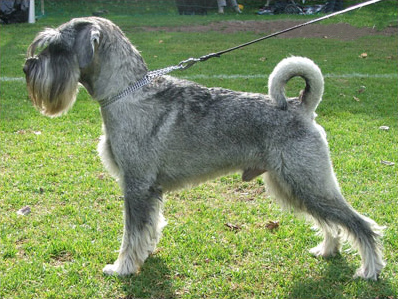
From the stable yard to a familiar beard
The Standard Schnauzer worked around stables in southern Germany, where controlling rodents was part of its role. When the Pinscher-Schnauzer club formed in 1895, it was recorded as a rough-haired Pinscher. FCI standard 182 uses the name Schnauzer; 'Standard' here distinguishes this medium-sized breed from the separately recognised Miniature and Giant Schnauzers.
Living with the individual dog
The beard gives a characterful expression, but daily compatibility depends on more than appearance. Offer the individual dog purposeful learning, suitable exercise and quiet time. Introduce visitors and handling thoughtfully, and ask about its existing routines instead of treating a watch-dog history as a prediction of every response.
Character and behaviour
The standard combines liveliness, composure, attentiveness and attachment to familiar people. Those tendencies are not guarantees; patient training and individual assessment remain important.
Breed descriptions are broad tendencies. An individual dog's behaviour also reflects experience, training and circumstances.
Care in daily life
Comb the beard and leg furnishings gently and keep food residue from building up. Discuss stripping or clipping with a groomer who can assess this dog's coat and comfort. A familiar style should remain practical between visits, with clear home-care instructions.
Care depends on the individual dog. If you notice a skin or health problem, speak to a vet.
Sources and review
These sources informed GroomNear's original summary. Place of origin does not describe where most dogs of this breed live today; reliable worldwide breed counts are not available for every breed.