
A Midlands history and a distinct modern breed
The Staffordshire Bull Terrier's name points to the English Midlands. The Royal Kennel Club places its development around the Black Country, Staffordshire and northern Birmingham, where bulldog-and-terrier dogs had a history linked to vermin control and blood sports. It is an uncomfortable part of the story, and one that should be explained without turning a modern pet into a historical stereotype.
As breeders developed different types from that shared background, some favoured the older, compact outline rather than the changing head shape of the Bull Terrier. The Staffordshire Bull Terrier became a separately recognised Kennel Club breed in the 1930s; AKC's historical notes give 1935. The FCI now lists it under standard 76 in its Terrier group.
A Staffordshire Bull Terrier is not simply another name for every bull-type dog. Names, recorded ancestry and the particular dog matter. The origin shown here follows the FCI's Great Britain record; the Midlands connection explains development, not a worldwide population count or a guarantee of how an individual dog will behave.
Living with the individual dog
Many readers first meet a Stafford as an enthusiastic companion who wants to be involved. Breed descriptions highlight affection and persistence, but it is still worth asking specific questions. Can this dog rest while the household is busy? How do they cope with visitors, unfamiliar dogs or a short separation? What handling have they already learned to enjoy?
Translate those answers into a routine with suitable activity, rewarding practice and predictable rest. Teach calm greetings in small steps rather than relying on physical restraint. Descriptions of affection towards children do not remove the need for supervision, respectful handling and a safe place where a dog can be left undisturbed. Individual experience and current circumstances matter alongside ancestry.
Comfort before a cosmetic finish
A smooth coat can make loose hair and dirt easy to see, but the dog still needs a comfortable introduction to grooming. Start on a secure surface and keep the first sessions brief. Ask a groomer to explain how they will introduce bathing and drying rather than assuming that a short coat means the whole visit must be quick.
Tell the groomer about sensitive areas, previous worries and any veterinary advice that affects handling. Agree which tasks you can maintain at home and which need professional help. The aim is a clean, comfortable dog and a routine you can repeat calmly, not a promise of a particular show-ring appearance.
Read our gentle coat-care guide for help with home maintenance, and our first grooming appointment guide for questions to ask before a visit.
About the photograph and sources
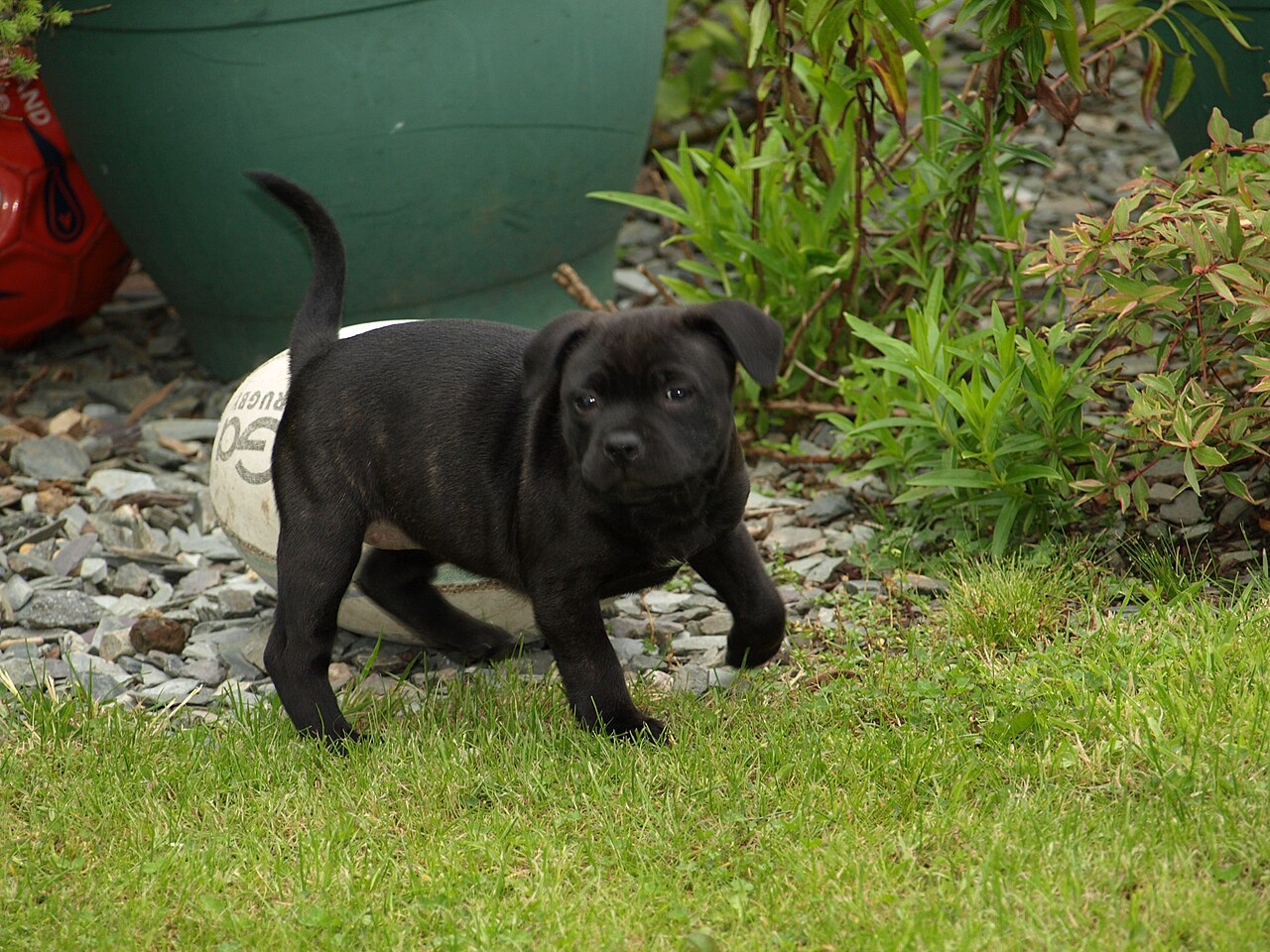
The photograph shows a young black Staffordshire Bull Terrier beside a ball outdoors. A puppy's proportions and ear carriage are still developing, so this is not an illustration of adult size or a conformation assessment. Its behaviour in one moment cannot establish its temperament.
Further reading: Royal Kennel Club breed guide; American Kennel Club breed guide; PDSA grooming guidance; Dogs Trust handling guidance.