
A Spanish running-hound tradition
The FCI history places the Galgo within a long Spanish tradition of hunting by pursuit across plains and open country. It also describes exports during the sixteenth, seventeenth and eighteenth centuries and a historical relationship with the English Greyhound.
Accounts of much earlier Roman and Asian connections are broader historical interpretations, not a complete pedigree. The modern Galgo Espanol is FCI number 285, with Spain as origin. It is a distinct breed, rather than simply any Greyhound living in Spain.
Two coat forms on a lean outline
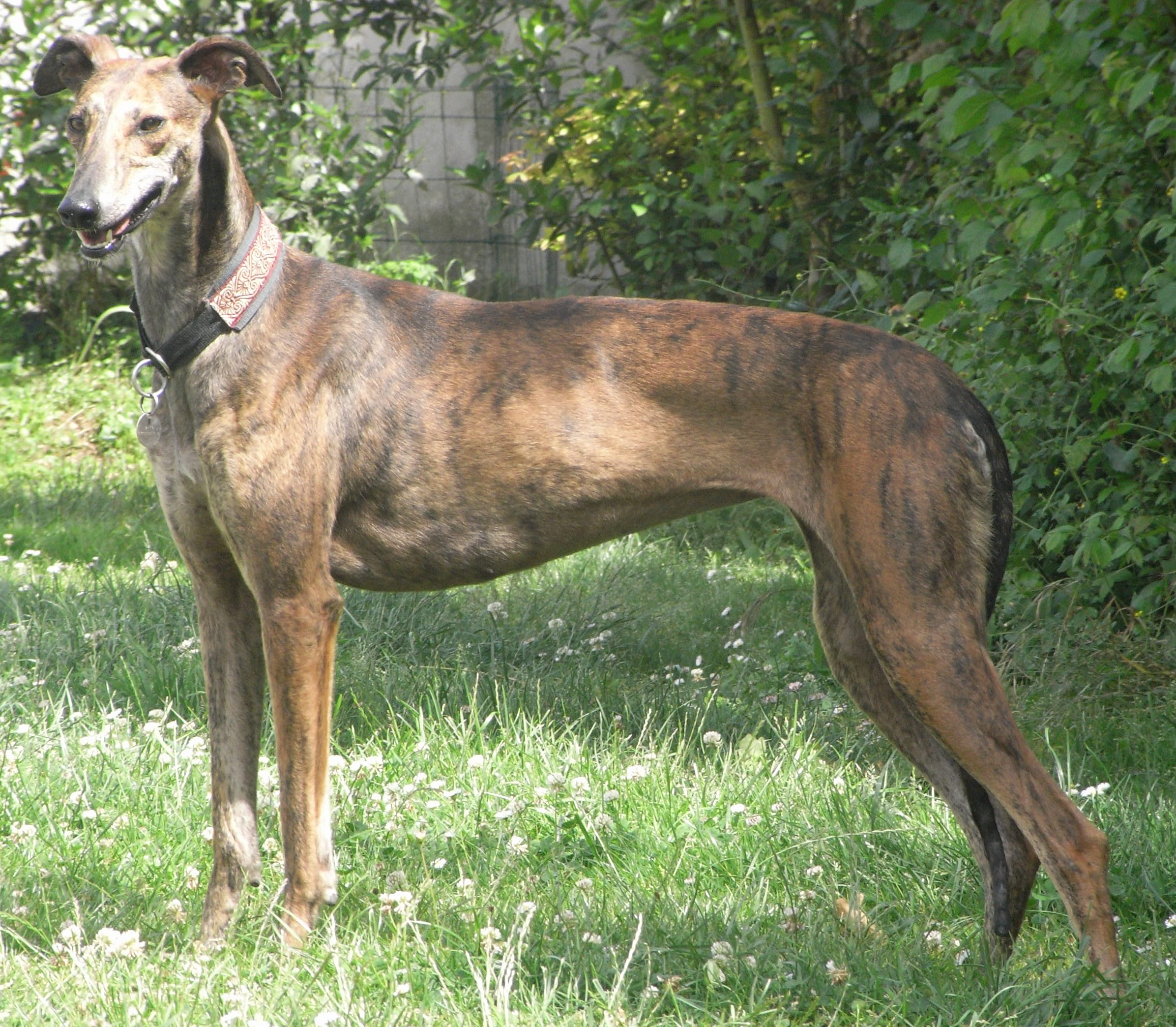
The smooth form has very fine, close hair, while the rougher semi-long form has harder furnishings around the face and body. Many colours occur, including brindles. The pictured smooth dog is only one example of a breed whose coat texture can make care quite different between individuals.
Stillness and pursuit can belong to the same dog
The standard describes a serious, sometimes reserved character alongside energy during hunting. A quiet dog at home may still respond quickly to moving animals outdoors. Reward attention to the handler, use secure exercise arrangements and allow new social experiences at a manageable pace.
Gentle maintenance for the individual coat
Soft tools and calm skin checks suit fine short hair, while rough furnishings need careful checks for trapped material. Practise foot handling and standing comfortably before appointments. A groomer can help choose a realistic routine without assuming every Galgo needs the same treatment.
Plan comfortable care
Our gentle coat-care guide and first grooming appointment guide help you prepare questions about handling, maintenance and a suitable service. This breed profile is independent of named businesses.
Photograph and sources
The photograph illustrates one Spanish Greyhound. See the linked credit for its creator, source and reusable licence. It does not establish the dog's health, age or temperament.
Read the FCI catalogue entry and FCI breed standard. General care and handling guidance is available from PDSA and Dogs Trust.