
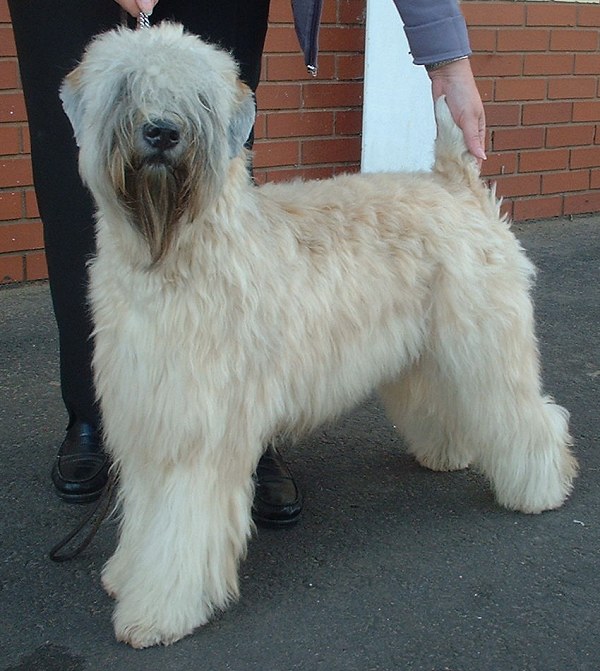
An Irish farm terrier with an uncertain early pedigree
The Soft Coated Wheaten Terrier belongs to Ireland's working terrier tradition. Older references to soft-coated dogs support a long history, but the precise relationships among Ireland's terrier breeds are not fully documented. Claims that one is unquestionably the oldest go beyond that evidence.
The Irish Kennel Club recognised the Wheaten in 1937. Its modern identity, FCI number40, is distinct from the harsher-coated red Irish Terrier and the blue-coated Kerry Blue. Shared country and farm work do not mean the three need identical grooming.
A coat that changes as the dog grows
The mature Wheaten has a soft, silky single coat with waves or loose curls. Puppies may start with darker colour and different texture, changing over an extended period. A pale adult photograph cannot predict the exact timing or appearance of an individual young dog's developing jacket.
A terrier's spirit alongside affection
The standard describes intelligence, spirit and loyalty to familiar people. Those qualities can make an engaging companion, but they do not establish easy recall or a willingness to stand through any grooming procedure. Introduce handling gradually and reward calm participation rather than relying on the breed's friendly reputation.
Soft hair needs a realistic routine
Check gently beneath the surface around ears, equipment, legs and the rear before loose tangles compact. Ask a groomer about tools and a manageable schedule for the coat actually present. Comfort comes before a decorative finish, and painful matting needs appropriate professional help.
Plan comfortable care
Our gentle coat-care guide and first grooming appointment guide help you prepare questions about handling, maintenance and a suitable service. This breed profile is independent of named businesses.
Photograph and sources
The photograph illustrates one Soft Coated Wheaten Terrier. See the linked credit for its creator, source and reusable licence. It does not establish the dog's health, age or temperament.
Read the FCI catalogue entry and FCI breed standard. General care and handling guidance is available from PDSA and Dogs Trust.