
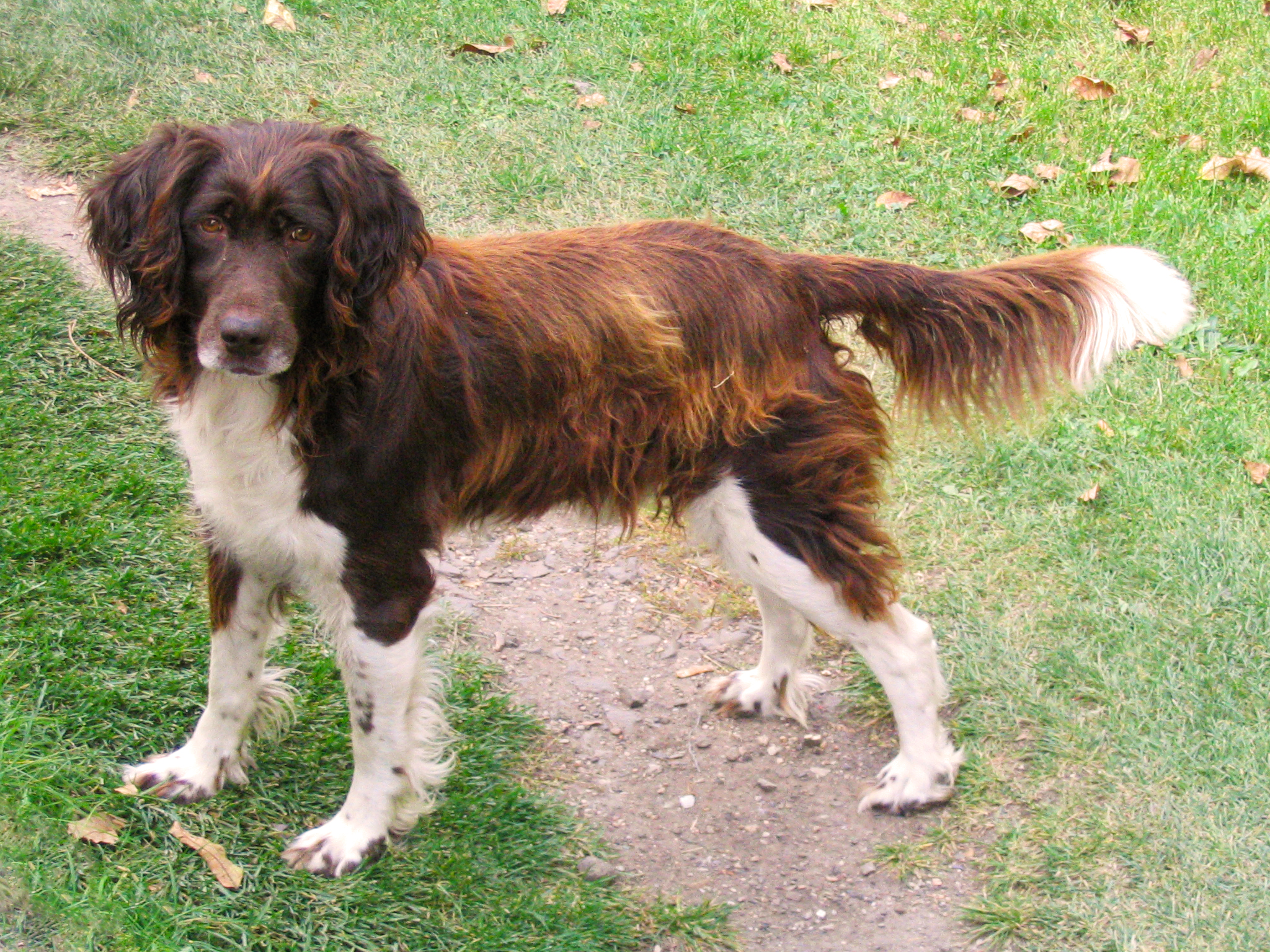
A working partnership from Munsterland
Breeding in northern Germany's Munsterland is documented from around 1870. The FCI traces the background to regional flushing and pointing dogs, selected for useful work rather than a purely decorative outline. Kleiner Munsterlander is the German breed name; Small Munsterlander is the familiar English form.
A breed association formed in Germany in 1912, and Friedrich Jungklaus produced the first standard in 1921. The objective was a medium-sized hunting partner able to search, point and retrieve across fields, woodland and water. It is a separate FCI identity from the Large Munsterlander.
Feathering with a practical purpose
The glossy brown-and-white or brown-roan jacket lies close enough to show a balanced body. Longer hair on the legs, rear and tail adds furnishings rather than the heavy curtain of a long-coated companion breed. Mud and plant material can remain hidden beneath those softer areas.
Intelligence alongside hunting interest
The standard combines friendliness and close cooperation with strong interest in game. Rewarding attention, secure exploration and opportunities to use the nose help owners respond to that combination. A dog that is attentive in a quiet room may behave differently when a moving animal or fresh scent appears.
A comfortable coat-care routine
Begin with short handling sessions before tackling a whole jacket. Look behind the ears and beneath equipment, then work gently through the feathering. Show a groomer where tangles recur and explain outdoor routines; a suitable maintenance plan should protect comfort rather than force an exaggerated finish.
Plan comfortable care
Our gentle coat-care guide and first grooming appointment guide help you prepare questions about handling, maintenance and a suitable service. This breed profile is independent of named businesses.
Photograph and sources
The photograph illustrates one Small Munsterlander. See the linked credit for its creator, source and reusable licence. It does not establish the dog's health, age or temperament.
Read the FCI catalogue entry and FCI breed standard. General care and handling guidance is available from PDSA and Dogs Trust.