
A Japanese hunting dog beyond its familiar portrait
The Shiba Inu has a history as a small hunting dog in Japan. The FCI describes dogs used for small animals and birds in mountainous areas facing the Sea of Japan, with regional differences before a unified modern standard. This background helps explain a working identity that is easy to overlook when the breed is encountered mainly in photographs or internet culture.
Imported hunting dogs and crossbreeding changed the population during the late nineteenth and early twentieth centuries. Preservation work gathered momentum in the 1920s and 1930s, drawing on remaining regional dogs. Sources differ on the exact year of the national-monument designation and on interpretations of the name; this profile keeps the broader, well-supported history rather than presenting one disputed detail as certain.
The FCI lists the breed as Shiba, standard 257. Shiba Inu is the familiar English name used here; it is not a different breed. Japan in our origin filter records that development. It does not mean that the location of the dog in our photograph, or a kennel club's popularity description, establishes the breed's current worldwide distribution.
Living with the individual dog
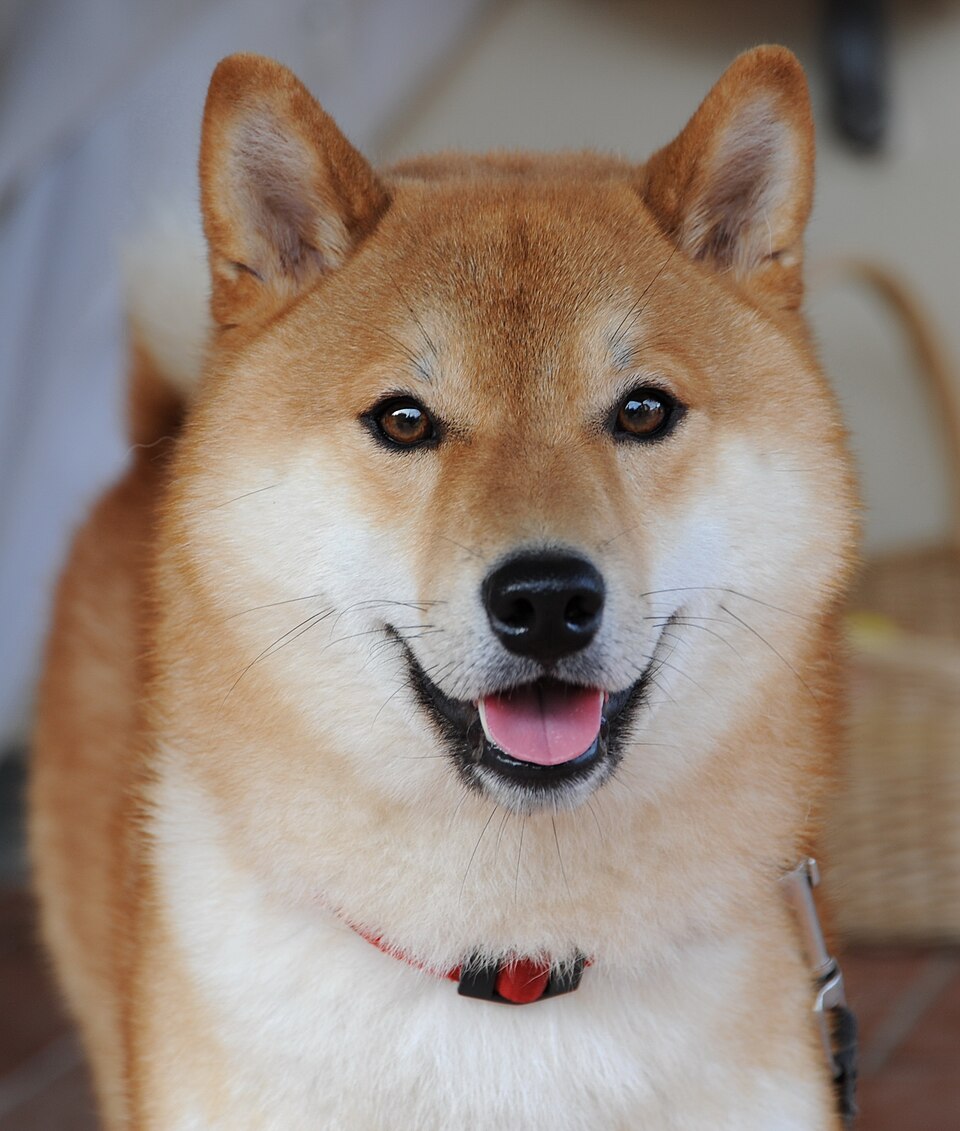
The alert expression invites attention, but a photograph cannot describe what living with a particular Shiba will be like. Breed descriptions mention keen awareness and a history of working as a hunter. Ask about the individual dog's experience with strangers, animals, handling and being left alone, rather than choosing on a familiar facial expression.
Make learning clear and rewarding, with manageable distractions and opportunities to rest. Introduce equipment and touch before they become urgent requirements. If the dog is uncomfortable with a task, change the steps or seek help rather than assuming that struggling is an unavoidable breed trait. Arrange introductions and everyday management around the dog you actually know.
Prepare for loose undercoat and comfortable foot handling
A compact outline can still carry a substantial double coat. Brushing time is an opportunity to notice where undercoat is loosening and which touches the dog finds comfortable. Ask a groomer to demonstrate a suitable tool and pressure, rather than using stronger equipment simply to collect more hair. A single picture cannot show the amount of undercoat present at another time of year.
Discuss drying and any de-shedding service before an appointment, including noise, temperature, breaks and the dog's previous experience. Ask which parts of the drying routine suit professional equipment and what you can comfortably maintain at home. Foot and nail care can be taught in very small steps; professional help is appropriate when a task becomes a struggle.
Read our gentle coat-care guide for help with home maintenance, and our first grooming appointment guide for questions to ask before a visit.
About the photograph and sources
Roberto Vasarri's natural portrait shows Taiki, identified by the creator as a Shiba Inu, with a red-and-white coat. It illustrates the face and outer coat rather than the full body, tail or all recognised colours. The original has no meme captions or generated elements.
Further reading: Royal Kennel Club breed guide; American Kennel Club breed guide; PDSA grooming guidance; Dogs Trust handling guidance.