
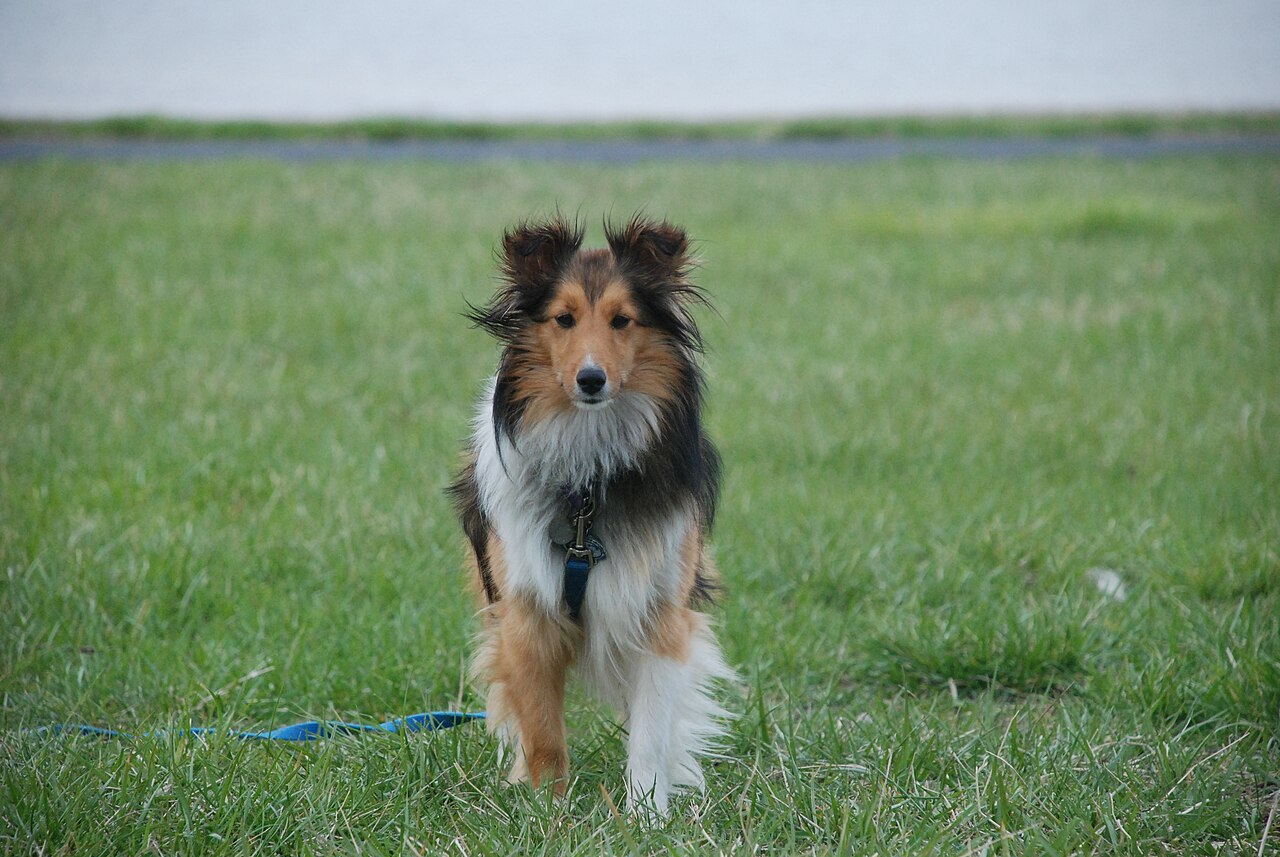
A small sheepdog with an island background
The Shetland Sheepdog, often called the Sheltie, takes its name from the islands off northern Scotland. Its story belongs to a working landscape, where small farm dogs helped with livestock. The Royal Kennel Club connects its ancestry with Scottish sheepdogs, while AKC describes island dogs used around sheep, ponies and poultry. These histories explain a herding background without providing a complete written family tree for every early dog.
The resemblance to a Rough Collie is familiar, but the Sheltie is a separate breed with its own proportions and standard. It became more widely known outside the islands in the early twentieth century, when names and formal recognition were being established. Accounts of a first show appearance and of registration describe different milestones; they should not be treated as one interchangeable date.
The FCI places standard 88 in Group 1, Sheepdogs and Cattledogs, and records Great Britain as origin. The more specific Shetland connection is useful historical context, not evidence that most of today's Shelties live on the islands.
Living with the individual dog
An attentive dog can notice much more than a household expects: a moving toy, a visitor at the gate or the beginning of a familiar routine. Breed descriptions emphasise responsiveness and intelligence. Use that as a reason to offer clear, rewarding learning, rather than assuming a Sheltie will understand what you meant without being taught.
Ask about the individual's confidence with new places, sounds and handling. Give a hesitant dog room to observe and let introductions progress at a manageable pace. Games, sniffing and suitable activity can sit alongside deliberate practice at resting. Success in obedience or agility by some Shelties does not mean every dog needs competition or has the same preferences.
Reach the coat beneath the outline
A quick pass over the long outer hair can leave loose undercoat and tangles unnoticed. Ask a coat-aware groomer to demonstrate how to part the hair, work in small comfortable areas and check the coat without scraping the skin. The useful question is whether the tool reaches the area you intended, not how much hair can be pulled out in one session.
Pay attention to places that rub or move, including behind the ears and around the front legs. Break the task into sessions the dog can accept. Before bathing or choosing a trim, discuss coat condition, the home routine and any difficult tangles. Our gentle coat-care guide explains when professional help is kinder than persisting with a mat.
Read our gentle coat-care guide for help with home maintenance, and our first grooming appointment guide for questions to ask before a visit.
About the photograph and sources
This outdoor photograph shows a sable-and-white Shetland Sheepdog moving towards the camera. It illustrates the face, frill and flowing coat in motion. The source identifies a two-year-old female; this single view does not represent all colours or show every part of the coat.
Further reading: Royal Kennel Club breed guide; American Kennel Club breed guide; PDSA grooming guidance; Dogs Trust handling guidance.