
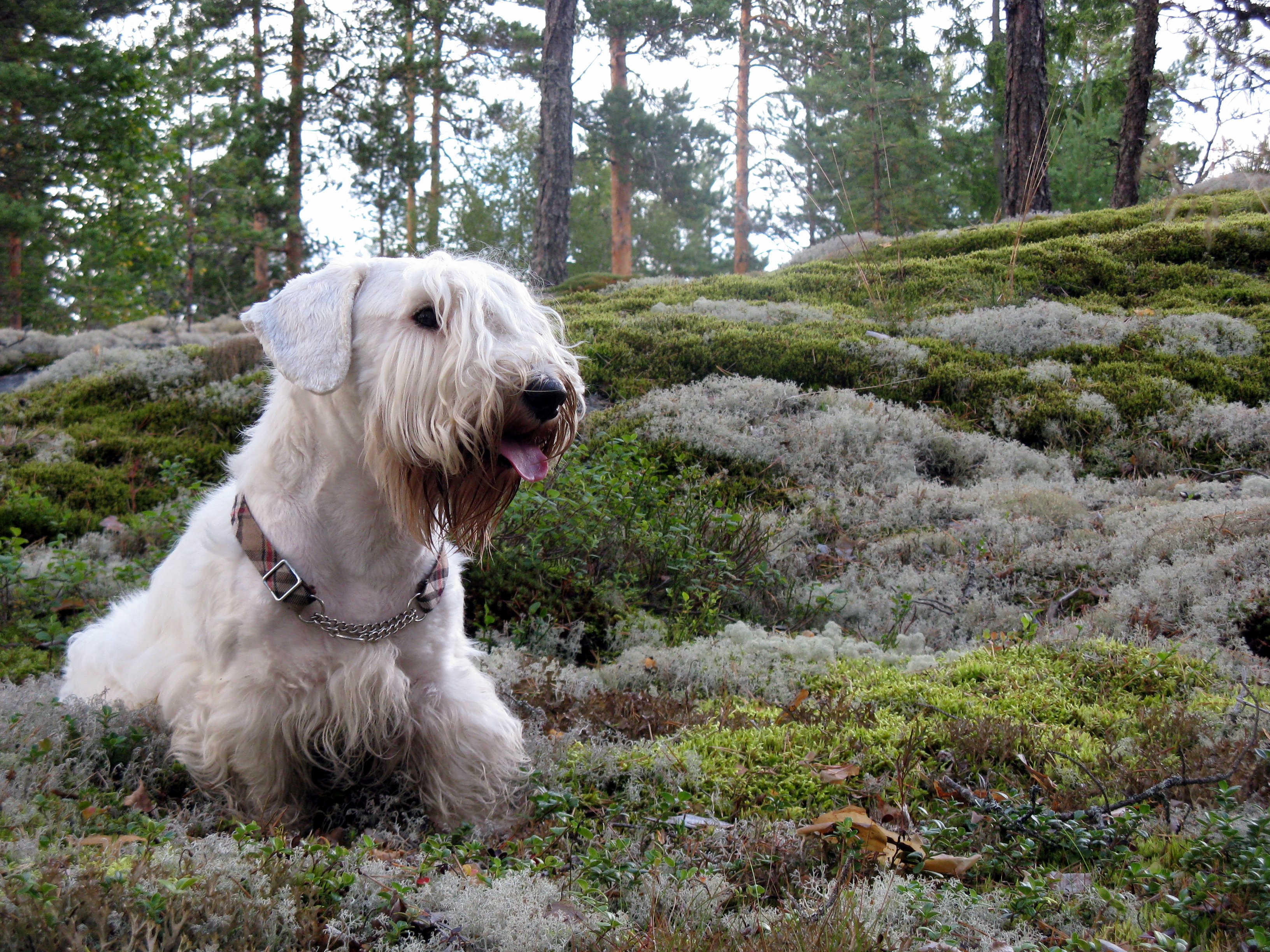
A Welsh terrier from Sealyham
The Sealyham Terrier developed around Sealyham in Pembrokeshire, Wales, associated with Captain John Owen Edwardes and his efforts to establish a sturdy short-legged white working terrier. The Royal Kennel Club describes a historical role alongside Otterhounds and in other earth work, rather than a purely decorative origin.
A breed club formed in 1908 and Kennel Club recognition followed in 1911. The historical methods used in selection should not be romanticised or repeated as modern training advice. The useful legacy is a distinct Welsh terrier identity, separate from other small white rough-coated breeds.
White hair with a wiry texture
A long hard outer jacket covers undercoat, with beard and other furnishings contributing to the outline. White is the base appearance, with some head and ear markings permitted. The natural-looking coat still needs checks near the skin; rough texture is not a reason to tolerate uncomfortable compacted hair.
Friendliness with terrier interests
The current standard combines an alert and fearless working ideal with friendliness. These aims do not establish reliable recall or compatibility with every animal. Reward attention, provide appropriate exploration and allow the individual's experience to guide introductions to visitors and grooming equipment.
Comfortable maintenance of furnishings
Check the beard, feet and places beneath equipment before debris tightens into tangles. Discuss suitable texture care and a manageable finish with an experienced groomer. Avoid pursuing a sharp outline through pain, and seek assessment for persistent irritation or a changed reaction to touch.
Plan comfortable care
Our gentle coat-care guide and first grooming appointment guide help you prepare questions about handling, maintenance and a suitable service. This breed profile is independent of named businesses.
Photograph and sources
The photograph illustrates one Sealyham Terrier. See the linked credit for its creator, source and reusable licence. It does not establish the dog's health, age or temperament.
Read the FCI catalogue entry and FCI breed standard. General care and handling guidance is available from PDSA and Dogs Trust.
Additional primary reading: Royal Kennel Club Sealyham Terrier history.