
The modern Scottish Terrier takes shape
The Scottish Terrier belongs to Scotland's working-terrier traditions, but the modern breed's organisation is more precisely documented. The FCI history records a first standard in 1881 and the Scottish Terrier Club's formation in 1882, with Captain Gordon Murray among the figures associated with establishing the type.
That is clearer history than treating every earlier short-legged Highland terrier as an identical registered Scottie. The breed's familiar silhouette became widely recognisable, but it remains a terrier with independent working interests rather than merely an ornamental emblem or a uniformly solemn personality.
A harsh jacket in more than black
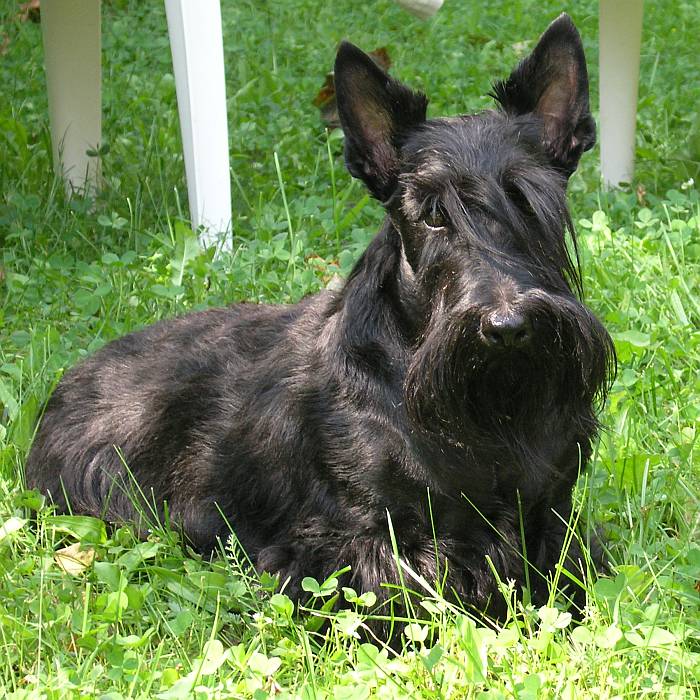
Wiry outer hair and a soft underlayer create the practical double jacket. Beard, eyebrows and lower furnishings shape the familiar outline. Black is well known, but wheaten and brindle are also recognised. Texture and comfort matter more than assuming the photographed colour defines every individual.
Independence with familiar-person attachment
The standard describes dignity, intelligence and reserve alongside loyalty. Rewarding cooperation and suitable exploration help owners respond to that background without relying on force. Small stature does not guarantee low activity, easy recall or tolerance of every unfamiliar dog and grooming procedure.
Care beneath the furnishings
Look through beard and leg hair and beneath equipment before loose debris compacts. Ask an experienced groomer to explain tools suited to the actual texture and a manageable everyday finish. Persistent skin irritation, painful knots or changed handling tolerance need assessment rather than more forceful preparation.
Plan comfortable care
Our gentle coat-care guide and first grooming appointment guide help you prepare questions about handling, maintenance and a suitable service. This breed profile is independent of named businesses.
Photograph and sources
The photograph illustrates one Scottish Terrier. See the linked credit for its creator, source and reusable licence. It does not establish the dog's health, age or temperament.
Read the FCI catalogue entry and FCI breed standard. General care and handling guidance is available from PDSA and Dogs Trust.