
Scotland and the red-deer story
The FCI lists the breed simply as Deerhound, number 164; Scottish Deerhound is the familiar common name. Its historical account associates this large running hound with red-deer pursuit in Scotland.
The same account acknowledges uncertainty about distant origins. Suggestions of ancient traders should therefore be treated as theories, not an established founding story or an unbroken pedigree. The enduring geographical connection is Scotland and the breed's deer-hunting role.
A tall hound in a rough coat
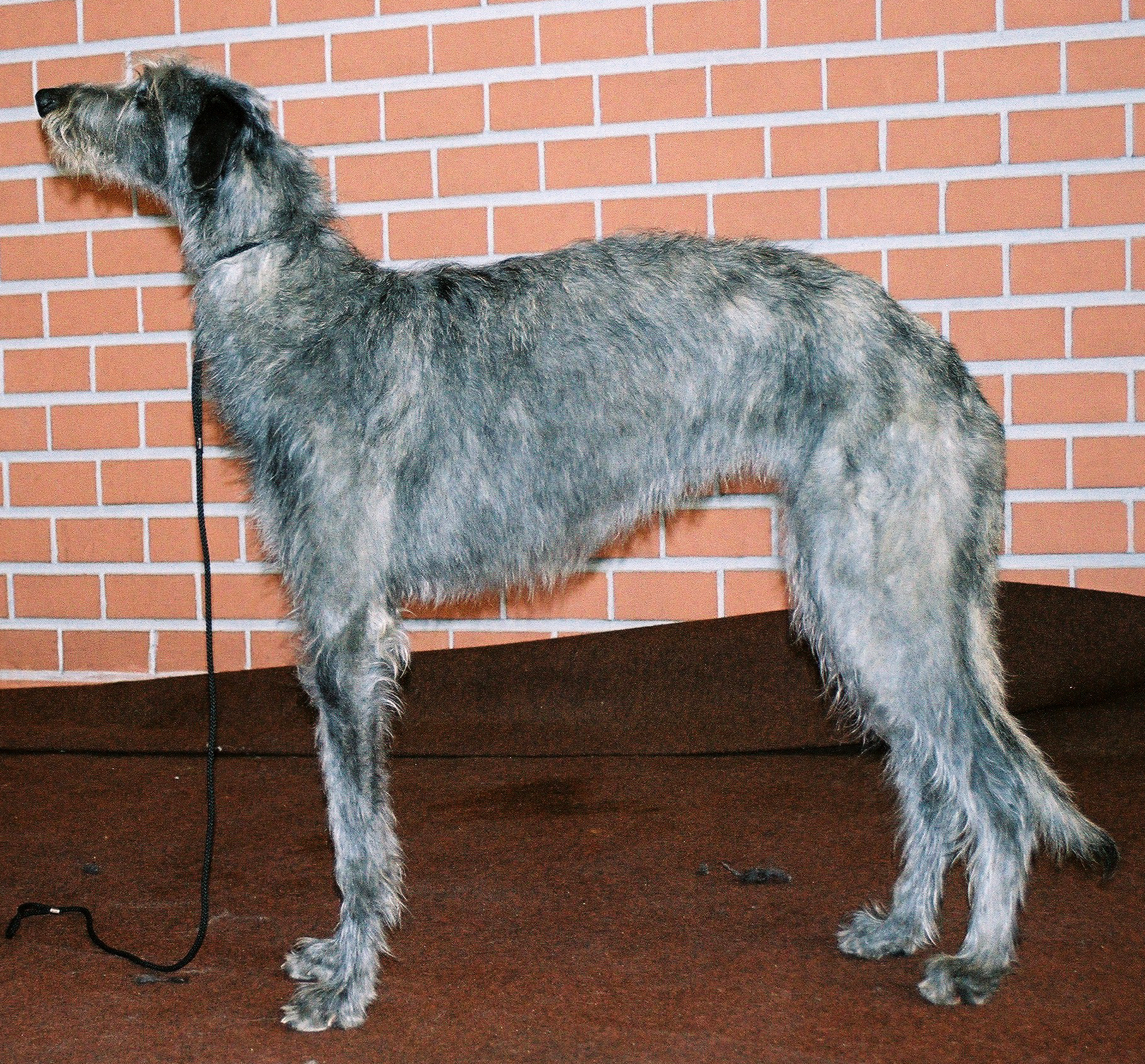
The outline combines the long limbs and flowing lines of a running hound with a ragged, wiry body coat. Softer hair occurs on the head, chest and underside. More coat is not automatically better: the standard rejects an excessively woolly appearance.
Dignity alongside pursuit
Gentleness is a breed ideal, not a guarantee that a moving animal will be ignored. Plan secure opportunities for movement and reward attention to the handler. Consider the individual dog's age and fitness when planning activity, rather than equating tall stature with unlimited stamina.
Care in daily life
Part the rough coat to find trapped plant material and small friction tangles. Work on a non-slip surface with the dog comfortably supported, rather than asking it to balance through a long session. Discuss practical coat maintenance with a groomer and seek veterinary advice if grooming exposes painful skin or a change in movement.
Plan comfortable care
Our gentle coat-care guide and first grooming appointment guide help you prepare questions about handling, maintenance and a suitable service. This breed profile is independent of named businesses.
Photograph and sources
The photograph illustrates one Scottish Deerhound. See the linked credit for its creator, source and reusable licence. It does not establish the dog's health, age or temperament.
Read the FCI catalogue entry and FCI breed standard. General care and handling guidance is available from PDSA and Dogs Trust.