
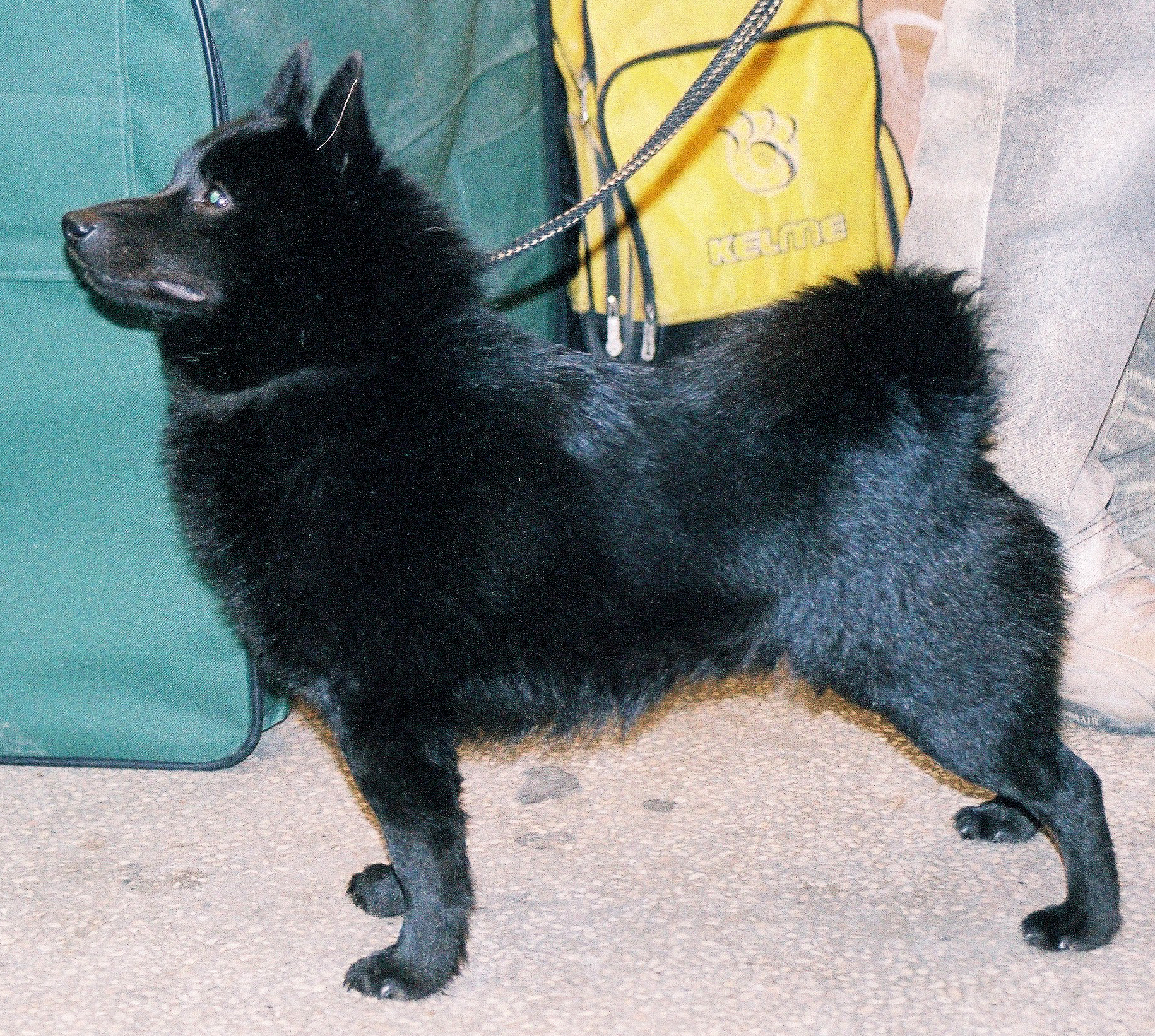
A small Belgian working-household dog
The Schipperke has associations with working households around Brussels, including the St Gery district, where dogs were valued for watchfulness and rodent control. The FCI gives the Flemish meaning little shepherd and discusses a possible older Leuvenaar connection with Belgian shepherd types. That proposed ancestry remains a historical explanation.
The breed appeared at a Spa show in 1882, with its first club and standard established in 1888. Royal interest helped wider attention, but the practical household background remains central. A small black dog with a ruff should not automatically be identified as a Schipperke without further evidence.
A ruff within a compact outline
The outer hair is straight and relatively harsh over a thick softer underlayer. Extra neck hair forms a ruff and mane, while rear culottes add to the silhouette. The coat is not uniformly long, and a prepared outline should not conceal the need to check skin beneath dense hair.
Curiosity and an alert voice
The standard describes a busy, inquisitive watchdog with a readiness to react. Those traits need thoughtful management rather than a promise of quiet companionship or universal child safety. Reward attention, allow time to settle and introduce unfamiliar people and handling equipment at the individual's pace.
Care beneath the black surface
Check the ruff, rear furnishings and places beneath collars or harnesses before loose material compacts. Gentle tools should reach undercoat without painful scraping. Discuss maintenance and handling preferences with a groomer, and investigate persistent irritation instead of assuming a thick natural jacket needs no attention.
Plan comfortable care
Our gentle coat-care guide and first grooming appointment guide help you prepare questions about handling, maintenance and a suitable service. This breed profile is independent of named businesses.
Photograph and sources
The photograph illustrates one Schipperke. See the linked credit for its creator, source and reusable licence. It does not establish the dog's health, age or temperament.
Read the FCI catalogue entry and FCI breed standard. General care and handling guidance is available from PDSA and Dogs Trust.