
Per Schiller's Swedish hounds
The Schiller Hound takes its name from Per Schiller, whose hounds Tamburini and Ralla appeared at Sweden's first dog show in 1886. The FCI history traces their background through estate hounds and later continental and British influences. Some earlier ancestry is described as probable rather than fully established.
Swedish Kennel Club recognition followed in 1907. Schillerstovare is the Swedish name for the modern breed, whose defined black-and-tan pattern differs from several other Swedish hounds. The documented nineteenth-century dogs and recognition date are firmer history than a sweeping ancient-pedigree claim.
A clearly defined black mantle
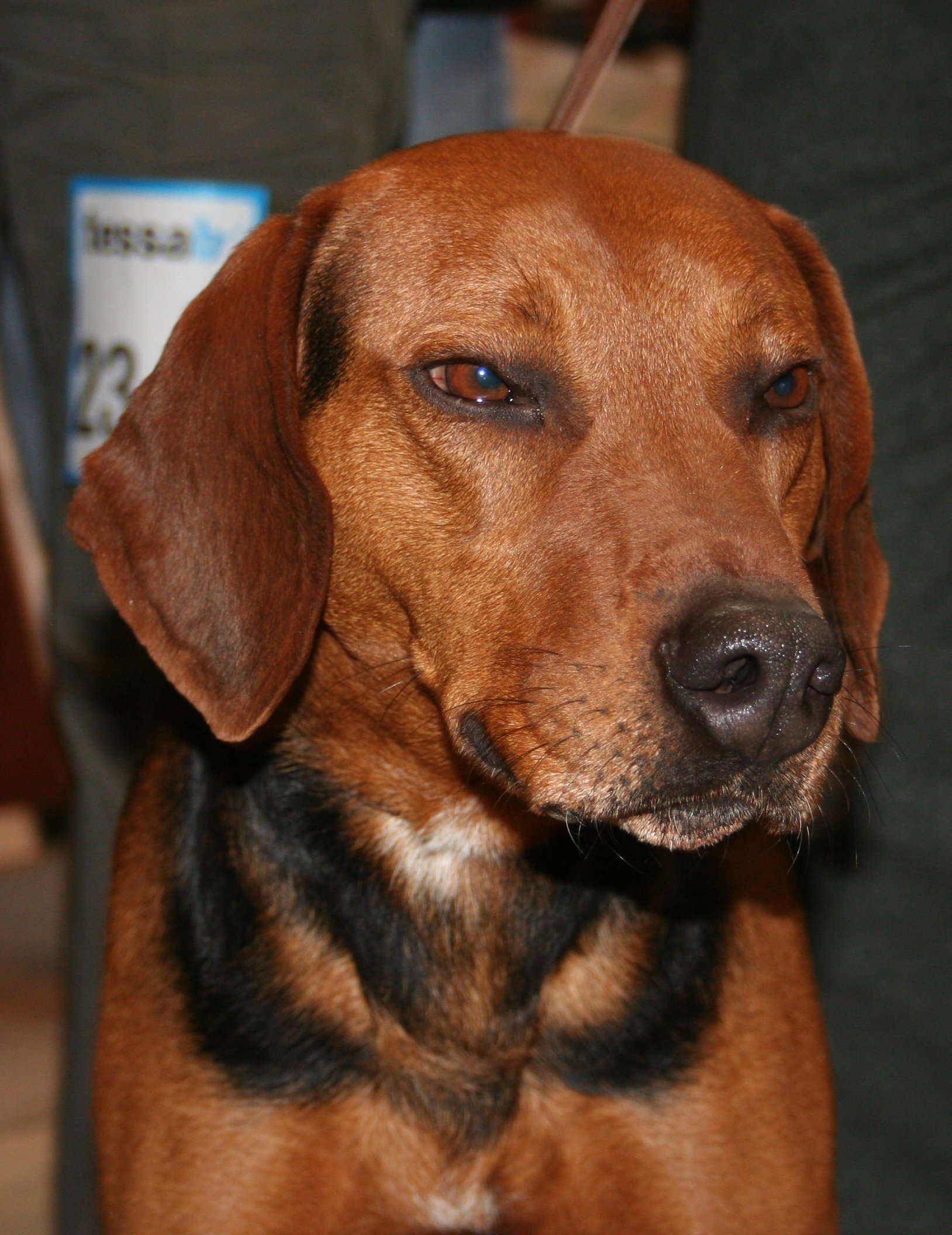
Tan hair covers the head and lower areas, contrasting with a black mantle across the back and upper body. The close jacket is harsher on the body and smoother on the face and ears. The portrait illustrates those colours but cannot demonstrate every feature of the complete outline.
Liveliness with a scent-hound background
The standard's attentive, lively description is useful context rather than a promise of recall or easy household behaviour. Rewarding attention and secure opportunities to investigate can help owners respond to scent interests. Individual experience and confidence still matter around strangers, animals and grooming tools.
Gentle routine care
Check feet and equipment contact points after outdoor activity, using appropriate tools without scraping skin. Introduce ear and body examination gradually and explain sensitivities before an appointment. Persistent irritation or a changed response to touch needs assessment rather than assuming a practical coat is maintenance-free.
Plan comfortable care
Our gentle coat-care guide and first grooming appointment guide help you prepare questions about handling, maintenance and a suitable service. This breed profile is independent of named businesses.
Photograph and sources
The photograph illustrates one Schiller Hound. See the linked credit for its creator, source and reusable licence. It does not establish the dog's health, age or temperament.
Read the FCI catalogue entry and FCI breed standard. General care and handling guidance is available from PDSA and Dogs Trust.