
An island cattle-working story
The FCI records this breed as Cao Fila de Sao Miguel, number 340, originating on the Azorean island of Sao Miguel. It is also described as the cow dog, reflecting a history of work with dairy cattle rather than a generic mastiff role.
The standard links its history with the now-extinct Terceira Dog and records the Saint Miguel Cattle Dog from the beginning of the nineteenth century. That is a documented historical association, not evidence of a modern population count.
Compact strength and brindling
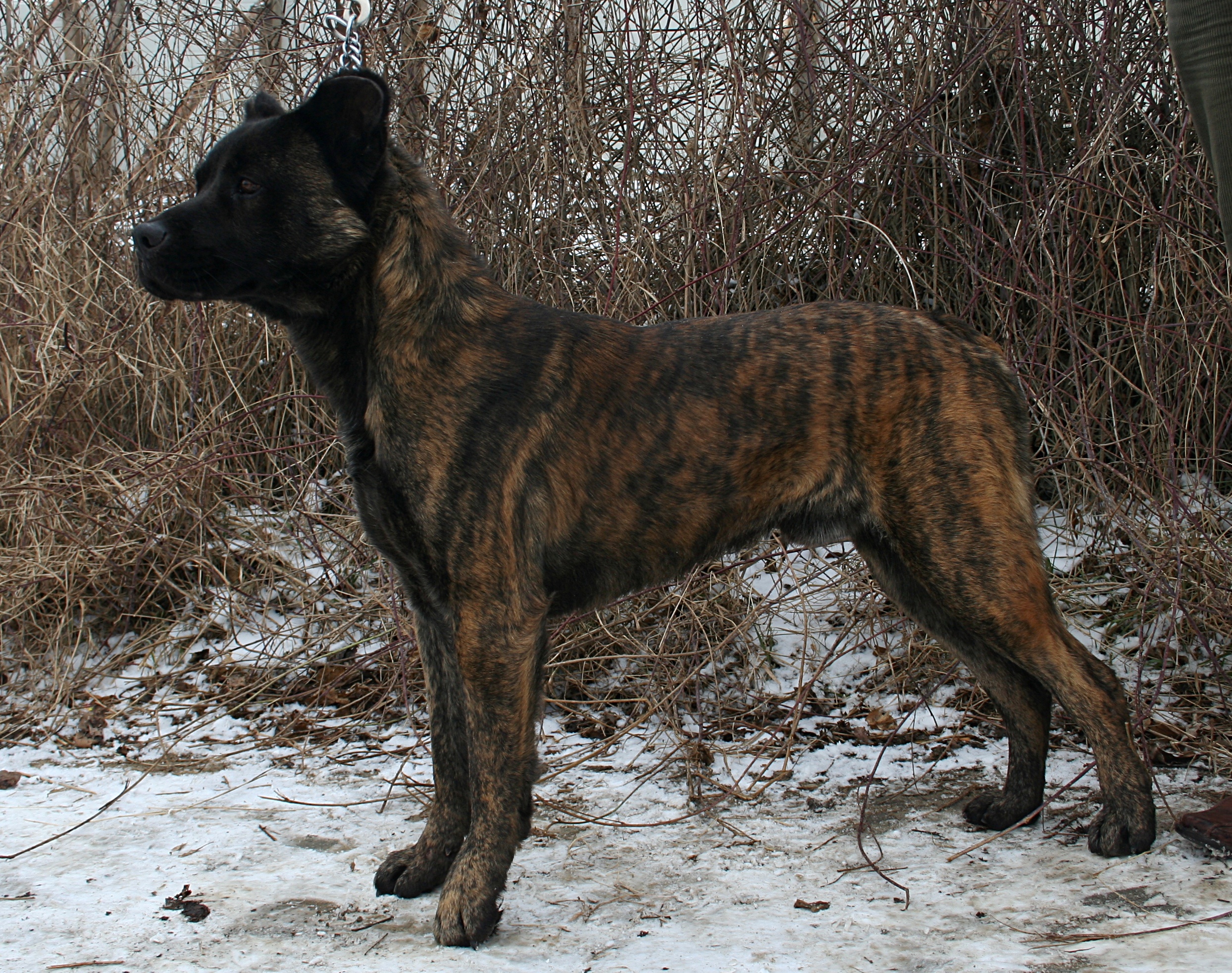
A robust, hardy body and short, dense brindled coat give the breed its practical outline. There can be a little longer hair beneath the tail and behind the thighs. Coat colour and a powerful appearance cannot establish a particular dog's ancestry or temperament.
A worker needs clear boundaries
The standard describes purposeful cattle work and determination towards strangers. In a companion setting, use secure management, reward-based training and thoughtful introductions. Do not encourage a dog to practise its working grip on people, clothing or other pets, even as play.
Care in daily life
Use routine grooming to notice rubbing, scratches and changes under the short coat. Practise standing comfortably and allowing gentle checks of feet and mouth. A groomer who knows the dog's handling history can plan a quieter introduction and suitable breaks; distress or painful skin calls for veterinary assessment.
Plan comfortable care
Our gentle coat-care guide and first grooming appointment guide help you prepare questions about handling, maintenance and a suitable service. This breed profile is independent of named businesses.
Photograph and sources
The photograph illustrates one Saint Miguel Cattle Dog. See the linked credit for its creator, source and reusable licence. It does not establish the dog's health, age or temperament.
Read the FCI catalogue entry and FCI breed standard. General care and handling guidance is available from PDSA and Dogs Trust.