
From royal kennels to a regional name
The Saint-Germain Pointer appears as Braque Saint-Germain in the FCI catalogue. Its history is unusually specific: the standard places its development around 1830 through an English Pointer and a Continental pointer in the royal kennels at Compiegne, followed by Saint-Germain-en-Laye.
The breed was prominent in early French dog shows, including the 1863 event, and a French breed club formed in March 1913. These are documented milestones in the modern breed's story. They are more useful than inventing a much older pedigree or assuming that every present-day dog has the same working experience.
An orange-and-white working outline
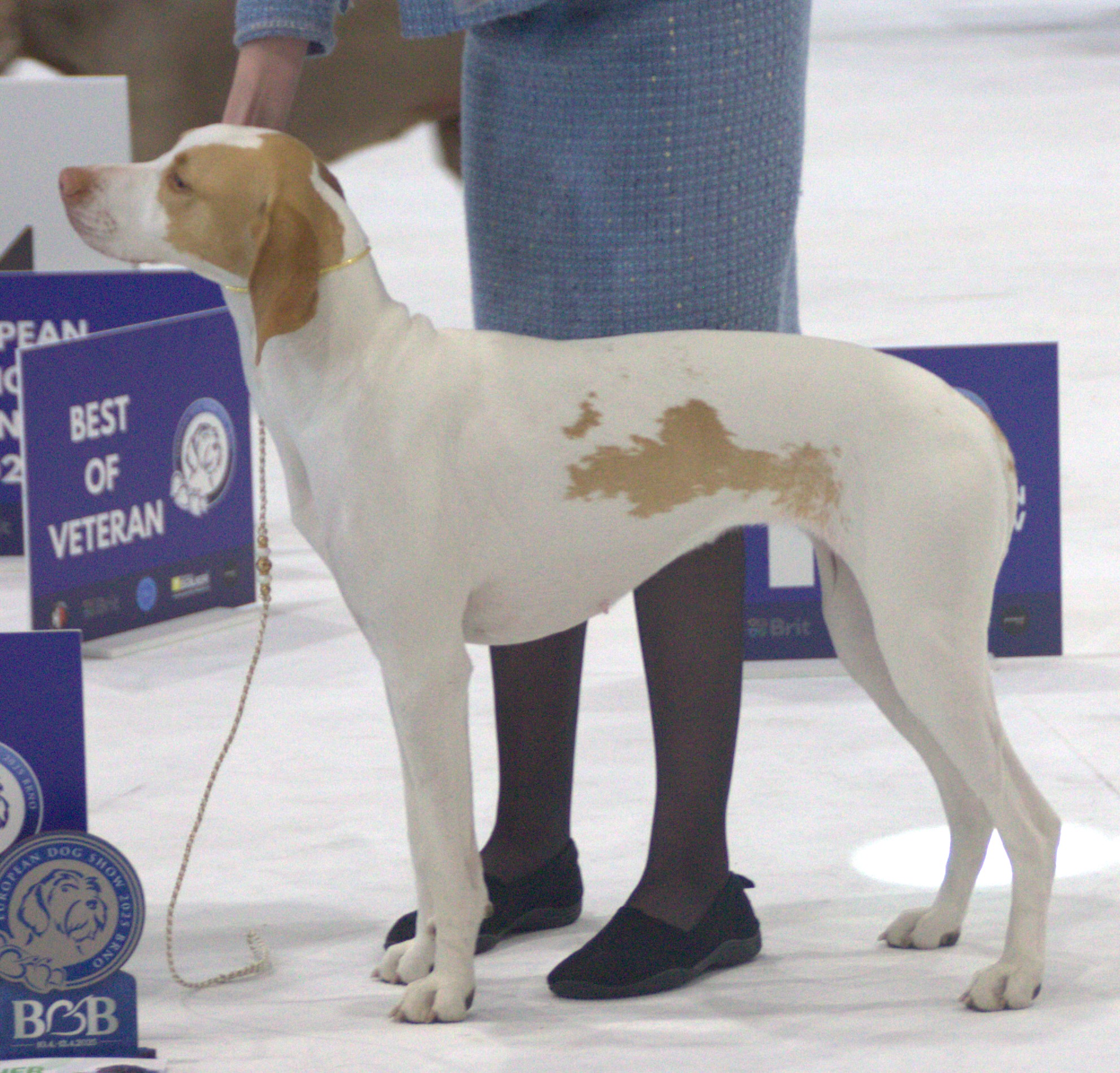
The standard describes a dog of moderate proportions, with enough bone and muscle for sustained work. Its white-and-orange coat and coloured ears are recognisable features. A show photograph illustrates the outline, but it cannot tell a reader whether a particular dog is fit, relaxed or ready for a demanding day.
The breed's hunting background makes questions about wildlife, safe exercise and settling worthwhile. Its favourable description as sociable and affectionate still leaves room for individual variation. Find out what the dog has experienced and how it responds when unfamiliar people approach.
Make care another familiar routine
Short hair can make routine maintenance manageable, but comfort depends on the method and the dog. Ask a groomer about appropriate tools and any useful bathing, and share concerns about feet, head contact or drying. Never interpret reluctance as a reason to handle more forcefully.
The natural photograph is explicitly identified as a Saint-Germain Pointer and shows the white-and-orange jacket in a show setting. France in the origin filter describes the breed's development. This page offers an introduction and practical care questions rather than a claim about worldwide population numbers.
Plan comfortable care
Our gentle coat-care guide and first grooming appointment guide help you prepare questions about handling, maintenance and a suitable service. This breed profile is independent of named businesses.
Photograph and sources
The photograph illustrates one Saint-Germain Pointer. See the linked credit for its creator, source and reusable licence. It does not establish the dog's health, age or temperament.
Read the FCI catalogue entry and FCI breed standard. General care and handling guidance is available from PDSA and Dogs Trust.