
Dogs of the Great Saint Bernard hospice
The Saint Bernard's history is linked with the hospice at the Great Saint Bernard Pass, a refuge for travellers founded in the eleventh century. The FCI records large dogs there from the seventeenth century, with pictorial evidence in 1695 and a written record in 1707. Their work included companionship, guarding and searching for travellers lost in snow or fog.
Nineteenth-century accounts spread the dogs' reputation, with Barry becoming a famous rescue-dog association. The modern breed also developed through organised records: Heinrich Schumacher issued genealogical documents from 1867, and the Swiss stud book and breed club followed in 1884. Romantic imagery should not replace these clearer historical milestones.
Two coats on a substantial frame
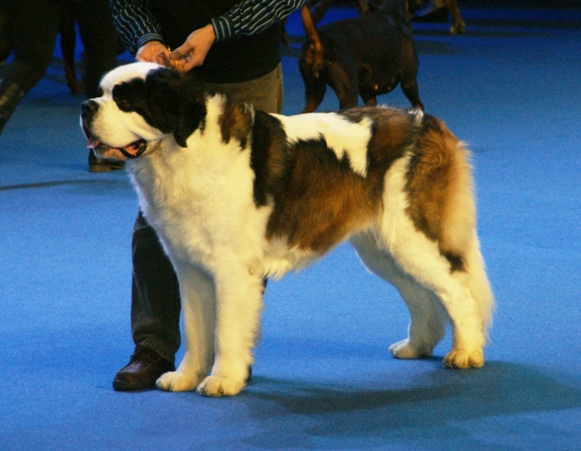
Both short-haired and long-haired forms carry plenty of undercoat. The longer form has more furnishings and a bushier tail, while the shorter jacket remains dense rather than thin. Red-and-white patterns vary. The selected photograph illustrates the long-haired form and does not establish an individual dog's health, mobility or temperament.
Friendliness without assumptions
The standard describes a friendly, watchful dog, with activity ranging from calm to lively. A large head and soft expression do not guarantee safety with children, easy restraint or tolerance of every procedure. Reward voluntary cooperation and consider the dog's actual learning history, confidence and physical comfort.
Planning comfortable care at scale
Check dense hair behind ears, beneath equipment and around the rear before loose material compacts. Ask a groomer about manageable sessions, stable footing and equipment suitable for the individual. Persistent irritation, painful tangles or changed mobility needs assessment; forceful lifting or pulling for a cosmetic finish should not be the maintenance plan.
Plan comfortable care
Our gentle coat-care guide and first grooming appointment guide help you prepare questions about handling, maintenance and a suitable service. This breed profile is independent of named businesses.
Photograph and sources
The photograph illustrates one Saint Bernard. See the linked credit for its creator, source and reusable licence. It does not establish the dog's health, age or temperament.
Read the FCI catalogue entry and FCI breed standard. General care and handling guidance is available from PDSA and Dogs Trust.