
A Russian companion breed's separate path
The Russian Toy developed from toy-terrier populations in Russia, where earlier English Toy Terriers had been kept as companions. Breeding numbers declined sharply during the first half of the twentieth century, followed by renewed efforts in the 1950s. The resulting Russian standard and type took a separate path from the English breed.
A long-haired male born in 1958 became important in developing the ear-fringed variety, with breeder Yevgueniya Zharova contributing to its preservation. The modern FCI identity includes smooth and long-haired forms. It is not simply another name for every small English-style black-and-tan terrier.
The ear fringe is a variety feature
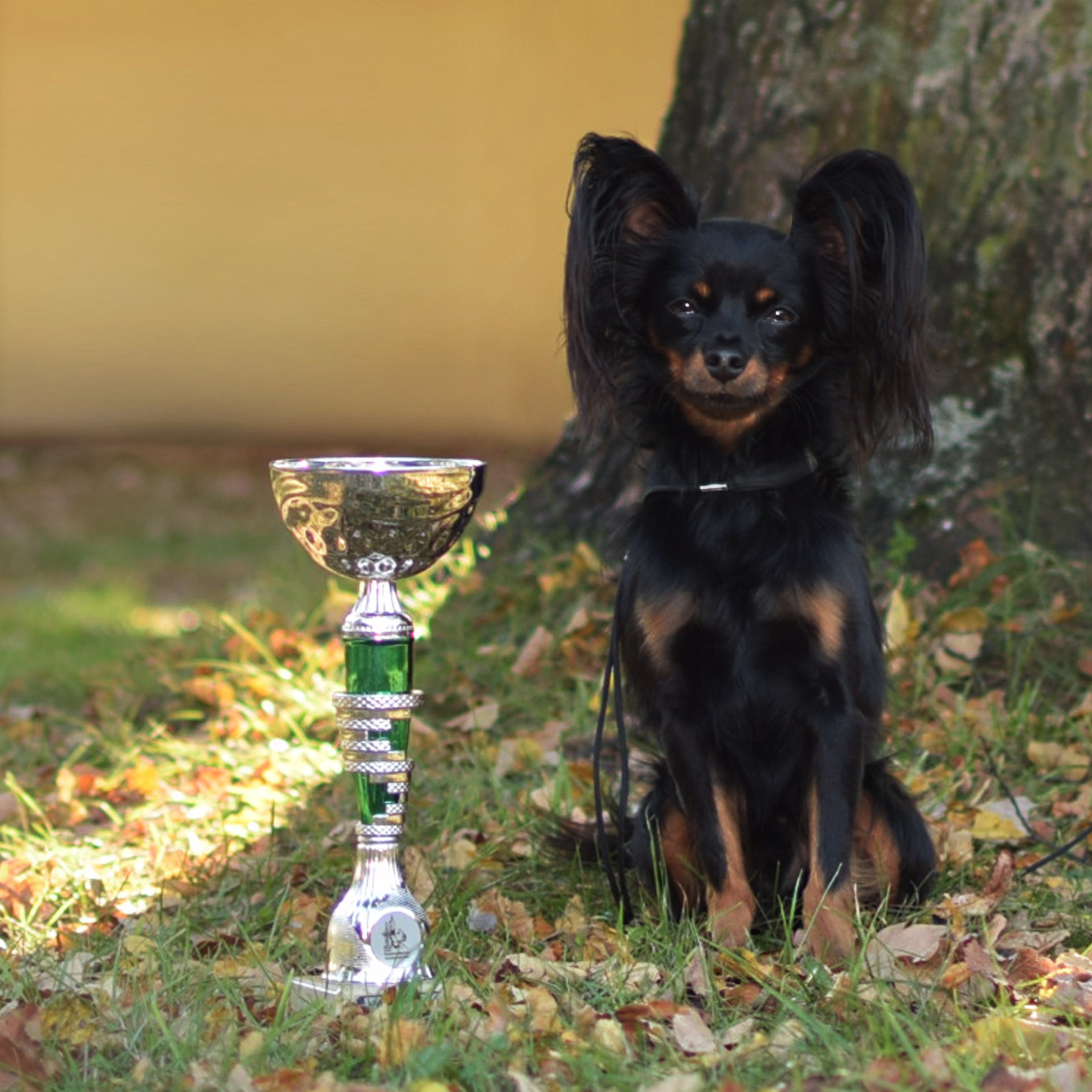
Smooth individuals carry short glossy hair without undercoat. Long-haired dogs have moderate body hair and more obvious furnishings around the ears, legs and tail. The photographed long-haired example shows those fringes, while several recognised colours mean not every Russian Toy has the same pattern.
Curiosity in a small frame
The standard describes cheerfulness, activity and attachment to familiar people. Those aims do not prove automatic confidence with strangers or permission to lift a reluctant dog. Reward cooperation and allow the individual's reactions to guide introductions to handling, equipment and unfamiliar settings.
Gentle care of fine hair
Check long ear fringes where present and places beneath equipment before small knots tighten. Use suitable tools without pulling delicate hair or sensitive skin. Discuss the actual variety with a groomer and seek assessment for persistent irritation or pain rather than relying on small size to make restraint easy.
Plan comfortable care
Our gentle coat-care guide and first grooming appointment guide help you prepare questions about handling, maintenance and a suitable service. This breed profile is independent of named businesses.
Photograph and sources
The photograph illustrates one Russian Toy. See the linked credit for its creator, source and reusable licence. It does not establish the dog's health, age or temperament.
Read the FCI catalogue entry and FCI breed standard. General care and handling guidance is available from PDSA and Dogs Trust.