
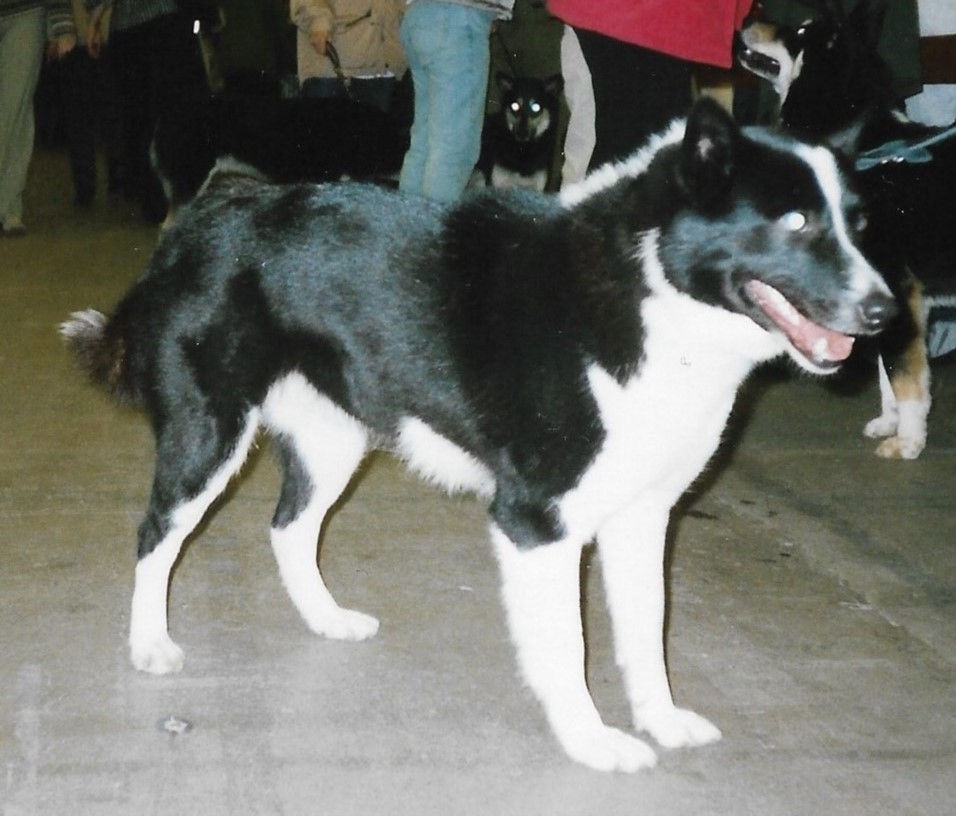
A forest-dog identity from European Russia
The Russian-European Laika developed from hunting dogs of the forest regions of European Russia. The FCI history cites nineteenth-century descriptions of northern erect-eared dogs and later contributions from regional populations including Komi, Arkhangelsk and Karelia. Laika is a wider dog-type term, not a single interchangeable breed name.
In 1947 several regional lines were brought together under the modern name, followed by a breed standard in 1952. Continued selection produced the present type. Those documented organisational milestones are clearer than treating every similar northern dog as a proven direct ancestor.
A harsh double jacket
Straight harsh outer hair covers a substantial soft undercoat, with a collar around the neck and fuller rear trousers. Black-and-white combinations are characteristic, though solid examples are also described. The furnishings differ from a long silky tail flag, and dense hair can hide loose debris near the skin.
A steady worker with scent interests
The standard's even-tempered description sits alongside pronounced interest in finding game. Rewarding attention and secure exploration help owners respond to that background. A dog can be calm beside a familiar person without having dependable recall around wildlife or tolerance of every unfamiliar procedure.
Gentle checks beneath the jacket
Look around the neck, feet and equipment contact areas after activity, working loose underhair out without scraping. Introduce examination gradually and tell a groomer about sensitive places or previous experiences. Persistent irritation or changed handling tolerance needs assessment rather than more vigorous brushing.
Plan comfortable care
Our gentle coat-care guide and first grooming appointment guide help you prepare questions about handling, maintenance and a suitable service. This breed profile is independent of named businesses.
Photograph and sources
The photograph illustrates one Russian-European Laika. See the linked credit for its creator, source and reusable licence. It does not establish the dog's health, age or temperament.
Read the FCI catalogue entry and FCI breed standard. General care and handling guidance is available from PDSA and Dogs Trust.