
A documented post-war development
The Russian Black Terrier was developed in Russia during the late 1940s and early 1950s. The FCI describes organised selection supervised by a military canine school near Moscow, using dogs at the Red Star kennels. Giant Schnauzer, Rottweiler, Airedale Terrier and Newfoundland were among the contributing breeds.
The objective was a large, capable working guardian rather than a small earth-working terrier. FCI recognition followed in 1984. That relatively recent documented programme is more useful than inventing an ancient origin, and the terrier name should not obscure the substantial adult size and guarding background.
Black hair in two layers
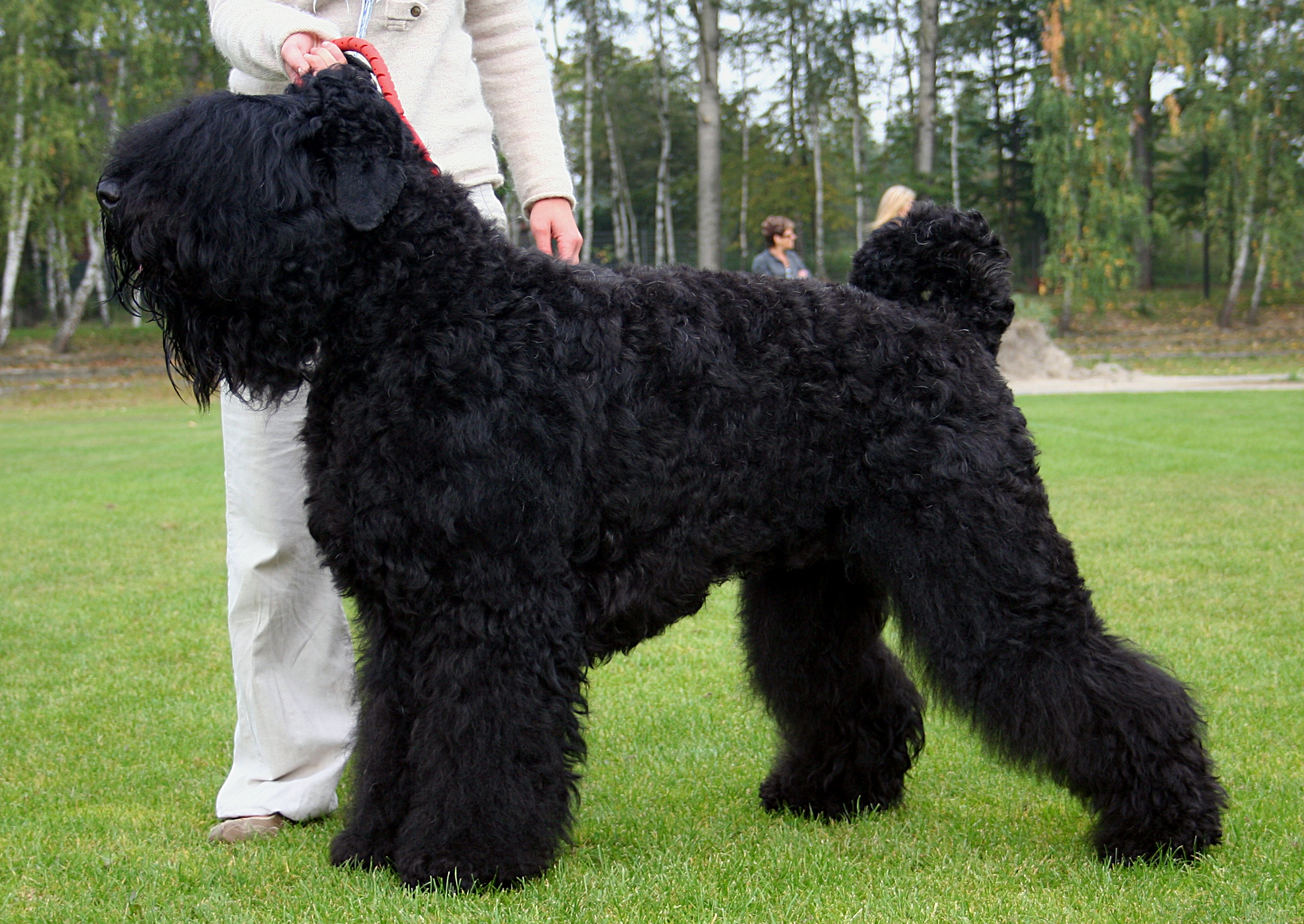
A coarse slightly waved outer jacket covers dense softer undercoat, with conspicuous beard, eyebrows and leg hair. Limited intermingled grey is permitted. The prepared outline should still describe a strong practical dog; a natural-looking black surface can conceal loose underhair or small uncomfortable tangles.
Confidence needs preparation
The standard's controlled and trainable ideal does not mean every individual welcomes unfamiliar people or examination. Reward cooperation early and introduce tools and settings gradually. Plan appropriate learning, rest and boundaries around the actual dog instead of treating a working background as an automatic training achievement.
Care beneath the furnishings
Check the beard, legs and equipment contact points before debris compacts. A groomer can help plan suitable tools, manageable sessions and stable footing for a large dog. Persistent skin irritation or pain should guide professional assessment rather than be hidden under an impressive cosmetic outline.
Plan comfortable care
Our gentle coat-care guide and first grooming appointment guide help you prepare questions about handling, maintenance and a suitable service. This breed profile is independent of named businesses.
Photograph and sources
The photograph illustrates one Russian Black Terrier. See the linked credit for its creator, source and reusable licence. It does not establish the dog's health, age or temperament.
Read the FCI catalogue entry and FCI breed standard. General care and handling guidance is available from PDSA and Dogs Trust.