
A southern African working history
The Rhodesian Ridgeback developed from dogs in southern Africa, including ridged dogs kept by Khoikhoi communities and dogs brought by European settlers. The FCI history describes a hunting role that included tracking and holding large quarry at bay, rather than the popular myth of a dog routinely killing lions alone.
F. R. Barnes drafted a modern standard in Bulawayo in 1922, drawing on the Dalmatian standard as a model. Approval by the South African Kennel Union followed in 1926. These documented milestones provide clearer modern history than sweeping claims about a single ancient ancestor.
The ridge within the wheaten jacket
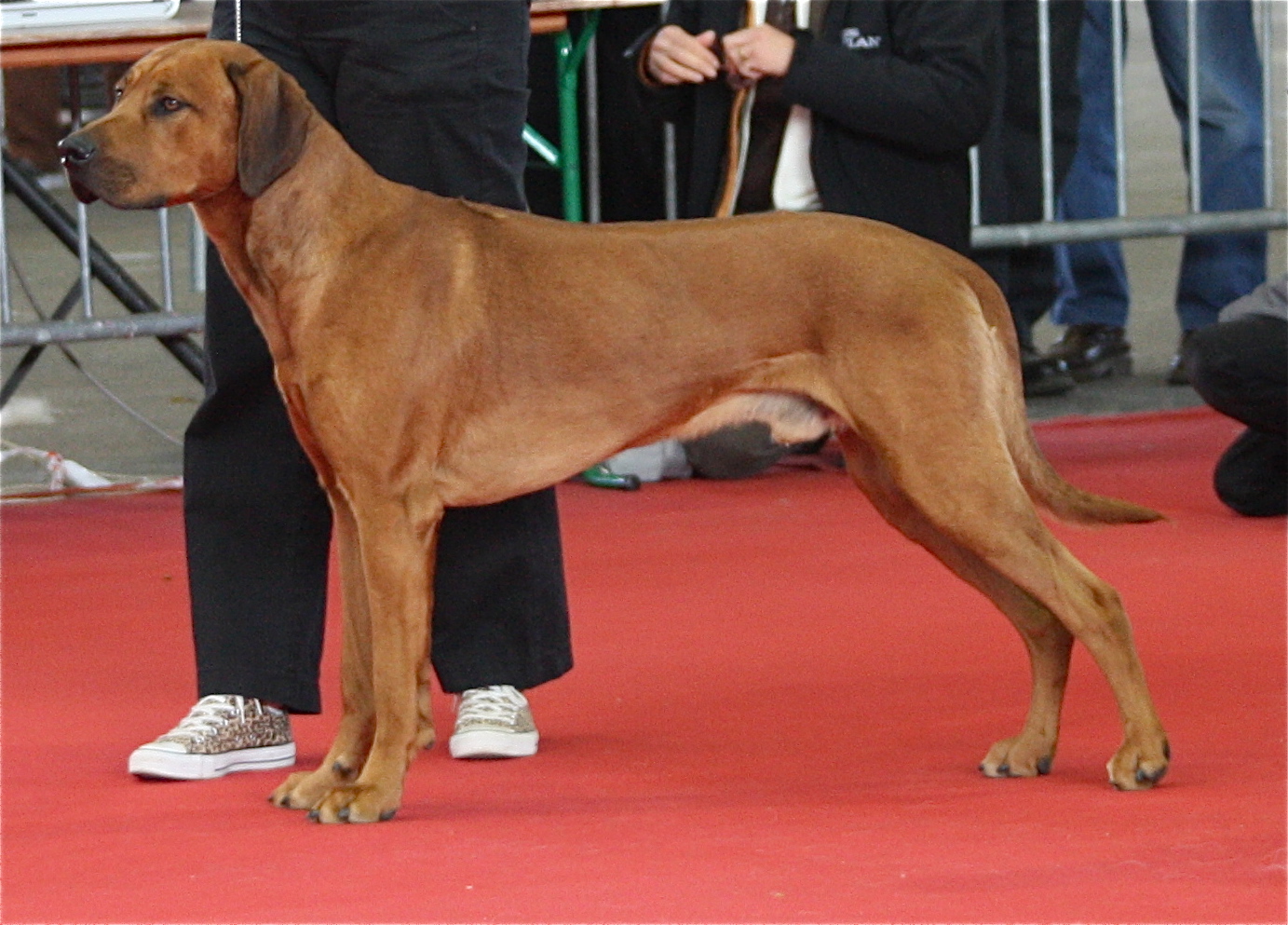
Short glossy hair shows a strong lean outline in wheaten shades. Along the back, a ridge grows against the direction of the surrounding hair. That visible feature helps describe the breed, but does not demonstrate an individual dog's health or replace examination of any skin concern.
Dignity and reserve
The standard combines intelligence and dignity with reserve towards unfamiliar people. Those aims do not make every dog equally confident or tolerant of examination. Reward cooperation, prepare introductions calmly and plan secure exploration with the individual's pursuit interests and previous experiences in mind.
Gentle checks around close hair
Appropriate short-coat tools can be combined with checks of feet and equipment contact points. Avoid scraping sensitive skin or forcing a long stand. Explain any discomfort to a groomer and seek veterinary assessment for skin changes or unusual swellings instead of treating them as cosmetic issues.
Plan comfortable care
Our gentle coat-care guide and first grooming appointment guide help you prepare questions about handling, maintenance and a suitable service. This breed profile is independent of named businesses.
Photograph and sources
The photograph illustrates one Rhodesian Ridgeback. See the linked credit for its creator, source and reusable licence. It does not establish the dog's health, age or temperament.
Read the FCI catalogue entry and FCI breed standard. General care and handling guidance is available from PDSA and Dogs Trust.