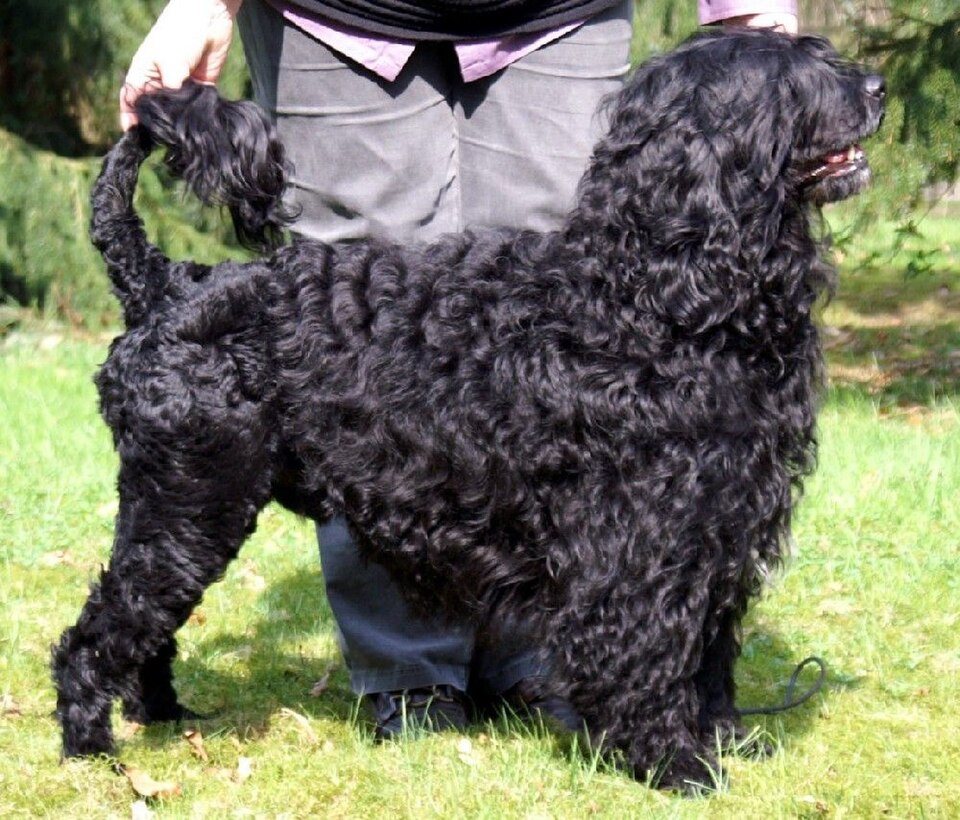
A working partnership beside the sea
Portuguese Water Dogs helped fishing communities by retrieving and carrying messages between boats and shore. The FCI history connects the breed with Portugal's coast and, later, particularly the Algarve as fishing methods changed. It recognises two coat varieties, long and wavy or shorter and curly, both without an undercoat.
Living with the individual dog
The working story suggests a dog accustomed to learning and taking part. Offer appropriate activity, cooperative games and quiet downtime. A historical swimming role does not make every dog a confident swimmer: introduce any water activity carefully and choose conditions suitable for the individual dog.
Character and behaviour
The standard describes an attentive, intelligent and determined working companion. That is a tendency, not an automatic training result; experience and patient teaching make a difference.
Breed descriptions are broad tendencies. An individual dog's behaviour also reflects experience, training and circumstances.
Care in daily life
Comb methodically through the coat and check areas under a harness, behind the ears and between the legs. Agree a practical clipping plan with a groomer. After wet outings, check that the coat is clean and thoroughly dry without uncomfortable heat.
Care depends on the individual dog. If you notice a skin or health problem, speak to a vet.
Sources and review
These sources informed GroomNear's original summary. Place of origin does not describe where most dogs of this breed live today; reliable worldwide breed counts are not available for every breed.