
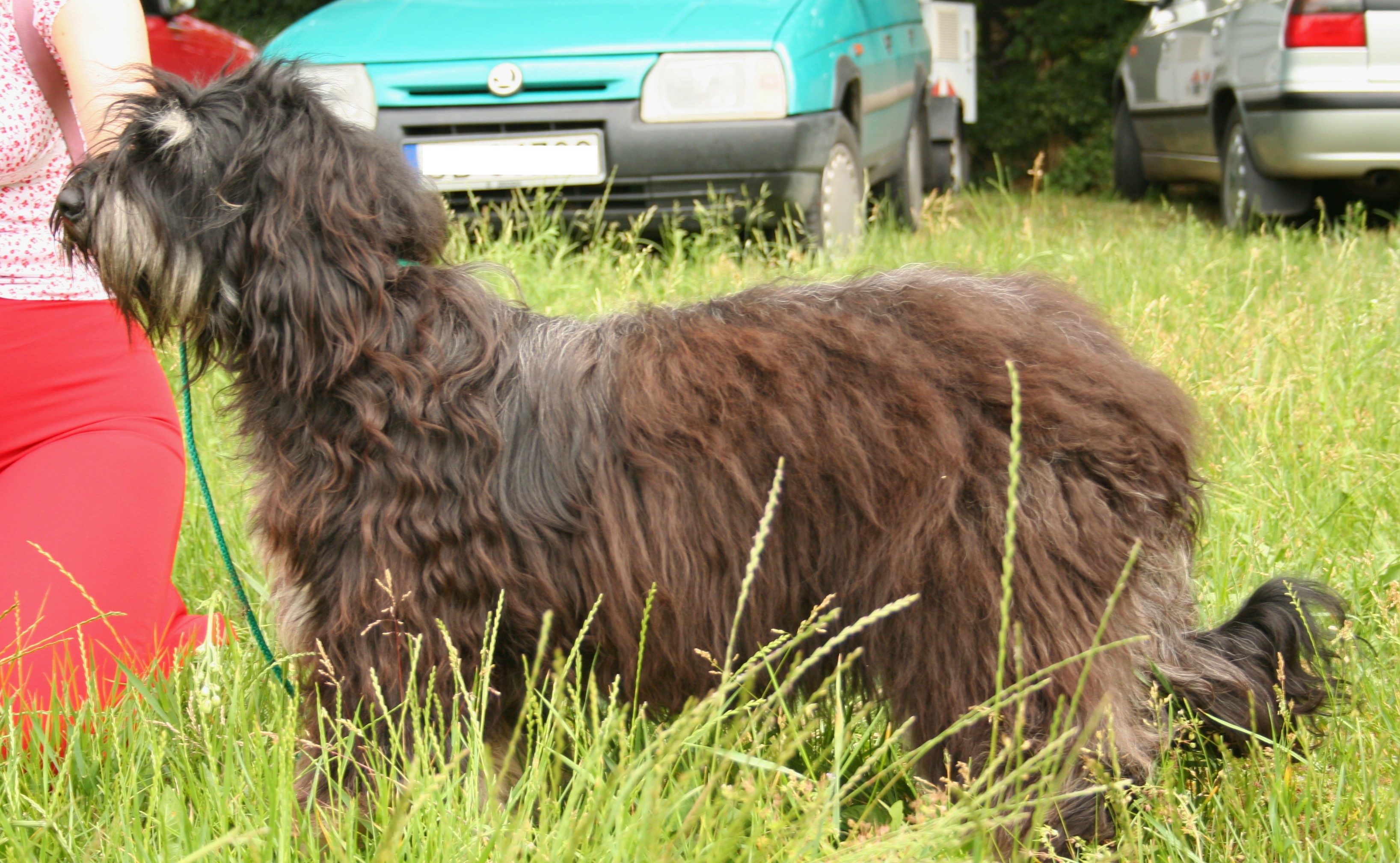
A herder of the Alentejo plains
The Portuguese Sheepdog is recorded by the FCI as Cao da Serra de Aires, number 93. The standard locates its work in the Alentejo region, where it moved and watched sheep, cattle, horses, goats and pigs across open country.
This setting helps explain the breed's agile movement and capacity for purposeful work in changing temperatures. It does not provide a reliable census of where the breed is most common today; its Portuguese working association is the firmer geographical fact.
Why the face is so expressive
Long brows, beard and moustache surround an alert face. The standard describes goat-like hair with no undercoat and notes the local comparison with a monkey's appearance and manner. That nickname is a cultural description, not a separate breed or a reason to exaggerate the facial hair.
Attention needs a useful outlet
A dog selected to keep livestock together may be highly attentive to movement and changes around it. Reward calm behaviour as well as activity, and offer tasks suited to the individual. New people should be introduced without forcing immediate contact.
Care in daily life
Part the coat during checks rather than smoothing only its surface. Pay attention to damp beard hair and the long hair between the toes. Keep the eyes visible and ask a professional to deal with tight tangles or work close to sensitive areas. Comfortable handling matters more than preserving every centimetre of coat.
Plan comfortable care
Our gentle coat-care guide and first grooming appointment guide help you prepare questions about handling, maintenance and a suitable service. This breed profile is independent of named businesses.
Photograph and sources
The photograph illustrates one Portuguese Sheepdog. See the linked credit for its creator, source and reusable licence. It does not establish the dog's health, age or temperament.
Read the FCI catalogue entry and FCI breed standard. General care and handling guidance is available from PDSA and Dogs Trust.