
Portugal's pointing-dog tradition
The Portuguese Pointing Dog is known as Perdigueiro Portugues, with the name linked to perdiz, the Portuguese word for partridge. The FCI history places its development within older Iberian pointing-dog traditions and describes use in royal and noble kennels, including work associated with falconry.
Later the dog became more widely used by hunters beyond those court settings. Organised efforts during the early twentieth century helped define and spread the modern type. Historical references explain a working tradition; they should not be treated as a completely documented pedigree for every present-day dog.
A short jacket without undercoat
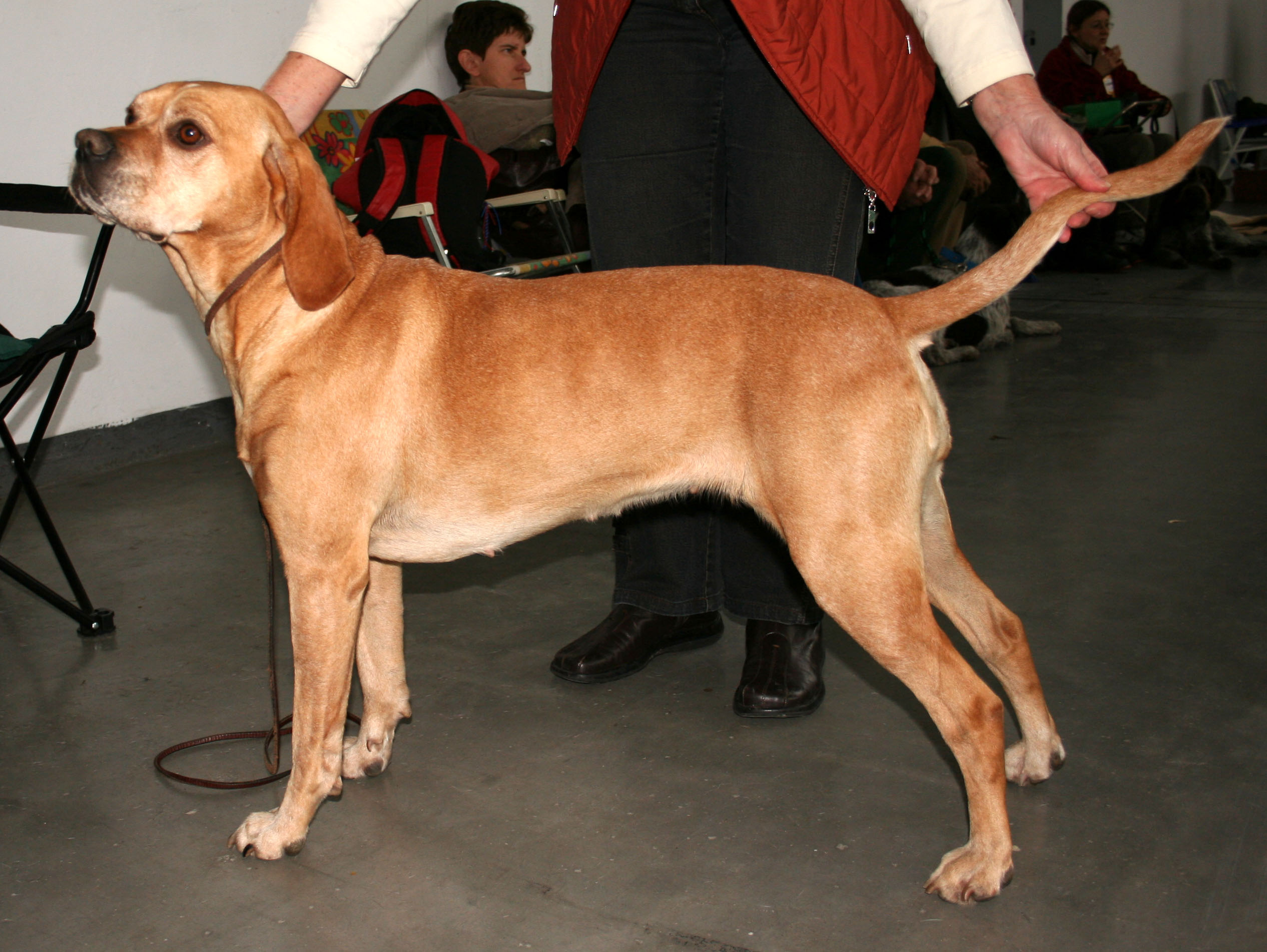
The hair is short, dense and relatively hard, with finer hair on the ears and head and less covering in sensitive lower areas. Yellow shades can be light or dark and may be combined with white. Unlike many retrievers, this pointing dog's standard specifies no undercoat.
A cooperative worker with real interests
The standard combines affection and sociability with persistence in hunting and close contact with the handler. Rewarding attention and suitable nose work can help owners understand those interests. A breed ideal cannot establish dependable recall around wildlife or an easy response to every unfamiliar dog.
Gentle checks for close hair
Use soft, appropriate tools rather than scraping a sparsely covered belly or sensitive skin. Check feet and equipment contact points after outdoor activity and practise examination calmly. Tell a groomer about discomfort or previous experiences so the routine follows the individual's needs instead of assuming short hair means effortless care.
Plan comfortable care
Our gentle coat-care guide and first grooming appointment guide help you prepare questions about handling, maintenance and a suitable service. This breed profile is independent of named businesses.
Photograph and sources
The photograph illustrates one Portuguese Pointing Dog. See the linked credit for its creator, source and reusable licence. It does not establish the dog's health, age or temperament.
Read the FCI catalogue entry and FCI breed standard. General care and handling guidance is available from PDSA and Dogs Trust.