
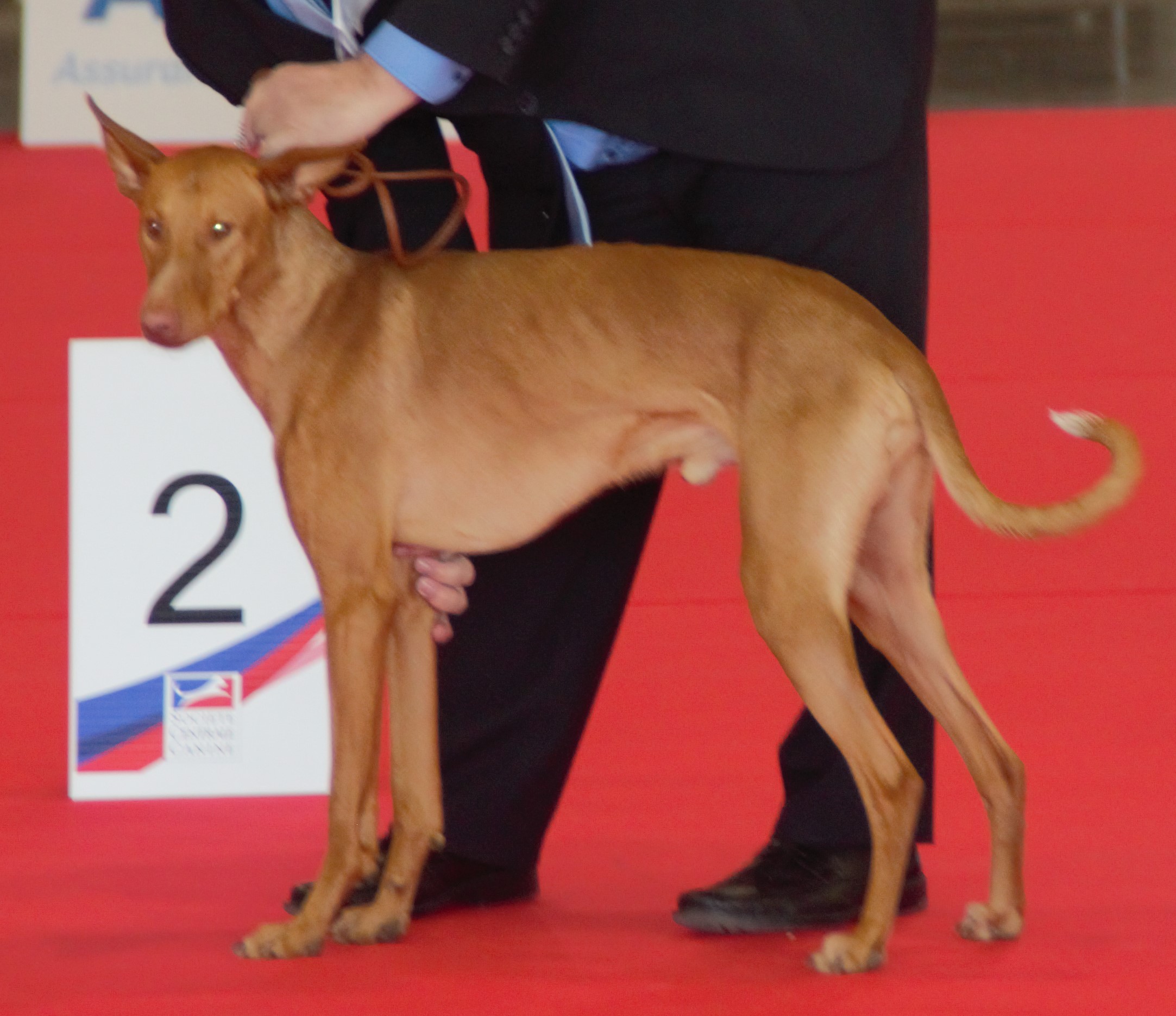
The working dog of the Canary Islands
The Podenco Canario belongs to the Canary Islands, with a traditional role in finding and pursuing rabbits. The FCI describes its regional presence particularly around Gran Canaria and Tenerife. That working connection is the practical starting point for understanding the breed's lean build, erect ears and energetic movement.
Older accounts propose Egyptian origins and arrival with Mediterranean seafarers. Similarities to ancient images are interesting, but do not prove a precise seven-thousand-year pedigree. The modern breed should be understood through its Canary Islands history and official identity rather than an attractive but unverified ancient timeline.
Red and white over a lean frame
The smooth dense jacket is short, with red and white in varied proportions. Red shades can range from orange to darker mahogany. The lack of long furnishings makes the outline easy to see, but a photograph cannot establish physical soundness, temperament or dependable recall.
Energy is not endless endurance
The standard emphasises enthusiastic working behaviour and attachment to the handler. Those aims do not mean every dog can safely sustain prolonged activity or ignore moving animals. Reward attention, arrange secure exploration and balance appropriate learning with rest according to the individual.
Gentle checks after activity
Look at feet and equipment contact points while introducing touch calmly and predictably. Use tools that do not scrape close hair or sensitive areas. Explain outdoor routines and handling preferences to a groomer, and seek assessment for persistent irritation or pain rather than pushing through discomfort.
Plan comfortable care
Our gentle coat-care guide and first grooming appointment guide help you prepare questions about handling, maintenance and a suitable service. This breed profile is independent of named businesses.
Photograph and sources
The photograph illustrates one Podenco Canario. See the linked credit for its creator, source and reusable licence. It does not establish the dog's health, age or temperament.
Read the FCI catalogue entry and FCI breed standard. General care and handling guidance is available from PDSA and Dogs Trust.