
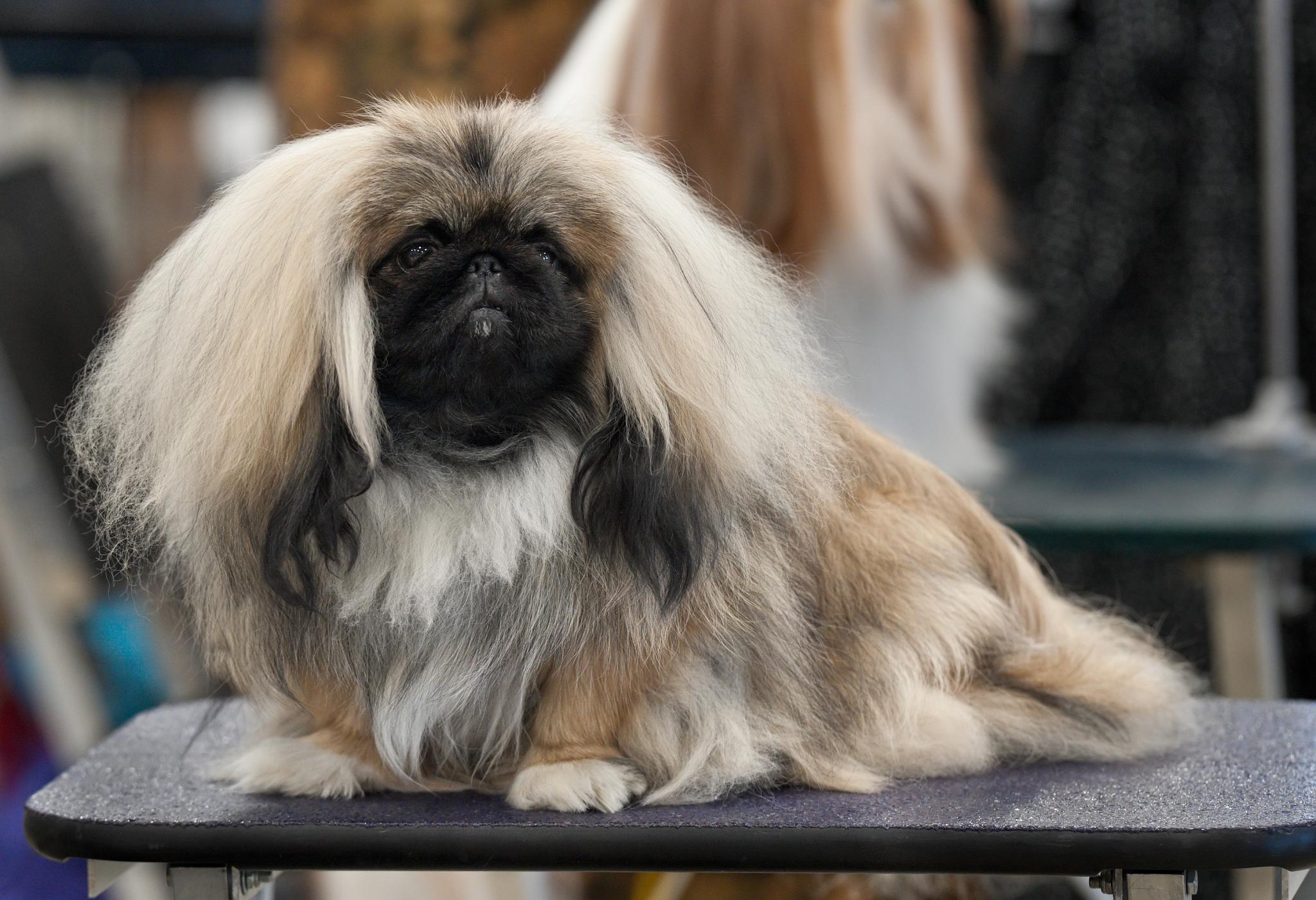
A Chinese court companion
The Pekingese is associated with the imperial court in Peking, now Beijing, in China. The Royal Kennel Club describes older short-faced companion types and the breed's privileged court setting. Cultural records of similar dogs are important context, but they should not be presented as a complete modern pedigree.
Dogs brought to Britain following the violent events in Peking in 1860 contributed to the later British breed story. Kennel Club registration followed in 1910. The FCI lists China as the country of origin and Great Britain as patron, preserving the distinction between origin and later standardised development.
The lion-like outline has limits
A mane, feathered ears and a full tail create the familiar appearance. The current standard calls for moderate hair and explicitly rejects coat that impairs activity or hides the body. It also rejects respiratory distress and unsound movement, so exaggeration should not be mistaken for a desirable breed feature.
Dignity and individual preferences
The standard describes loyalty, fearlessness and some aloofness. Those ideals do not mean every dog welcomes lifting, strangers or prolonged coat work. Introduce touch and tools gradually, reward cooperation and plan sessions around the individual's actual comfort rather than a decorative companion stereotype.
Comfort before a large mane
Check behind ears, beneath equipment and through the undercoat gently. Discuss manageable maintenance with a groomer instead of assuming maximum coat volume is necessary. Changes in breathing, movement or eye comfort need veterinary attention; grooming should never be used to disguise a problem or push through distress.
Plan comfortable care
Our gentle coat-care guide and first grooming appointment guide help you prepare questions about handling, maintenance and a suitable service. This breed profile is independent of named businesses.
Photograph and sources
The photograph illustrates one Pekingese. See the linked credit for its creator, source and reusable licence. It does not establish the dog's health, age or temperament.
Read the FCI catalogue entry and FCI breed standard. General care and handling guidance is available from PDSA and Dogs Trust.
Additional primary reading: Royal Kennel Club Pekingese history.