
What tolling means
The Nova Scotia Duck Tolling Retriever was developed in Canada's Nova Scotia during the early nineteenth century. Tolling means luring: a dog's playful movement near the shore could attract waterfowl closer. Retrieving then formed another part of the job, so the breed name describes two connected working tasks.
That history explains why playfulness and interest in retrieving appear prominently in the FCI description. It does not establish that every companion is a trained gundog or naturally safe in all water. Working heritage provides context for learning opportunities, rather than a substitute for training and supervision.
A red jacket with soft furnishings
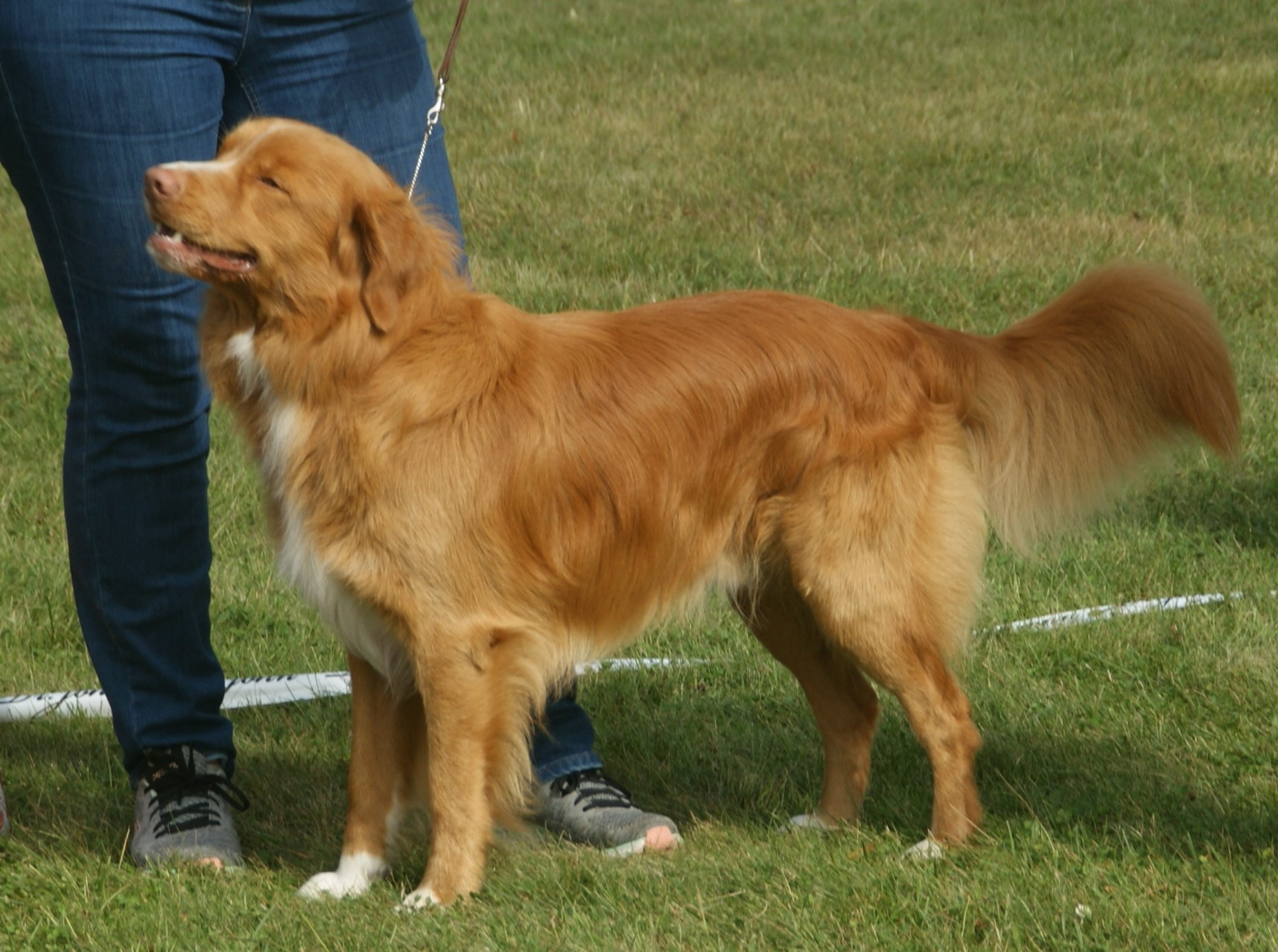
Red and orange shades, often with white markings, give the Toller a familiar appearance. The outer hair covers a softer dense underlayer, with feathering around ears, throat, legs and tail. A slight wave across the back is possible, but the coat is not a mass of tight curls.
An interested partner needs balance
The standard emphasises endurance, intelligence and enthusiasm for retrieving. Appropriate games and training can use those interests, while predictable rest matters too. Judge the individual's response to frustration, visitors and grooming equipment rather than assuming a cheerful working description guarantees effortless household behaviour.
Keeping feathering comfortable
Check behind ears and along rear and tail furnishings before small tangles become tight. Gentle maintenance should reach the undercoat without scraping skin. Explain outdoor and water routines to a groomer, and investigate irritation or changed handling tolerance instead of pursuing a finish through discomfort.
Plan comfortable care
Our gentle coat-care guide and first grooming appointment guide help you prepare questions about handling, maintenance and a suitable service. This breed profile is independent of named businesses.
Photograph and sources
The photograph illustrates one Nova Scotia Duck Tolling Retriever. See the linked credit for its creator, source and reusable licence. It does not establish the dog's health, age or temperament.
Read the FCI catalogue entry and FCI breed standard. General care and handling guidance is available from PDSA and Dogs Trust.