
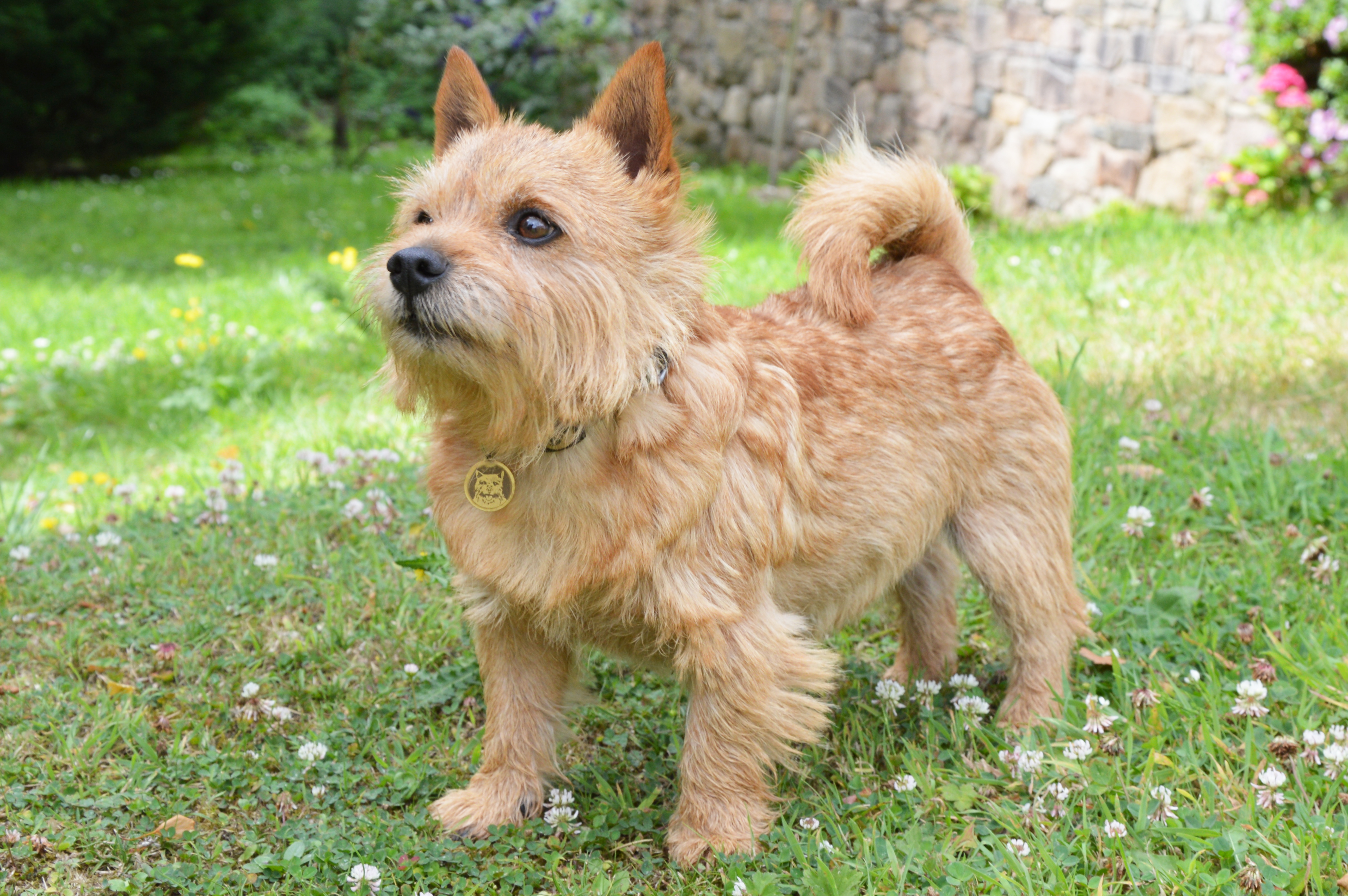
The prick-eared terrier from East Anglia
The Norwich Terrier shares a rural East Anglian background with the Norfolk Terrier. Earlier working dogs were selected for farm and terrier tasks before modern breed distinctions became fixed. Their names now refer to separate breeds rather than interchangeable labels for every small red rough-coated dog.
Kennel Club registration began in 1932 with folded- and prick-eared varieties together. In 1964 the folded-ear variety became the Norfolk Terrier, leaving the erect-ear Norwich with its own identity. The ear distinction is a useful visual comparison, although it cannot by itself establish a dog's ancestry.
A ruff and harsh double jacket
Wiry outer hair and a thick undercoat create a practical coat, with a fuller neck ruff and modest facial furnishings. Several colours are recognised. A prepared show outline is only one presentation; everyday maintenance should follow the actual hair texture and the dog's comfort.
Small size, active interests
The standard's affectionate and fearless description sits alongside considerable activity. Plan appropriate exploration, learning and rest rather than assuming a compact body means an undemanding companion. Responses to moving animals and unfamiliar dogs need individual observation, with secure arrangements where chasing is a concern.
Care that respects the texture
Check coarse furnishings and equipment contact points before loose debris compacts. An experienced groomer can explain suitable tools and techniques without making a cosmetic shape the overriding aim. Build foot and face handling gradually, and seek assessment when itch, soreness or painful knots affect cooperation.
Plan comfortable care
Our gentle coat-care guide and first grooming appointment guide help you prepare questions about handling, maintenance and a suitable service. This breed profile is independent of named businesses.
Photograph and sources
The photograph illustrates one Norwich Terrier. See the linked credit for its creator, source and reusable licence. It does not establish the dog's health, age or temperament.
Read the FCI catalogue entry and FCI breed standard. General care and handling guidance is available from PDSA and Dogs Trust.