
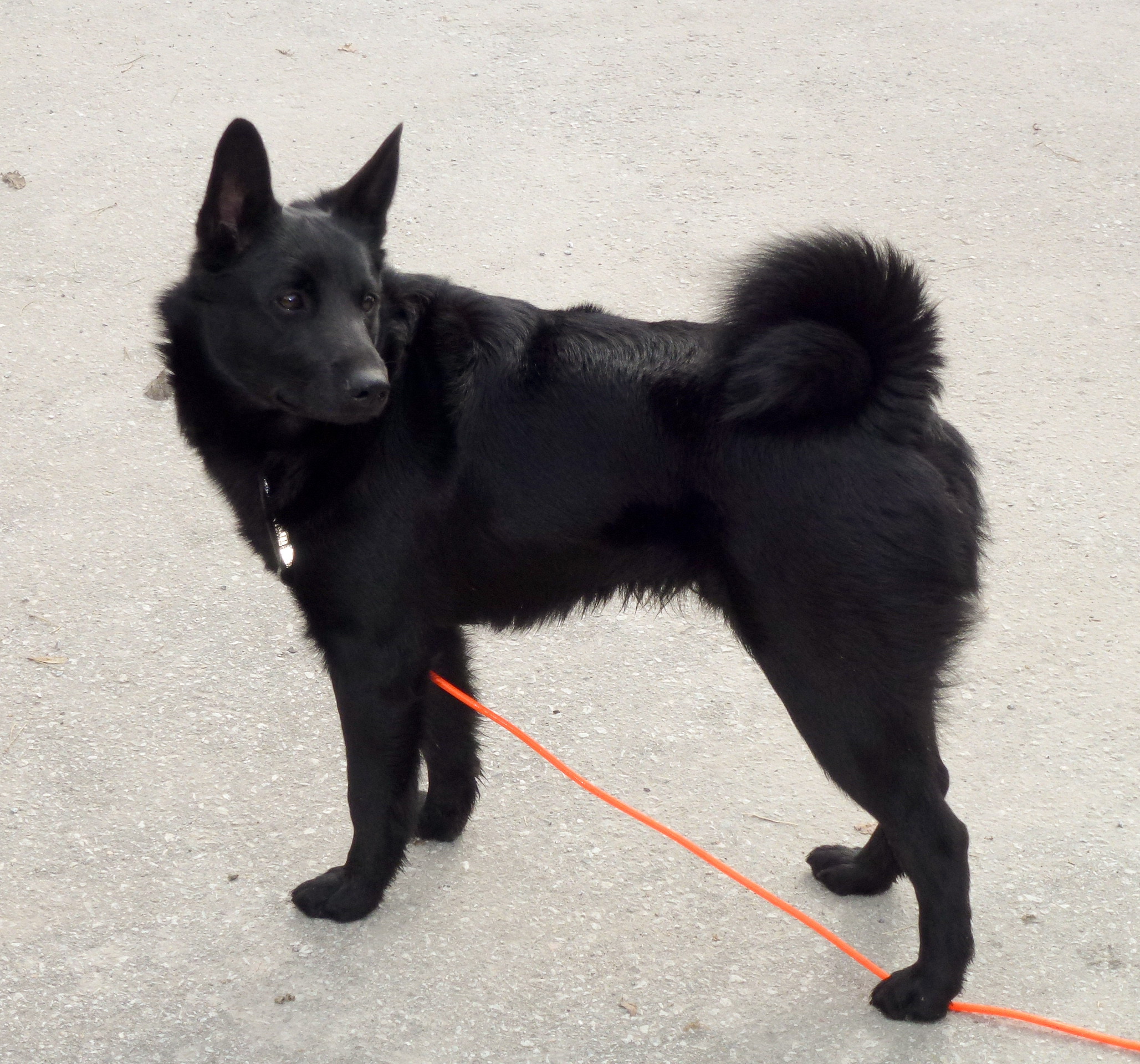
A distinct Norwegian hunting dog
The Black Norwegian Elkhound developed from regional spitz dogs near the Norwegian-Swedish border and existed as a separate breed by the middle of the nineteenth century, according to the Norwegian Kennel Club. Its history includes hunting in eastern Norwegian districts, rather than simply being a colour variety of the Grey Elkhound.
Numbers became very small around the middle of the twentieth century before dedicated breeding efforts rebuilt the population. NKK particularly associates it with bandhund work: a dog searching in close cooperation with a handler while on a lead. Historical purpose is not permission to ignore current wildlife or access rules.
Black hair over a soft underlayer
The outer coat is dense and rough but lies fairly close, with fuller chest, neck and tail hair. Soft black undercoat supports it. The athletic square outline differs from a long-haired decorative spitz, although the familiar erect ears and curled tail can make northern breeds look superficially similar.
Cooperation in a working setting
NKK emphasises quietness and attention during lead-based hunting, alongside the standard's courage and energy. Those are useful aims, not guarantees about every household or encounter. Reward calm attention, offer appropriate learning and assess the dog's actual response to visitors, animals and grooming equipment.
Care that reaches the undercoat
Check beneath collars and harnesses and around dense rear hair before loose material compacts. Work gently and build comfortable foot examination gradually. Explain outdoor routines to a groomer and seek assessment for persistent skin changes or pain rather than treating a robust working history as proof of trouble-free health.
Plan comfortable care
Our gentle coat-care guide and first grooming appointment guide help you prepare questions about handling, maintenance and a suitable service. This breed profile is independent of named businesses.
Photograph and sources
The photograph illustrates one Norwegian Elkhound Black. See the linked credit for its creator, source and reusable licence. It does not establish the dog's health, age or temperament.
Read the FCI catalogue entry and FCI breed standard. General care and handling guidance is available from PDSA and Dogs Trust.
Additional primary reading: Norwegian Kennel Club Black Elkhound history.