
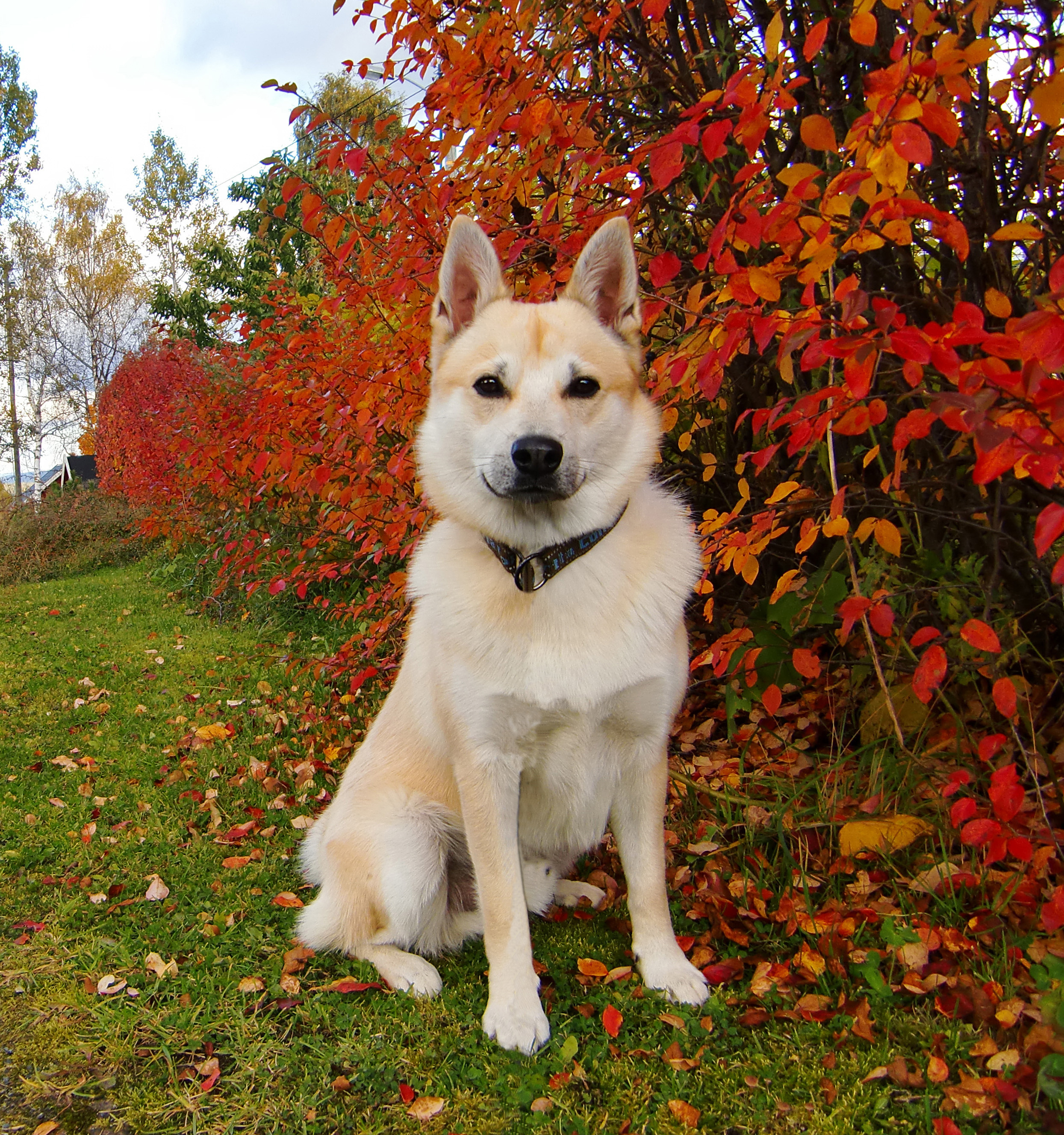
The Norwegian farmstead dog
Buhund means farmstead dog, a name that captures the breed's versatile rural background. The FCI describes herding and guarding work and places similar spitz types within Norwegian cultural history. Archaeological finds and saga stories are interesting context, but do not establish a complete modern pedigree from Viking times.
The first standard was approved by the Norwegian Kennel Club in 1926. That documented milestone helps separate organised breed development from older descriptions of regional dogs. The modern Norwegian Buhund is a distinct FCI breed, rather than a general name for every Nordic dog with a curled tail.
Wheaten or black in two layers
A hard relatively smooth outer jacket covers soft dense undercoat. Hair becomes fuller around the neck, chest, rear and tail, while the face remains more clearly defined. Wheaten shades and black are recognised, so the pictured pale dog represents one possible appearance rather than the entire breed.
Energy within a cooperative routine
The breed ideal combines alertness, courage and energy. A working background makes thoughtful learning opportunities useful, but does not mean a dog needs constant excitement. Reward cooperation, allow time to settle and learn the individual's responses to movement, visitors and grooming equipment.
Care beneath the familiar spitz outline
Check dense neck and rear hair and places beneath collars or harnesses before loose material compacts. Gentle short sessions help build tolerance of brushes and foot examination. Explain the dog's coat and handling history to a groomer so maintenance remains manageable and comfortable.
Plan comfortable care
Our gentle coat-care guide and first grooming appointment guide help you prepare questions about handling, maintenance and a suitable service. This breed profile is independent of named businesses.
Photograph and sources
The photograph illustrates one Norwegian Buhund. See the linked credit for its creator, source and reusable licence. It does not establish the dog's health, age or temperament.
Read the FCI catalogue entry and FCI breed standard. General care and handling guidance is available from PDSA and Dogs Trust.