
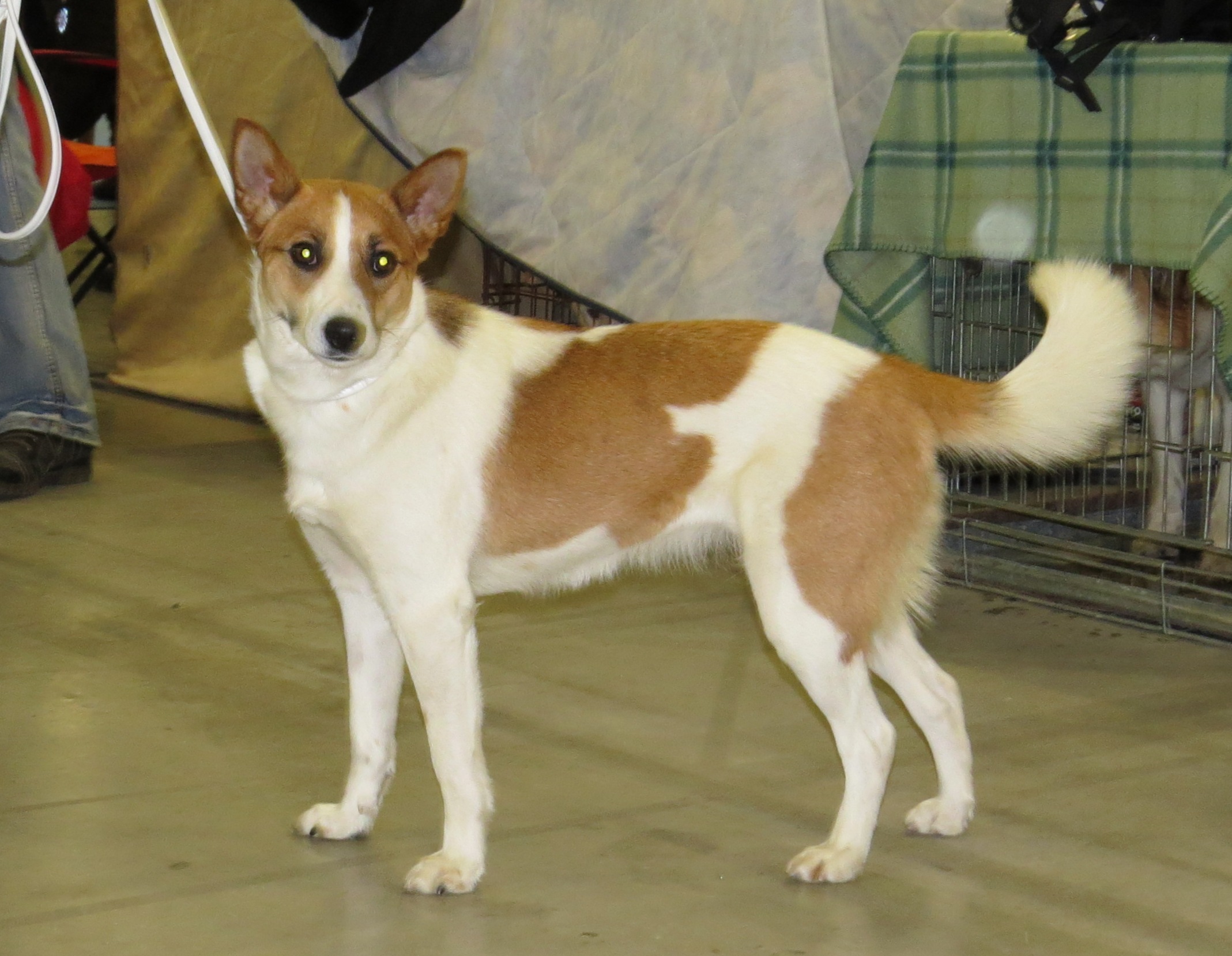
A northern working type brought back to the register
The Norrbottenspets takes its name from North Bothnia in northern Sweden. The FCI history associates it with small northern hunting spitz dogs and a livelihood in which hunting supported food and fur production. Broad prehistoric explanations should be understood as accounts of a type rather than a complete pedigree.
Interest declined as the fur economy changed after the Second World War. With no registrations for years, the Swedish Kennel Club considered the breed lost, before surviving dogs were located around northern smallholdings. Organised preservation led to renewed registration and a new standard in 1967.
A small outline in a double jacket
Short hard guard hair covers a fine dense undercoat, with extra hair around the neck and tail. White with defined coloured patches is characteristic. It is a practical hunting-spitz jacket rather than a floor-length coat, but loose underhair and outdoor debris can still remain hidden beneath the surface.
Alertness and hunting interests
The standard describes an attentive and lively dog, historically used for forest birds and other game. That background matters when planning secure exploration and rewarding attention. A small size or friendly expression does not prove reliable recall or compatibility with every animal encountered outdoors.
Gentle checks after activity
Look at feet, equipment contact points and dense neck hair after outdoor sessions, removing loose debris without pulling. Introduce examination gradually so it becomes predictable. A groomer can explain suitable undercoat tools, while persistent skin changes or pain require assessment rather than more vigorous brushing.
Plan comfortable care
Our gentle coat-care guide and first grooming appointment guide help you prepare questions about handling, maintenance and a suitable service. This breed profile is independent of named businesses.
Photograph and sources
The photograph illustrates one Norrbottenspets. See the linked credit for its creator, source and reusable licence. It does not establish the dog's health, age or temperament.
Read the FCI catalogue entry and FCI breed standard. General care and handling guidance is available from PDSA and Dogs Trust.