
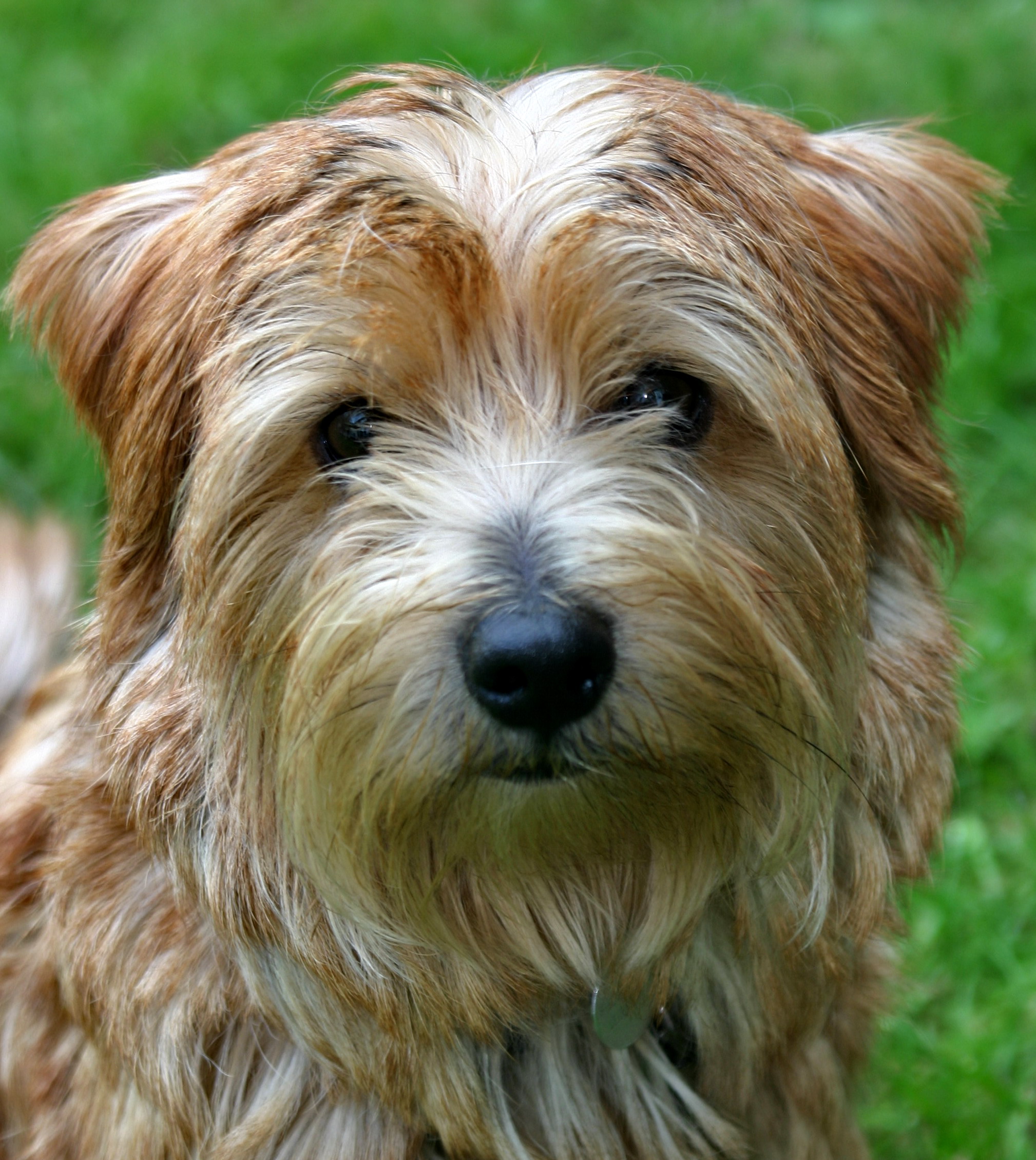
The folded-ear East Anglian terrier
The Norfolk Terrier shares its earlier background with the Norwich Terrier in East Anglia. During the nineteenth century these were working farm and earth-dog types rather than two clearly separated modern show breeds. Ratting and other historical terrier tasks help explain their compact, determined character.
The Norwich Terrier entered the Kennel Club register in 1932 with both folded- and prick-eared varieties. In 1964 the folded-ear dogs received the Norfolk name and a separate identity. That ear distinction is useful, although a photograph alone cannot establish ancestry or a dog's registration.
A harsh jacket rather than a soft toy coat
The wiry hair lies close, with rougher neck and shoulder furnishings and modest facial hair. Several colours occur, including red, wheaten and black-and-tan. The working outline is more useful to understand than assuming every small shaggy dog needs a heavily sculpted exhibition finish.
Affection and terrier determination
The standard combines a lovable disposition with alertness and fearlessness. Those aims do not make every individual uncomplicated around moving animals or unfamiliar handling. Reward attention and offer appropriate exploration while learning how the particular dog responds to new situations and opportunities to chase.
Comfortable care of coarse hair
Check the mouth furnishings, feet and areas under equipment after outdoor activity. Ask an experienced groomer to explain maintenance suited to the actual texture, rather than pulling through resistance to achieve a shape. Persistent itch, soreness or reluctance to be touched belongs in a veterinary discussion.
Plan comfortable care
Our gentle coat-care guide and first grooming appointment guide help you prepare questions about handling, maintenance and a suitable service. This breed profile is independent of named businesses.
Photograph and sources
The photograph illustrates one Norfolk Terrier. See the linked credit for its creator, source and reusable licence. It does not establish the dog's health, age or temperament.
Read the FCI catalogue entry and FCI breed standard. General care and handling guidance is available from PDSA and Dogs Trust.