
From German farmyards to a familiar companion
The beard may draw your attention first, but the Miniature Schnauzer’s story starts with a useful working dog. German farmers developed smaller Schnauzers for jobs that included catching vermin. The result kept the sturdy outline and determined character of the larger Schnauzer in a smaller frame.
The Royal Kennel Club records the miniature variety in 1888. The FCI’s history describes the small rough-coated dogs of the Frankfurt area around the turn of the twentieth century, when breeders were working towards a consistent type. The name Zwergschnauzer remains its FCI identity.
A beard, brows and a practical double coat
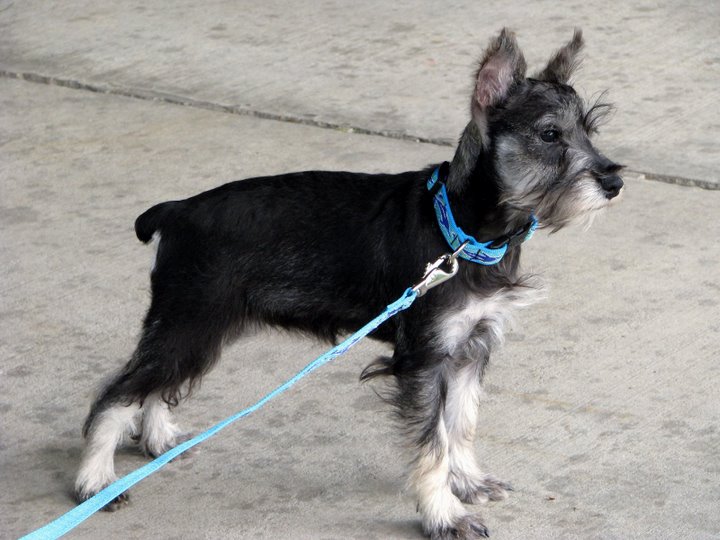
The FCI describes a strong, near-square dog, usually 30–35 cm at the shoulder in its standard. The outer hair is wiry and the undercoat dense. Beard and eyebrows are characteristic features, rather than a reason to let hair obscure a dog’s comfort or sight.
Its coat is often described as low-shedding, but that does not make it maintenance-free. The American Kennel Club explains that pet coats are commonly clipped, while show preparation often uses hand-stripping. Those are different grooming approaches; a professional should assess the actual coat and explain the upkeep before you choose.
A companion worth getting to know
Small size and an expressive face are only part of the picture. Ask owners and breed clubs about everyday activity, barking, social experiences and what the dog enjoys doing. A breed profile is a starting point for those conversations, not a guarantee that every dog will behave alike.
Make home care part of the plan
Ask your groomer to show you how to work through the beard and leg furnishings without pulling. A manageable routine between appointments matters more than a photograph-perfect trim.
Further reading: Royal Kennel Club breed guide and the American Kennel Club care guide. The photograph shows a puppy; adult coats and outlines develop with maturity.