
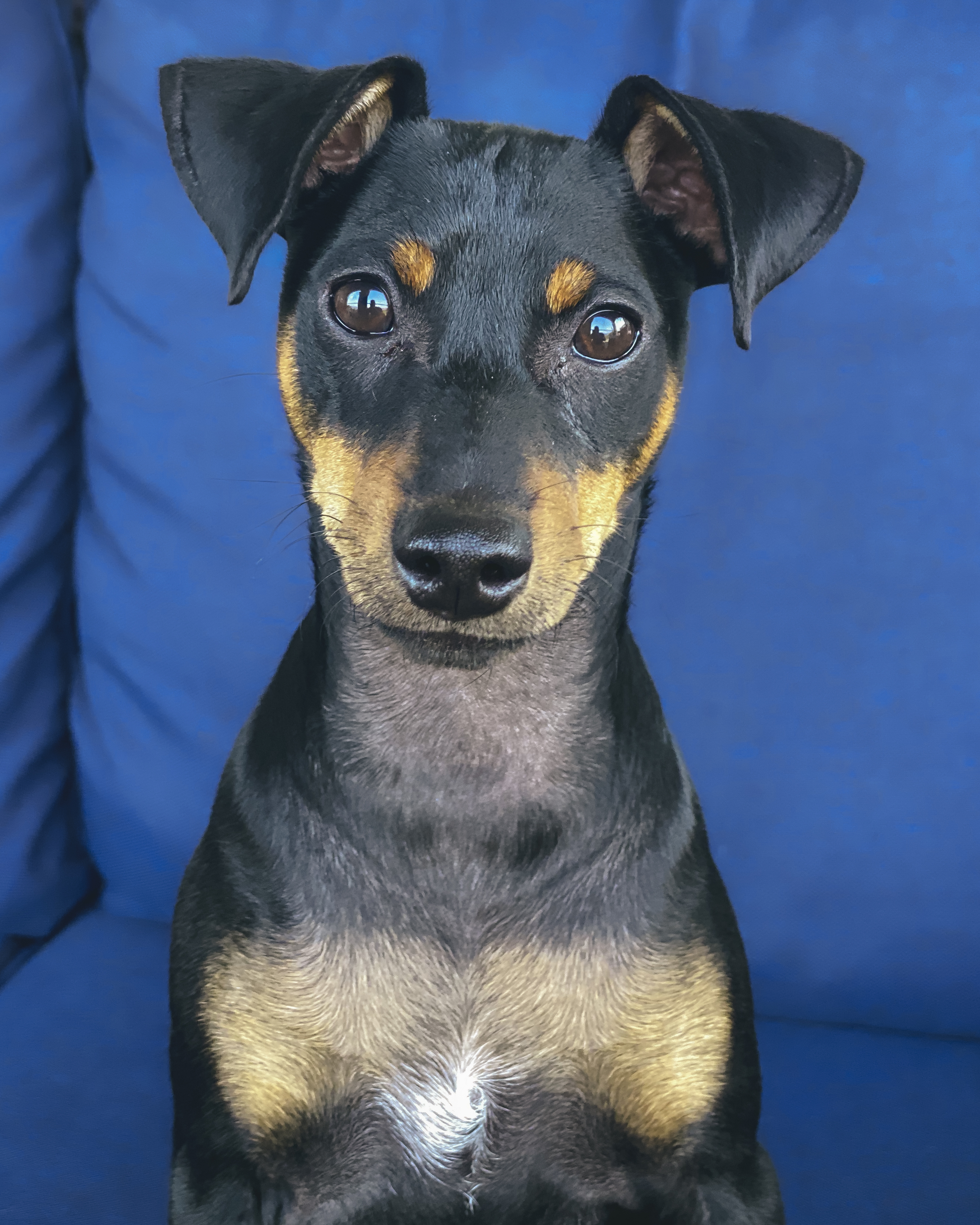
A small dog with a working past
The Miniature Pinscher is easy to remember: a compact outline, a glossy coat and an alert expression. Its German name, Zwergpinscher, points to the Pinscher family. The Royal Kennel Club traces it to the small dogs used to catch vermin, before it became better known as a companion.
Breed-club organisation in Germany dates to 1895. By 1925 the stud book described in the FCI standard contained around 1,300 Miniature Pinschers. Those records tell a more interesting story than the idea that this is simply a larger dog shrunk for modern homes.
Recognising the Miniature Pinscher
The FCI describes a near-square, elegant dog with a short, close coat. Its standard gives a height of 25–30 cm and a weight of 4–6 kg for both sexes. These are breed-standard reference points, not a promise about an individual pet. The recognised colours include rich red shades and black with tan markings.
There is a useful detail for breed enthusiasts: the Royal Kennel Club notes that the high-stepping action developed in Britain and America differs from the movement sought in the country of origin. Breed descriptions can vary between registries, so this atlas keeps its FCI identity clear.
Living with a small, confident companion
Think beyond size when considering a dog. Meet adult Miniature Pinschers, talk to a breed club and ask about daily routines, handling and the particular dog’s experience. A comfortable place to rest and enjoyable shared activities matter alongside appearance.
Keep the coat routine comfortable
A smooth coat makes the outline easy to see, but it still needs care. Discuss a simple home routine with a groomer instead of assuming that short hair means no grooming.
Further reading: Royal Kennel Club breed guide and RSPCA advice on choosing a groomer. Photograph by Matthew T Rader.