
The smaller Bull Terrier's modern history
James Hinks helped standardise Bull Terrier type during the nineteenth century, and the breed appeared in recognisable form at Birmingham in 1862. Smaller examples were also known, but their popularity declined and they were removed from the Kennel Club register in 1918.
A revival led by Colonel Richard Glyn and fellow enthusiasts in 1938 established a dedicated Miniature Bull Terrier club. The smaller breed shares the distinctive head and overall type of the Bull Terrier, with a separate height limit. Small size should not be mistaken for a different, universally placid temperament.
A close coat and a distinctive head
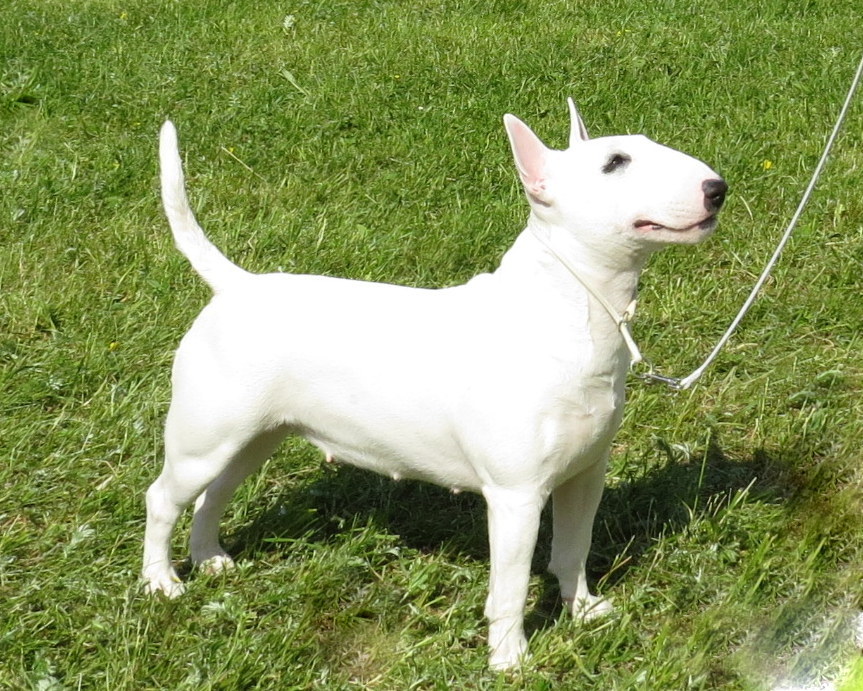
The egg-shaped head is the familiar feature, while short flat hair follows a compact body. White dogs and several coloured patterns are recognised. A fine winter underlayer can occur, so the jacket is not necessarily identical throughout the year or across every individual.
Playfulness with persistence
The FCI's spirited and even-tempered ideal also acknowledges a determined streak. Rewarding learning, appropriate activity and opportunities to settle can help owners understand that combination. A breed description cannot establish a particular dog's tolerance of other animals, unfamiliar people or prolonged grooming restraint.
Simple-looking hair still needs care
Gentle brushing provides an opportunity to observe the skin and equipment contact areas. Practise comfortable foot, mouth and body handling in small steps rather than waiting for an urgent need. Explain sensitivities to a groomer and investigate irritation instead of treating shiny hair as proof that all is well.
Plan comfortable care
Our gentle coat-care guide and first grooming appointment guide help you prepare questions about handling, maintenance and a suitable service. This breed profile is independent of named businesses.
Photograph and sources
The photograph illustrates one Miniature Bull Terrier. See the linked credit for its creator, source and reusable licence. It does not establish the dog's health, age or temperament.
Read the FCI catalogue entry and FCI breed standard. General care and handling guidance is available from PDSA and Dogs Trust.