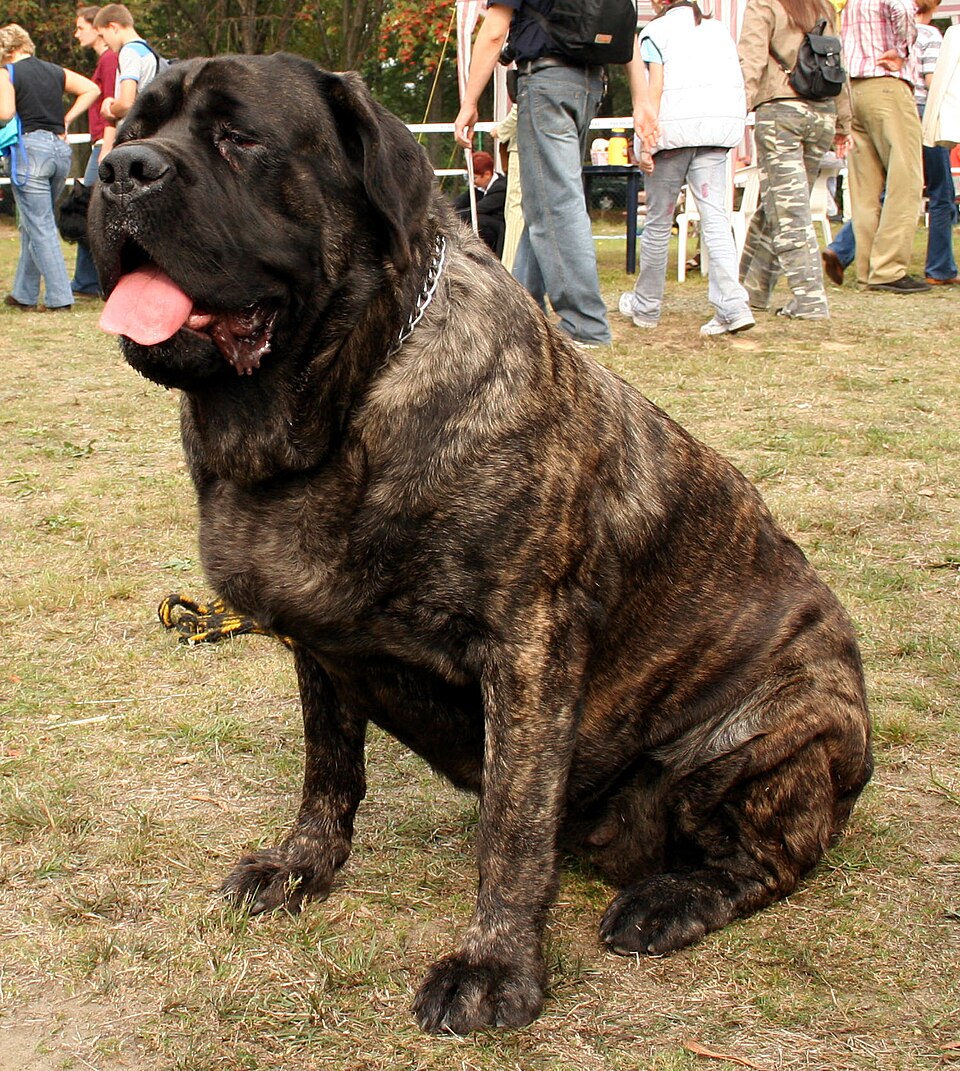
A British breed rebuilt after difficult years
Mastiff-type dogs have a long place in British history, although ancient references do not describe a modern pedigree population exactly. The FCI account records the breed's severe decline in Britain after the Second World War and its recovery with imported dogs. Here Mastiff means the breed under FCI standard 264, often called the English Mastiff, rather than every mastiff-type breed.
Living with the individual dog
Size shapes ordinary decisions: safe transport, comfortable flooring, room to move and access for professional care. Build cooperative handling rather than relying on physical strength. Ask about the individual's confidence and needs, and plan introductions thoughtfully; a guarding history is context, not a training method.
Character and behaviour
The standard describes a calm dog affectionate towards familiar people and capable of guarding. Individuals differ, so training, supervision and careful social introductions remain essential.
Breed descriptions are broad tendencies. An individual dog's behaviour also reflects experience, training and circumstances.
Care in daily life
Use a gentle brush and check the skin and areas that retain moisture. Introduce paw handling and standing on a secure surface gradually. Before booking grooming, discuss access, equipment and rest breaks suitable for a very large dog; a short coat does not remove those practical needs.
Care depends on the individual dog. If you notice a skin or health problem, speak to a vet.
Sources and review
These sources informed GroomNear's original summary. Place of origin does not describe where most dogs of this breed live today; reliable worldwide breed counts are not available for every breed.