
A terrier named for Manchester
The Manchester Terrier takes its name from the city where nineteenth-century ratting contests and early dog-show gatherings helped establish its identity. The FCI history describes weekly events and the emergence of dedicated classes. That is a historical setting, not a practice this profile recommends repeating.
Whippet influence is considered likely in the standard's account, helping explain the elegant outline, but a possible influence should not become a precisely proven ancestry formula. The modern breed combines terrier purpose with a smooth, carefully defined appearance and its own FCI identity.
Black and tan with clear boundaries
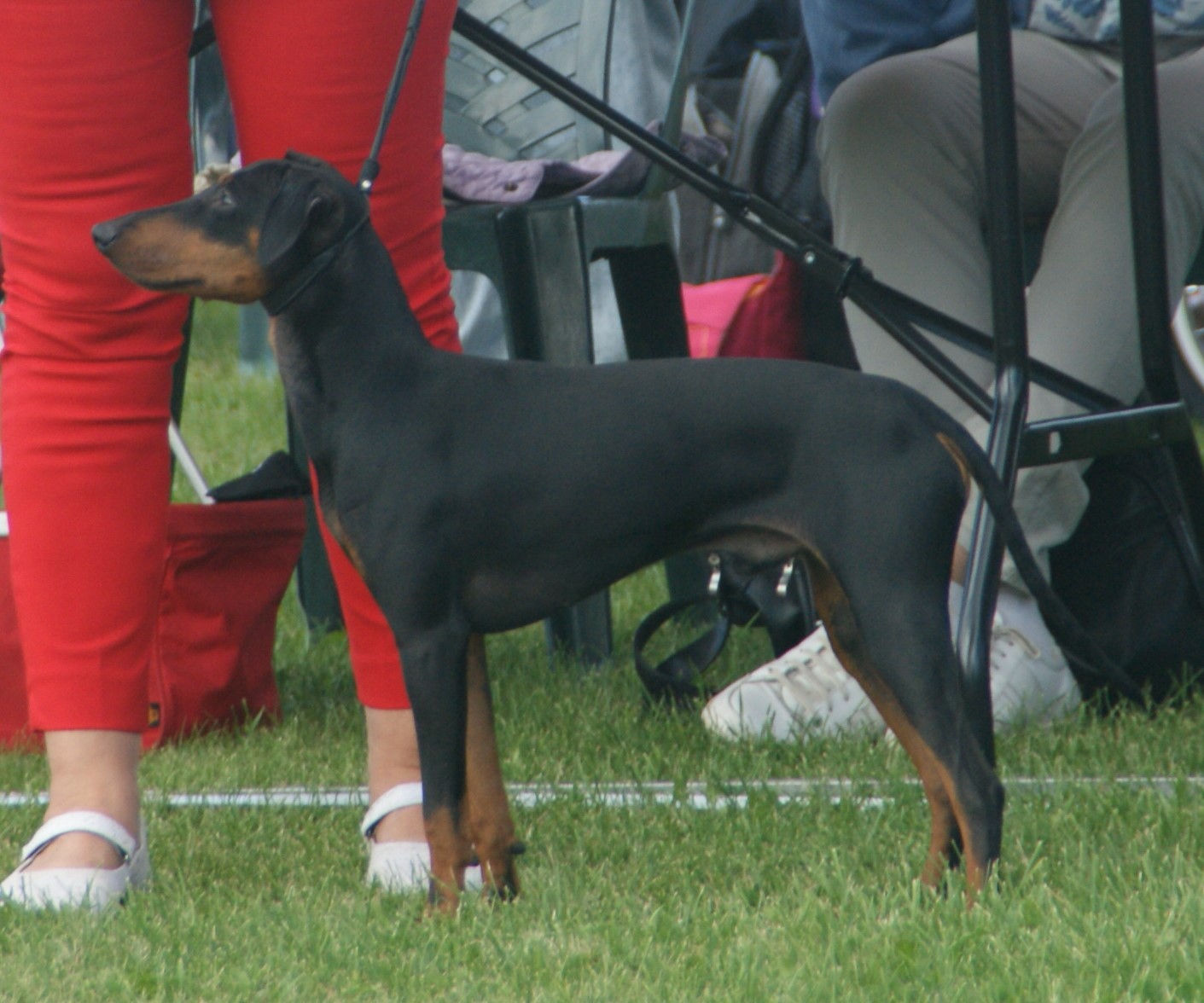
A short glossy jacket reveals the body's lines rather than hiding them under furnishings. Rich tan marks occur in specified places against a jet-black background. The sharp colour pattern is characteristic, yet a photograph cannot confirm pedigree or show whether the skin beneath the hair is comfortable.
Alertness behind the polished appearance
The standard's devoted and discerning ideal sits alongside a keen working background. Owners should plan secure exploration and rewarding attention, particularly around moving small animals. A dog that looks composed in a show photograph may still require careful introductions and patient preparation for unfamiliar routines.
Short hair still needs observation
Gentle brushing can be combined with checks around equipment contact points and feet. Build comfortable examination gradually, allowing the dog to cooperate rather than treating a small body as easy to hold still. Tell a groomer about sensitivities and investigate persistent redness, itch or soreness.
Plan comfortable care
Our gentle coat-care guide and first grooming appointment guide help you prepare questions about handling, maintenance and a suitable service. This breed profile is independent of named businesses.
Photograph and sources
The photograph illustrates one Manchester Terrier. See the linked credit for its creator, source and reusable licence. It does not establish the dog's health, age or temperament.
Read the FCI catalogue entry and FCI breed standard. General care and handling guidance is available from PDSA and Dogs Trust.