
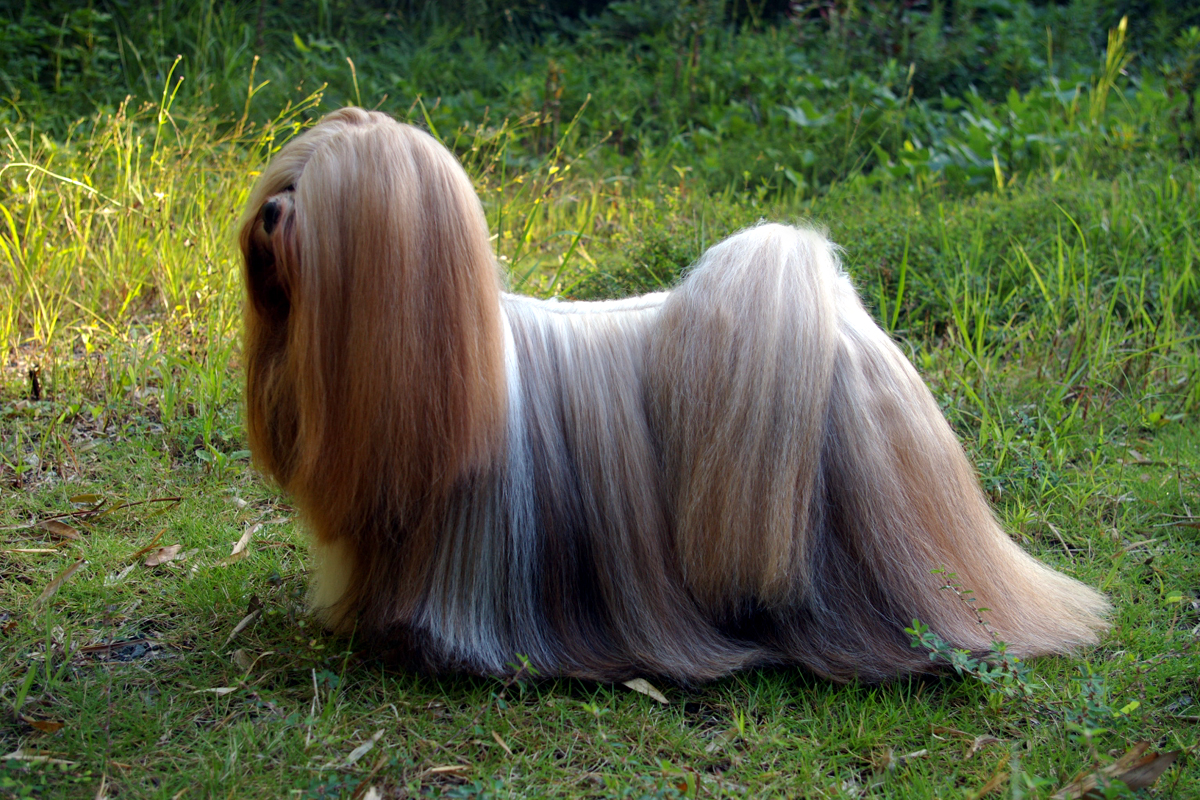
A small companion from the Tibetan plateau
The Lhasa Apso's background is Tibetan, with breed histories linking small watchful companions to homes and monasteries. The FCI history places its development in the high-altitude environment of Tibet and describes the coat's role in that setting. The Royal Kennel Club also records the breed's association with Tibetan monks. These are accounts of the breed's heritage; traditional spiritual stories are not evidence of special powers or of the exact age of every modern bloodline.
Early British records sometimes grouped different Tibetan dogs together, so a simple recognition date can conceal changing names and classifications. The FCI and Royal Kennel Club histories give different milestones for the early British period. What is clear in the modern catalogue is the distinction between the Lhasa Apso and the larger Tibetan Terrier. The FCI lists origin as Tibet (China), patronage as Great Britain, and Group 9, Companion and Toy Dogs. Patronage is not a change of origin, and neither field measures the breed's present-day population. This atlas retains the catalogue wording in its origin filter.
Living with the individual dog
Look past the impressive coat to the sturdy, alert dog underneath. The breed's watchful background helps explain why a small companion may notice arrivals and take time to become comfortable with unfamiliar people. Ask about an individual dog's experience and let introductions proceed at a manageable pace. Provide age- and health-appropriate walks, interesting activities and a quiet resting place, rather than assuming a small dog only needs carrying.
Comfort with handling is particularly useful when a coat needs regular attention. Start with an area the dog accepts, reward a little calm contact and stop before the session becomes a struggle. Do not interpret a worried reaction as a challenge to win. If a dog suddenly objects to a familiar touch, ask your vet whether pain could be involved. A groomer also needs to know about sensitive areas, previous matting and how much the dog can comfortably tolerate in one visit.
Plan a comfortable care routine
Our gentle coat-care guide explains home care and when to ask for professional help. Use the first appointment guide to prepare questions about handling, coat condition and a suitable visit.
About the photograph and sources
This natural grass-setting photograph shows a Lhasa Apso in a long coat, including the feathered tail over the back. It illustrates one presentation, not a required pet haircut. Hair in a photograph is not a reason to let a real dog's view become obstructed: the current standard explicitly protects the ability to see and move.
Further reading: Royal Kennel Club Lhasa Apso guide; American Kennel Club breed guide; PDSA grooming guidance; Dogs Trust handling guidance.