
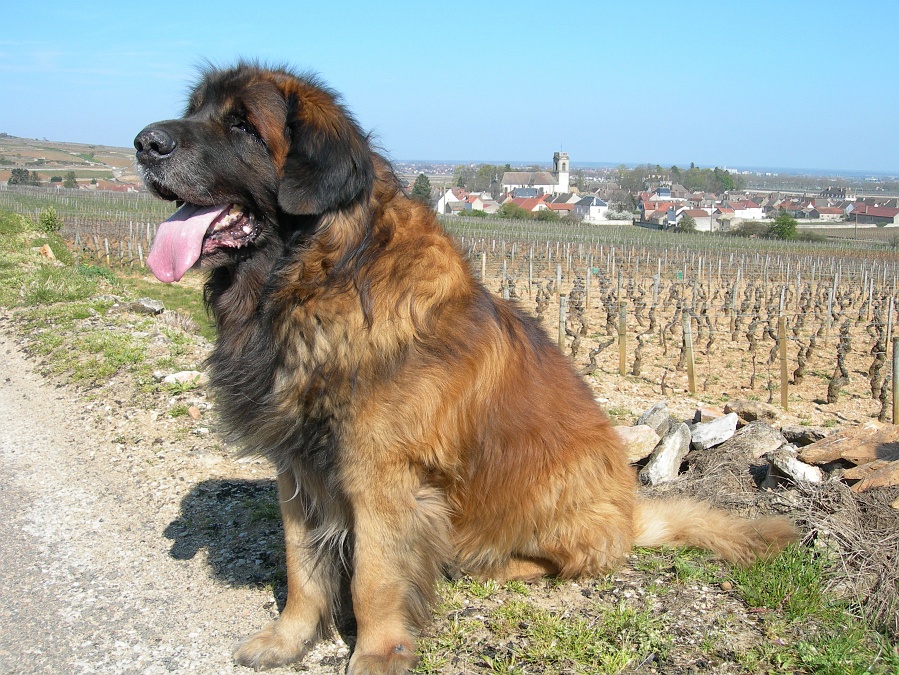
A dog associated with Leonberg's lion
The Leonberger's documented development centres on Heinrich Essig in Leonberg, Germany, during the 1830s and 1840s. The FCI account describes Newfoundland and Saint Bernard dogs, with later Pyrenean Mountain Dog influence, in efforts to produce a large dog recalling the lion on the town's coat of arms.
Dogs carrying the Leonberger name appeared in 1846. Beyond that striking civic image, the breed became associated with farm, guarding and draught work in the surrounding region. The two World Wars greatly reduced numbers, so the modern story also includes preservation and rebuilding rather than uninterrupted abundance.
The mask and mane
A black facial mask contrasts with lion-yellow, red, brown-red or sandy hair. The long coat has a substantial underlayer and fuller neck, chest and rear furnishings. The attractive outline should not obscure the practical fact that a large amount of loose hair or a small tangle can remain hidden near the skin.
A companion ideal is not a guarantee
The standard's steady companion description helps explain the breeding aim, but individual experience and health still matter. Plan gentle introductions and reward cooperation with feet, mouth and body examination. A dog that enjoys familiar family company may need more preparation for a busy grooming environment.
Planning care around comfort
Check dense furnishings regularly in short sessions, particularly where equipment presses or hair rubs together. Tell a groomer about mobility, standing tolerance and handling preferences before booking substantial work. A manageable maintenance plan should protect skin and comfort rather than aim solely for an impressive mane.
Plan comfortable care
Our gentle coat-care guide and first grooming appointment guide help you prepare questions about handling, maintenance and a suitable service. This breed profile is independent of named businesses.
Photograph and sources
The photograph illustrates one Leonberger. See the linked credit for its creator, source and reusable licence. It does not establish the dog's health, age or temperament.
Read the FCI catalogue entry and FCI breed standard. General care and handling guidance is available from PDSA and Dogs Trust.