
How black-and-white longhairs gained their own identity
The Large Munsterlander belongs to the family of longhaired German pointing dogs. The FCI history connects that family with earlier bird and hawking dogs, while the modern breeding story becomes clearer around the end of the nineteenth century.
When the German Longhair club excluded black colouring in 1909, breeders of black-and-white longhairs organised separately. A club founded in 1919 gathered foundation dogs, and planned Large Munsterlander breeding began in 1922. This history explains a distinct FCI number 118 rather than a large version of every dog called a Munsterlander.
Sleek hair with generous feathering
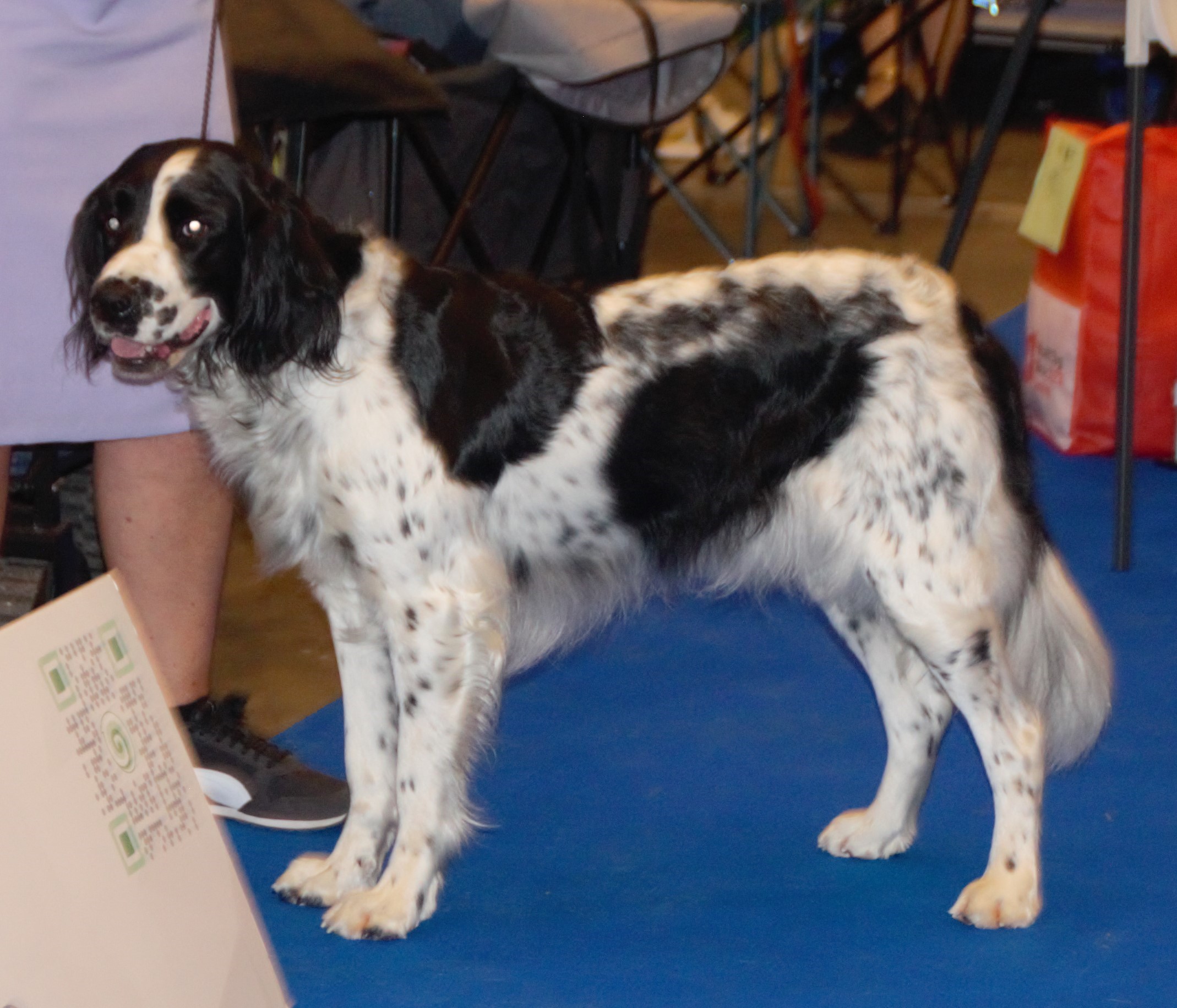
The long coat should lie close and sleek, with especially developed hair around the ears, backs of the legs and tail. Black-and-white patching or roaning may look quite different between dogs. The photographed example illustrates one pattern without defining the entire breed's appearance.
A cooperative working description
The standard values a dependable gundog, ready to learn and useful after the shot. That purpose helps explain why exploration and rewarding activity belong alongside rest. A lively working ideal cannot predict the individual's confidence, behaviour around other animals or tolerance of a busy salon.
Make outdoor coat checks a habit
Ear fringes and leg feathering can carry seeds and wet debris back from a walk. Gently check to the skin and remove loose material before it compacts. A groomer can help choose suitable tools and a realistic routine without turning the working jacket into a purely cosmetic project.
Plan comfortable care
Our gentle coat-care guide and first grooming appointment guide help you prepare questions about handling, maintenance and a suitable service. This breed profile is independent of named businesses.
Photograph and sources
The photograph illustrates one Large Munsterlander. See the linked credit for its creator, source and reusable licence. It does not establish the dog's health, age or temperament.
Read the FCI catalogue entry and FCI breed standard. General care and handling guidance is available from PDSA and Dogs Trust.