
A continental identity with Newfoundland connections
The Landseer European Continental Type has a history connected with white-and-black Newfoundland dogs brought to Britain. VDH describes German and Swiss efforts around the turn of the twentieth century to preserve and develop that population as its British popularity declined. The modern FCI origin entry names Germany and Switzerland.
The name recalls the nineteenth-century animal painter Sir Edwin Landseer. FCI recognition as a separate breed followed in 1960. The distinction matters: the Newfoundland standard also allows black-and-white dogs, so colour alone cannot establish whether an individual belongs to this separate continental breed.
A tall outline beneath long hair
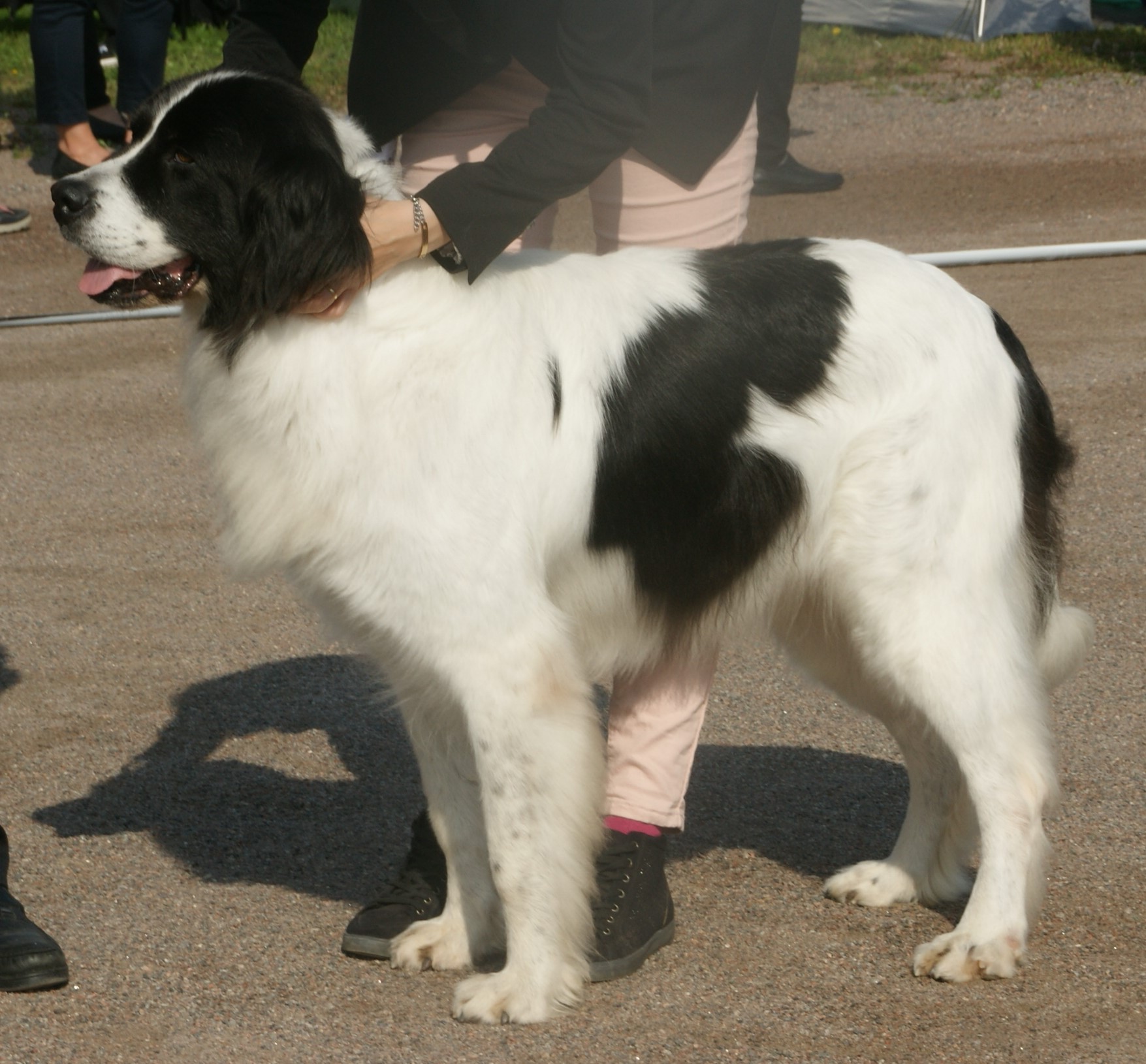
The FCI describes relatively longer legs than those of the black Newfoundland, particularly in males. Dense white hair with black patches gives the familiar pattern, while furnishings add volume around the body and tail. A living photograph is useful for the outline, but cannot establish pedigree, physical soundness or temperament.
Living with strength and watchfulness
VDH emphasises family contact, socialisation and patient education alongside the breed's self-confidence. Water-related traditions do not mean every individual is a trained rescue dog or safe swimmer. Introduce unfamiliar people, equipment and environments gradually, taking the dog's size and actual responses into account.
Reaching beneath the surface
Regular checks should find loose undercoat and tangles before they become uncomfortable, especially under equipment and around the rear. Ask a groomer to demonstrate gentle maintenance and plan appropriate footing. More hair does not justify prolonged restraint or brushing through pain to achieve a particular outline.
Plan comfortable care
Our gentle coat-care guide and first grooming appointment guide help you prepare questions about handling, maintenance and a suitable service. This breed profile is independent of named businesses.
Photograph and sources
The photograph illustrates one Landseer European Continental Type. See the linked credit for its creator, source and reusable licence. It does not establish the dog's health, age or temperament.
Read the FCI catalogue entry and FCI breed standard. General care and handling guidance is available from PDSA and Dogs Trust.
Additional primary reading: VDH Landseer history and care.