
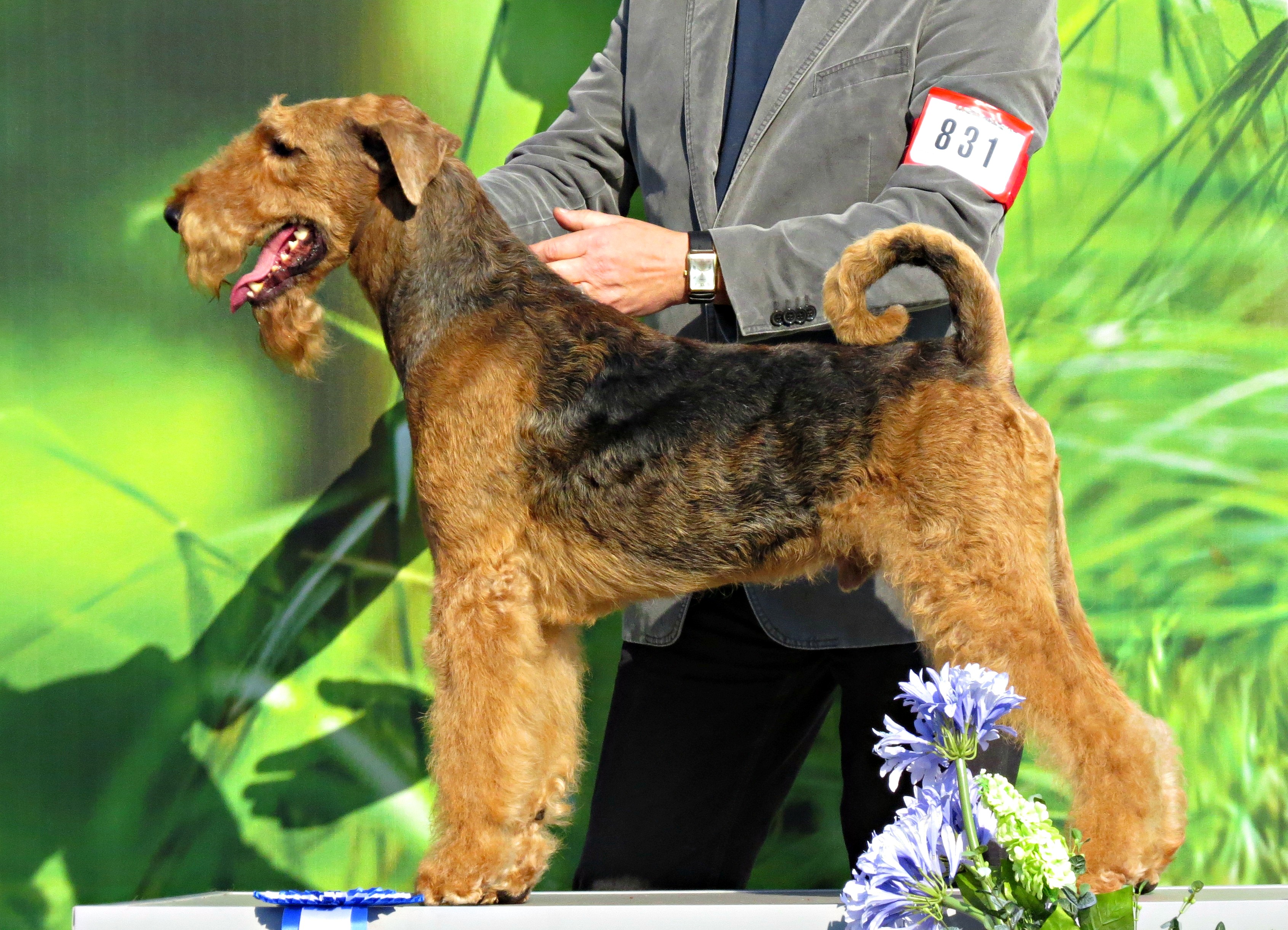
A terrier of the fells
The Lakeland Terrier developed in the valleys of Cumberland and Westmorland in England's Lake District. The Royal Kennel Club places it among the regional black-and-tan working terriers that accompanied hounds and followers across steep, rocky ground. The landscape helps explain its compact, capable build.
A breed club formed in 1912, with Kennel Club recognition following in 1921. Earlier regional influences are part of the history, but they should not be turned into a precise modern recipe of parent breeds. This is a distinct terrier identity rather than a miniature version of every larger rough-coated terrier.
The practical harsh jacket
Dense outer hair and an undercoat create the characteristic texture. Black-and-tan is only one permitted appearance; red, wheaten, grizzle and other colours broaden the range. The photograph's prepared outline does not mean every companion needs an identical exhibition finish or that a harsh coat needs no care.
A small dog with working interests
The FCI's friendly and self-confident ideal still describes a terrier. Secure exploration, rewarding attention and opportunities to investigate are sensible starting points. Learn the individual's response to wildlife and other animals rather than relying on size or a cheerful expression to predict behaviour.
Maintaining texture without discomfort
Discuss suitable tools and techniques with an experienced groomer, explaining the dog's coat and handling history. Look around the mouth, beneath equipment and between outdoor sessions for retained debris. A grooming plan should follow comfort and skin condition, rather than force the dog through painful preparation.
Plan comfortable care
Our gentle coat-care guide and first grooming appointment guide help you prepare questions about handling, maintenance and a suitable service. This breed profile is independent of named businesses.
Photograph and sources
The photograph illustrates one Lakeland Terrier. See the linked credit for its creator, source and reusable licence. It does not establish the dog's health, age or temperament.
Read the FCI catalogue entry and FCI breed standard. General care and handling guidance is available from PDSA and Dogs Trust.
Additional primary reading: Royal Kennel Club Lakeland Terrier history.