
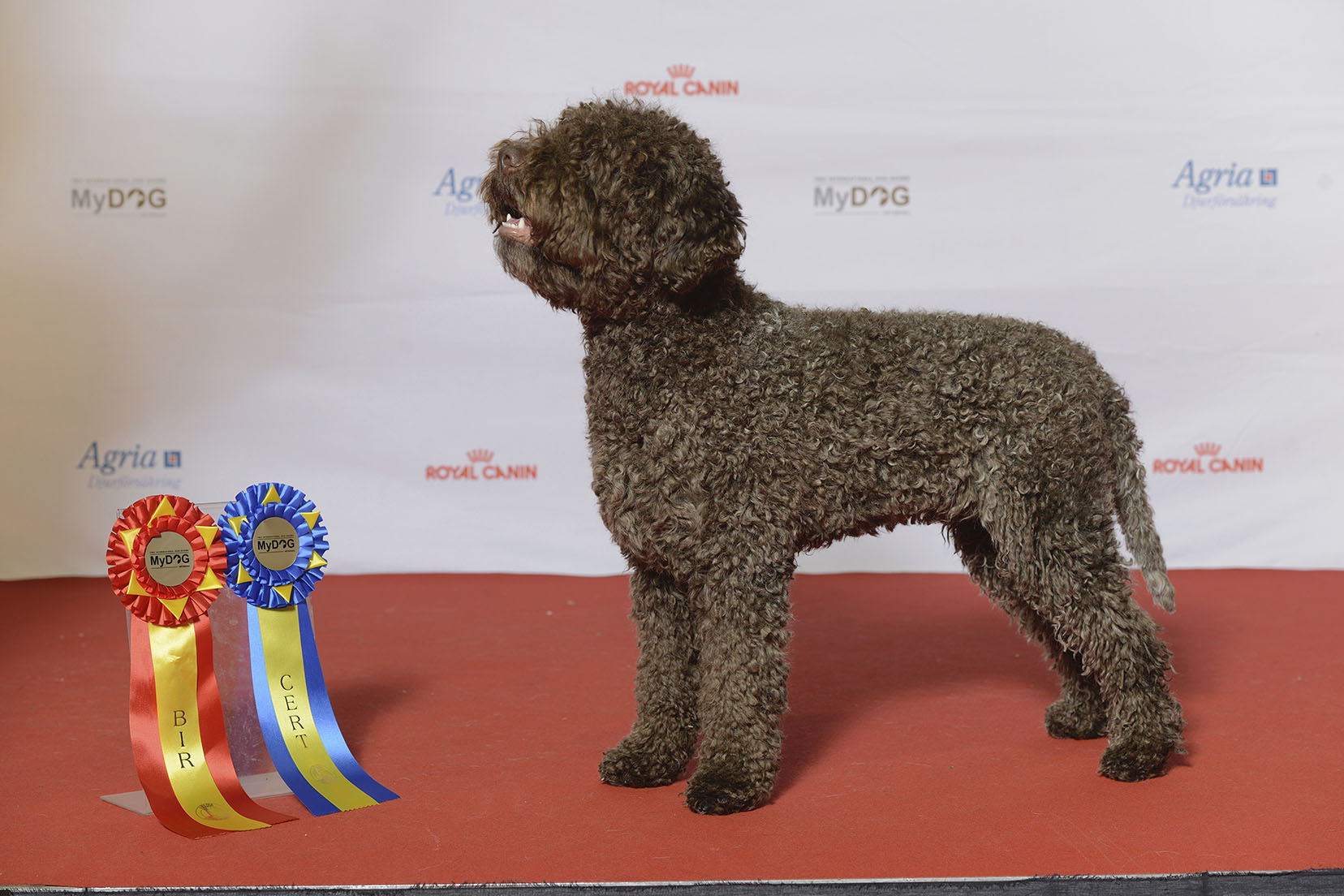
From Romagna's marshes to truffle ground
The Lagotto Romagnolo comes from the lowlands around Comacchio and the marshes of Ravenna in Italy. Its earlier role involved retrieving from water. As marshland was drained and agriculture changed the landscape, the breed's working emphasis shifted towards locating truffles in the Romagna countryside.
That change makes its story more interesting than a simple label of curly companion. The modern FCI description still places scent work at the centre of the breed's identity. A useful nose is a starting point for training, rather than proof that an untrained dog can identify or safely find truffles.
Curls with their own texture
The woolly outer hair and undercoat form close curls, while the face carries looser furnishings and a beard. Several white, brown and orange combinations occur. A Lagotto should not automatically receive the same finish or maintenance approach as a Poodle merely because both can appear curly.
An interested working partner
The standard's affectionate, willing description sits alongside a searching background. Appropriate scent games, opportunities to learn and time to settle can help owners understand that combination. Individual differences, previous experience and the environment remain important when planning exercise, introductions and handling.
Comfort before a cosmetic outline
Discuss how to keep the actual jacket manageable with an experienced groomer. Curls can hide debris and compacted hair close to the skin, particularly beneath equipment and around furnishings. Work gently and stop when an area is painful rather than pursuing a particular show-style silhouette at any cost.
Plan comfortable care
Our gentle coat-care guide and first grooming appointment guide help you prepare questions about handling, maintenance and a suitable service. This breed profile is independent of named businesses.
Photograph and sources
The photograph illustrates one Lagotto Romagnolo. See the linked credit for its creator, source and reusable licence. It does not establish the dog's health, age or temperament.
Read the FCI catalogue entry and FCI breed standard. General care and handling guidance is available from PDSA and Dogs Trust.